
What should you know about acute complications of sickle cell disease?
Short answer
Acute sickle cell complications can worsen quickly, so new severe symptoms need prompt medical assessment.
This answers one question. It is not a diagnosis and does not replace an assessment by a licensed doctor.
At a glance
- Main concern
- Sudden pain may be a crisis, while chest, neurological or infection symptoms can be emergencies.
- Useful preparation
- Keep the personal care plan and current medication list accessible.
- Assessment
- The clinical team may check oxygen levels and order blood tests based on the symptoms.
The short answer
A painful vaso-occlusive crisis is one possibility, but fever, breathing difficulty, marked weakness, neurological changes or a prolonged painful erection may signal other emergencies. Follow the person's individual sickle cell plan when available, while arranging care rather than waiting for symptoms to settle.
What acute complications mean
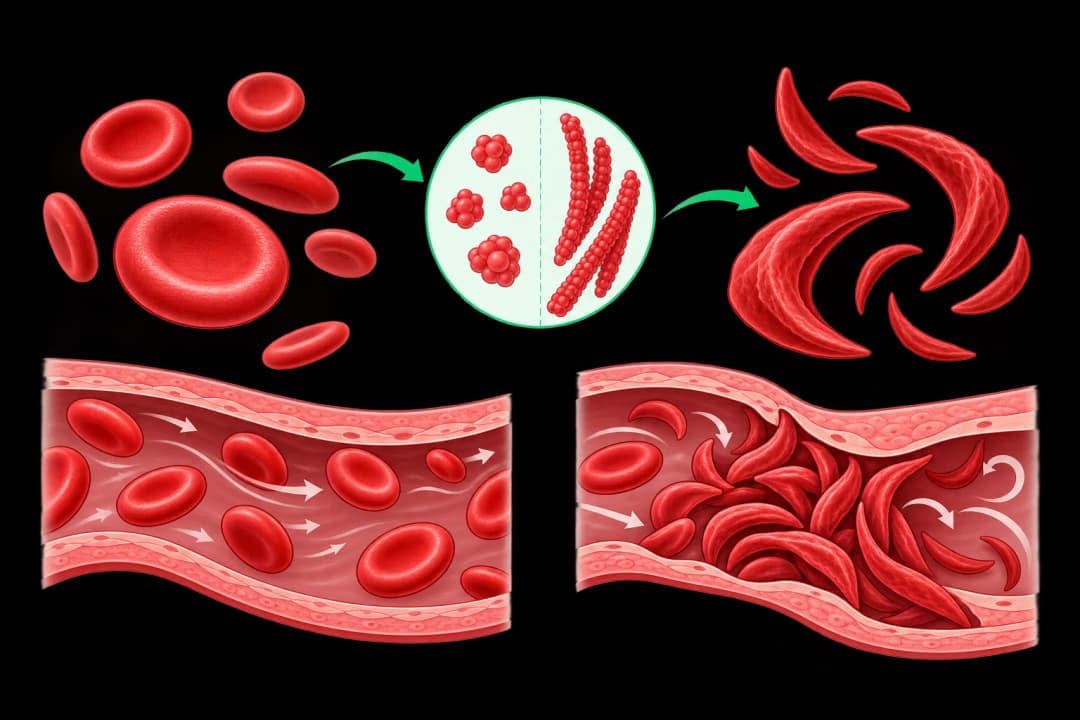
Sickle-shaped red blood cells can obstruct small blood vessels, limiting oxygen delivery and causing sudden pain in the bones, chest, abdomen or joints. Sickling and increased red-cell breakdown can also contribute to anaemia and pale skin. Infection, dehydration, cold exposure or low oxygen may trigger trouble, although an episode can occur without an obvious trigger.
Chest pain, cough, fever or shortness of breath can accompany acute chest syndrome. Sudden one-sided weakness, facial droop, speech difficulty, confusion or a severe unusual headache can indicate a stroke. A rapid fall in circulating red cells may cause unusual tiredness, breathlessness, dizziness or pronounced pallor.
What to do during an episode
Use prescribed pain medicine exactly as directed in the personal care plan. Rest, stay comfortably warm and take regular fluids if drinking is safe and there is no fluid restriction. Do not take extra doses or someone else's medicine. Record the symptoms, temperature, medicines taken and whether the pain is changing; this helps the clinical team assess the episode.
Contact the usual haematology service or urgent-care provider early if home treatment is not controlling pain. Bring the medication list and sickle cell care plan. Hospital assessment may include oxygen measurements, examination and blood tests, followed by treatment tailored to pain, hydration, infection, anaemia or organ complications.
When emergency care is needed
Seek emergency care for difficulty breathing, chest pain, blue or grey lips, fainting, seizures, confusion, new weakness, facial droop, trouble speaking, extreme drowsiness or a severe headache unlike usual. Fever in a person with sickle cell disease needs urgent clinical advice because serious infection can progress rapidly.
Urgent assessment is also needed for severe or escalating pain despite the agreed medicines, repeated vomiting or inability to drink, a suddenly enlarged abdomen, striking pallor, or an erection that remains painful. Call local emergency services if the person is struggling to breathe, collapses or develops stroke signs; do not drive them yourself in an unstable condition.
Questions for your clinician
Ask which symptoms should trigger direct contact with the specialist team, which pain medicines and doses belong in the home plan, and whether any medicines should be avoided. Clarify how to check for fever, where to go after clinic hours, and when fluid intake should be adjusted. After an acute episode, discuss possible triggers and whether the prevention plan needs changing.
Find care
General Clinics & Polyclinics in Abu Dhabi
That answer is general. If you want it applied to your own case, these are licensed general clinics & polyclinics listed in Abu Dhabi.
27 Ar Ruwwad St - Shakhbout City - MSH4 - Abu Dhabi - United Arab Emirates
Accepts: Daman, Thiqa, Cigna, MetLife +20 more
Al Ruwais, Al Dhafrah
Accepts: Daman, Thiqa, AXA, Cigna +16 more
Al Bahyah - Al Bahyah Old - Abu Dhabi - United Arab Emirates
Accepts: Daman, Thiqa, Cigna, Allianz Care +18 more
Abu Dhabi
Accepts: Daman, Thiqa, AXA, Cigna +27 more
Ordered by verification status and how complete each clinic's public record is, then alphabetically. This is a directory listing, not a ranking — Zavis does not rate or recommend providers.
A factual listing drawn from the DHA, DOH and MOHAP licence registers. It is not a referral, an endorsement, or advice that any of these providers is right for you.
Questions people ask
Can a pain crisis be managed at home?
Some familiar, milder episodes may respond to the person's agreed home plan. Seek clinical advice if pain is unusually severe, different from normal, worsening or not controlled by prescribed treatment.
Why does fever need urgent attention?
Sickle cell disease can make serious infection harder for the body to contain. A fever therefore warrants prompt advice even when other symptoms seem mild.
Should someone drink as much water as possible?
Regular fluids can help when dehydration is a concern, but forced or excessive drinking is unsuitable for some people. Follow any fluid restriction given for heart or kidney problems.
Related
Related reading
Keep reading
Medical disclaimer. This page is general health information, not medical advice, and it cannot diagnose you. Always consult a licensed healthcare provider about your own symptoms and treatment. In an emergency in the UAE, call 998 for an ambulance.