
Acute chest syndrome in sickle cell disease
Short answer
Acute chest syndrome is a serious lung complication of sickle cell disease that needs urgent hospital assessment and treatment.
This answers one question. It is not a diagnosis and does not replace an assessment by a licensed doctor.
At a glance
- Who is affected
- People with sickle cell disease
- Care setting
- Urgent hospital assessment
- Common checks
- Oxygen measurement, chest imaging, and blood tests
The short answer
It can worsen quickly, so new chest pain, fever, cough, breathing difficulty, or unusual sleepiness in someone with sickle cell disease should not be managed at home while waiting to see whether it passes.
What acute chest syndrome means
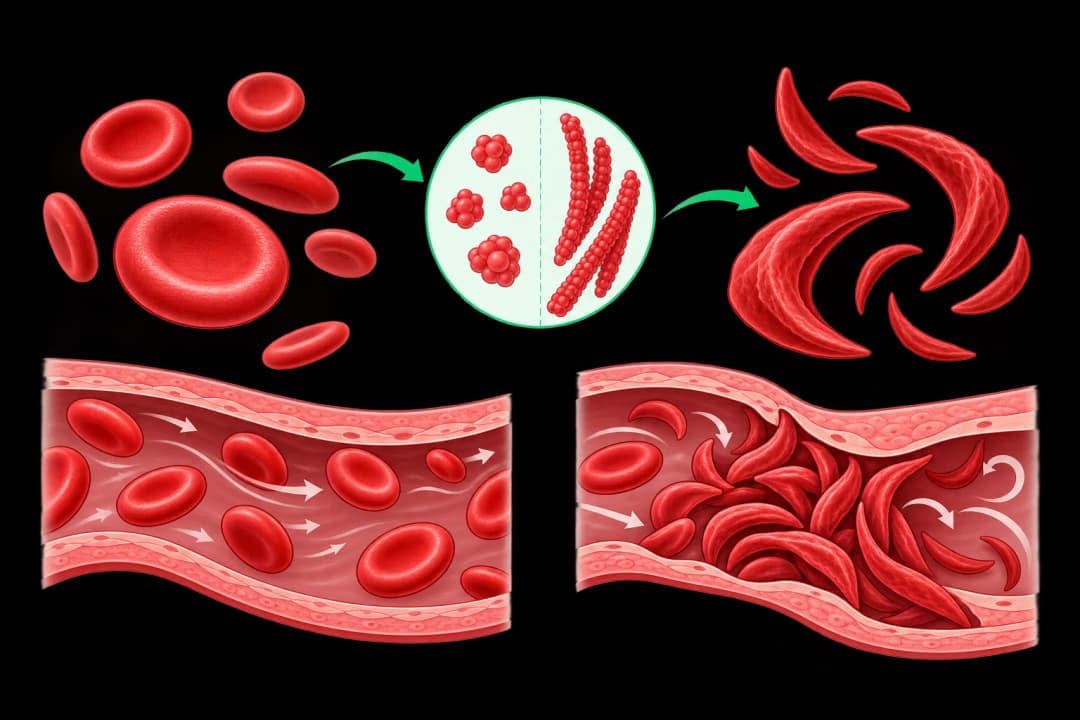
The syndrome occurs when part of the lung becomes inflamed or blocked and a new abnormal area appears on a chest image alongside breathing-related symptoms. Infection, trapped sickled blood cells, or fat released from bone marrow can contribute, and more than one process may occur together.
People with acute chest syndrome may develop fever, cough, chest pain, shortness of breath, fast breathing, wheezing, or lower oxygen levels. Children may initially have fever and cough, while adults may have more prominent chest pain or breathing difficulty.
What to do now
Seek emergency assessment and tell the clinical team immediately that the person has sickle cell disease. Keep them resting, bring their medicine list and sickle cell care information if readily available, and do not delay travel to try home remedies.
In hospital, clinicians may check oxygen levels, order a chest X-ray and blood tests, and look for infection or worsening anaemia. Treatment can include oxygen, antibiotics, careful pain relief, breathing exercises with an incentive spirometer, and appropriately managed fluids. A simple or exchange blood transfusion may be considered when oxygenation or illness severity warrants it.
When to seek emergency care
Call the UAE ambulance service on 998 for severe breathing difficulty, blue or grey lips, collapse, confusion, marked drowsiness, or inability to speak normally because of breathlessness. These warning signs require immediate help.
Go to an emergency department promptly for new chest pain, fever, cough, shortness of breath, rapid breathing, or falling oxygen readings in anyone with sickle cell disease, including during or soon after a pain crisis or hospital procedure.
Questions for the treating team
Ask what the chest imaging and oxygen readings show, whether infection is suspected, and how pain will be controlled without suppressing breathing. You can also ask whether transfusion is being considered, how breathing exercises should be used, and what follow-up plan may reduce another episode.
Find care
General Clinics & Polyclinics in Abu Dhabi
That answer is general. If you want it applied to your own case, these are licensed general clinics & polyclinics listed in Abu Dhabi.
27 Ar Ruwwad St - Shakhbout City - MSH4 - Abu Dhabi - United Arab Emirates
Accepts: Daman, Thiqa, Cigna, MetLife +20 more
Al Ruwais, Al Dhafrah
Accepts: Daman, Thiqa, AXA, Cigna +16 more
Al Bahyah - Al Bahyah Old - Abu Dhabi - United Arab Emirates
Accepts: Daman, Thiqa, Cigna, Allianz Care +18 more
Abu Dhabi
Accepts: Daman, Thiqa, AXA, Cigna +27 more
Ordered by verification status and how complete each clinic's public record is, then alphabetically. This is a directory listing, not a ranking — Zavis does not rate or recommend providers.
A factual listing drawn from the DHA, DOH and MOHAP licence registers. It is not a referral, an endorsement, or advice that any of these providers is right for you.
Questions people ask
Can acute chest syndrome start during a sickle cell pain crisis?
Yes. It can appear during a pain crisis, and shallow breathing caused by chest or rib pain may worsen lung expansion. New fever, cough, chest pain, or breathing difficulty needs urgent reassessment even if treatment for pain is already underway.
Is acute chest syndrome the same as pneumonia?
No. They can look similar, and a lung infection can trigger acute chest syndrome, but sickled-cell blockage and other processes may also be involved. Clinicians often begin treatment that covers infection while assessing oxygenation, imaging, anaemia, and overall severity.
Why might a blood transfusion be used?
Transfusion can increase the amount of normally shaped red blood cells carrying oxygen and reduce the proportion of sickled cells. The team chooses between simple and exchange transfusion according to the clinical situation and the person's blood results.
Related
Related reading
Keep reading
Medical disclaimer. This page is general health information, not medical advice, and it cannot diagnose you. Always consult a licensed healthcare provider about your own symptoms and treatment. In an emergency in the UAE, call 998 for an ambulance.