
Acute bronchial asthma: recognising an asthma flare
Short answer
Acute bronchial asthma is a sudden worsening of airway narrowing that requires quick-relief treatment and careful monitoring.
This answers one question. It is not a diagnosis and does not replace an assessment by a licensed doctor.
At a glance
- Airway change
- Tightened muscles, inflammation and sometimes extra mucus
- Immediate guide
- The individual's written asthma action plan
- Danger sign
- Struggling to speak or reliever medicine not helping
The short answer
An episode may bring wheezing, cough, chest tightness, breathlessness or difficulty speaking comfortably. Follow your written asthma action plan and use the prescribed reliever exactly as directed. Severe symptoms or poor response to reliever medicine need emergency care.
What happens inside the airways
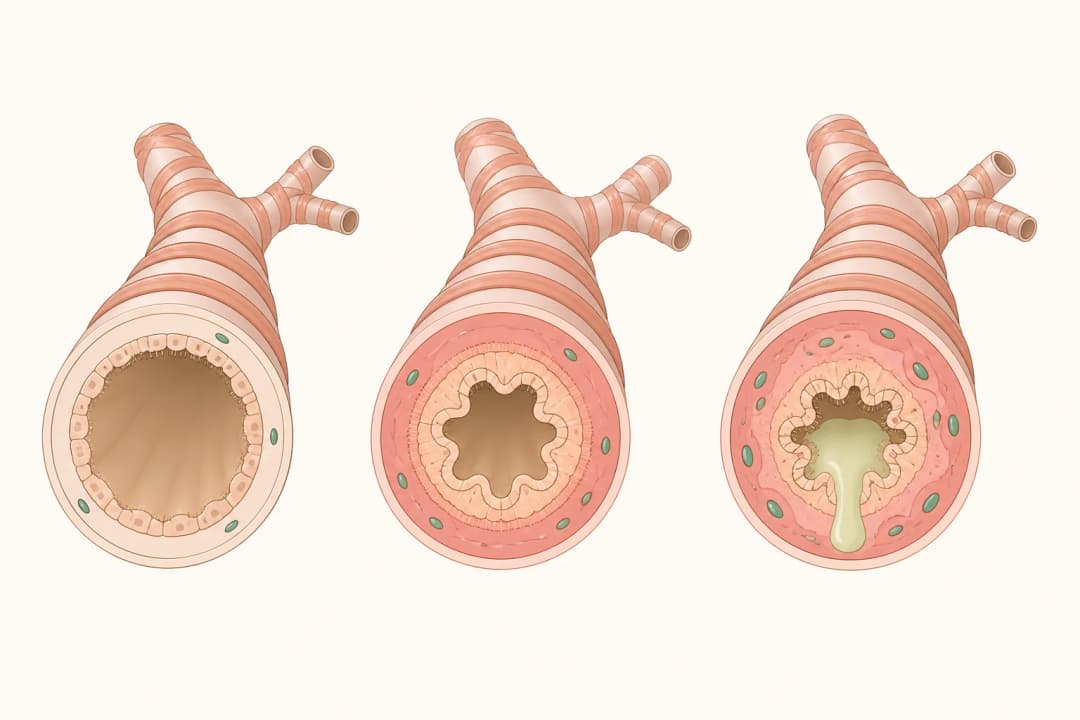
During an asthma flare, muscles around the bronchial tubes tighten while the airway lining becomes inflamed and may produce extra mucus. Less space remains for air to move, particularly when breathing out. Wheezing can occur, but a very severe attack may produce little sound because airflow is markedly reduced.
Triggers differ between people and may include respiratory infection, smoke, dust, strong scents, exercise, weather changes or allergens. Allergic rhinitis and house dust mite allergy can coexist with asthma, so controlling nasal allergy and reducing known exposure may support overall symptom control.
Responding to a flare
Sit upright, stay as calm as possible and move away from a known trigger if this is safe. Use your prescribed reliever inhaler with the technique and dose set out in your action plan; a spacer may help when one has been recommended. Do not lie flat or rely on steam, caffeine or unprescribed remedies in place of asthma medicine.
Once breathing settles, arrange follow-up to review what triggered the episode, inhaler technique, medicine use and whether the action plan needs updating. Frequent reliever use, night waking or activity limitation can signal that background asthma control needs review.
Breathing danger signs
Call emergency services if breathing is rapidly worsening, the reliever is not helping as expected, speech is limited to short words, the chest or neck pulls in with each breath, lips look blue or grey, or the person becomes exhausted, confused or less responsive. Keep using emergency medicine according to the action plan while help is on the way.
Do not drive yourself during a severe attack. A child with marked difficulty feeding, unusual sleepiness, grunting or pronounced rib movement also requires immediate assessment.
Plan for the next episode
Request a written action plan that names your usual controller medicine, your reliever instructions and the signs for seeking help. Ask for an inhaler technique check, guidance about exercise and triggers, and advice on what to do if symptoms interrupt sleep or return soon after a flare.
Find care
General Clinics & Polyclinics in Abu Dhabi
That answer is general. If you want it applied to your own case, these are licensed general clinics & polyclinics listed in Abu Dhabi.
27 Ar Ruwwad St - Shakhbout City - MSH4 - Abu Dhabi - United Arab Emirates
Accepts: Daman, Thiqa, Cigna, MetLife +20 more
Al Ruwais, Al Dhafrah
Accepts: Daman, Thiqa, AXA, Cigna +16 more
Al Bahyah - Al Bahyah Old - Abu Dhabi - United Arab Emirates
Accepts: Daman, Thiqa, Cigna, Allianz Care +18 more
Abu Dhabi
Accepts: Daman, Thiqa, AXA, Cigna +27 more
Ordered by verification status and how complete each clinic's public record is, then alphabetically. This is a directory listing, not a ranking — Zavis does not rate or recommend providers.
A factual listing drawn from the DHA, DOH and MOHAP licence registers. It is not a referral, an endorsement, or advice that any of these providers is right for you.
Questions people ask
Can an asthma attack happen without wheezing?
Yes. Cough, chest tightness or breathlessness may dominate, and very restricted airflow can make wheezing faint. Judge severity by breathing effort, speech and response to reliever treatment, not sound alone.
Should I use someone else's inhaler during a flare?
Use medicine prescribed for you and follow your own action plan. If your medicine is unavailable and breathing is difficult, call emergency services for immediate guidance.
Why is follow-up needed after symptoms settle?
A review can identify triggers, correct inhaler technique, assess background control and update the plan intended to prevent or manage another flare.
Related
Related reading
Keep reading
Medical disclaimer. This page is general health information, not medical advice, and it cannot diagnose you. Always consult a licensed healthcare provider about your own symptoms and treatment. In an emergency in the UAE, call 998 for an ambulance.