
Acute and chronic kidney disease explained
Short answer
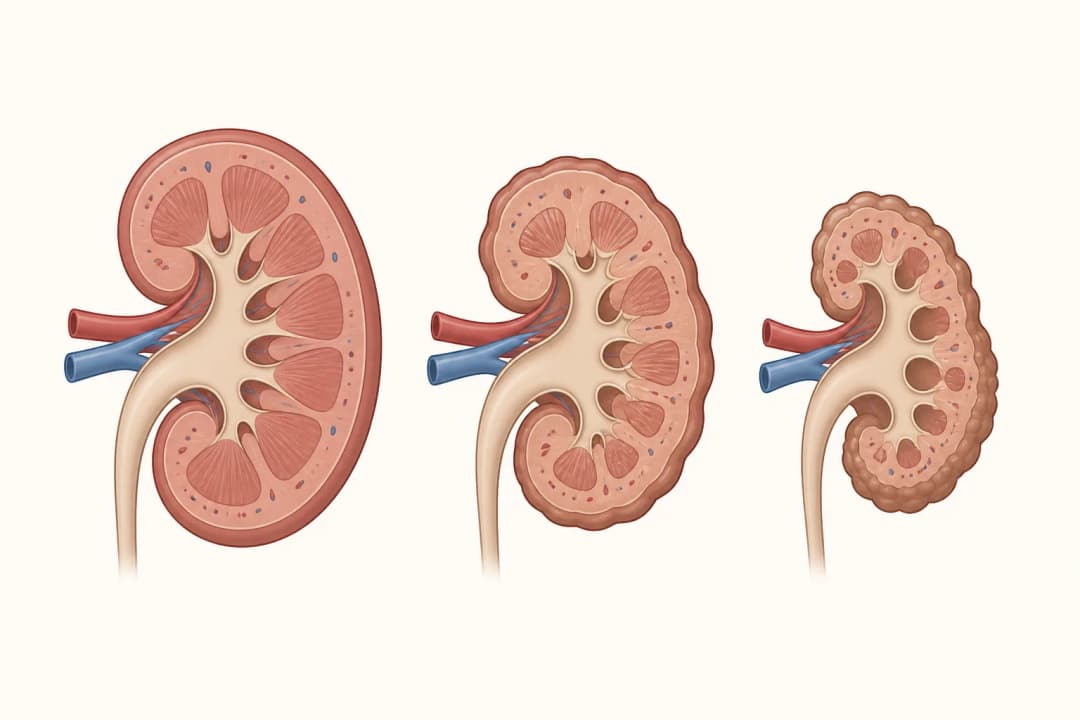
Acute kidney injury is a sudden fall in kidney function, whereas chronic kidney disease is persistent damage or reduced function that develops over time.
This answers one question. It is not a diagnosis and does not replace an assessment by a licensed doctor.
At a glance
- Acute problem
- A rapid change that may be reversible when its cause is treated
- Chronic problem
- A persistent condition requiring ongoing monitoring and risk-factor control
- Core checks
- Blood creatinine, electrolytes, urine protein and blood pressure
The short answer
Either problem can disturb fluid, salts and waste removal. Blood and urine tests are needed because symptoms alone cannot show how well the kidneys are filtering.
What separates acute injury from chronic disease
Acute kidney injury may follow dehydration, severe infection, urinary blockage, reduced blood flow or a medicine effect. It can develop over hours or days and may improve when the cause is treated promptly.
Chronic kidney disease develops over months or longer. Diabetes and high blood pressure are frequent contributors. Early disease can cause no noticeable symptoms; later presentations can include fatigue, itching, nausea, swelling, breathlessness or changes in urination. Anaemia and mineral imbalance may occur as kidney function declines.
Protecting kidney function
Arrange clinical assessment for suspected kidney problems rather than changing fluid intake on your own. A clinician may check creatinine, electrolytes, urine protein, blood pressure, medicines and possible urinary obstruction. Previous results help distinguish a sudden change from a longstanding pattern.
Keep diabetes and blood pressure care on schedule, follow individual dietary advice and avoid unreviewed herbal products. Before taking non-prescription painkillers, ask a pharmacist or clinician whether they are suitable for your kidney function. During vomiting, diarrhoea or fever, request advice about hydration and whether any regular medicines need temporary adjustment.
When kidney symptoms need urgent assessment
Seek urgent care for very little or no urine, new confusion, severe drowsiness, persistent vomiting, rapidly increasing swelling, or breathlessness. Severe weakness, fainting or an irregular heartbeat can signal a dangerous salt or fluid disturbance.
Prompt review is also warranted after substantial fluid loss, a serious infection, difficulty passing urine, or starting a medicine followed by reduced urine or swelling. Emergency care is appropriate when breathing is difficult or consciousness changes.
Questions to guide your kidney review
Ask whether the change appears acute or chronic, what the likely cause is, which medicines require review, how often blood and urine tests are needed, and what fluid or dietary guidance applies to you.
Find care
General Clinics & Polyclinics in Abu Dhabi
That answer is general. If you want it applied to your own case, these are licensed general clinics & polyclinics listed in Abu Dhabi.
27 Ar Ruwwad St - Shakhbout City - MSH4 - Abu Dhabi - United Arab Emirates
Accepts: Daman, Thiqa, Cigna, MetLife +20 more
Al Ruwais, Al Dhafrah
Accepts: Daman, Thiqa, AXA, Cigna +16 more
Al Bahyah - Al Bahyah Old - Abu Dhabi - United Arab Emirates
Accepts: Daman, Thiqa, Cigna, Allianz Care +18 more
Abu Dhabi
Accepts: Daman, Thiqa, AXA, Cigna +27 more
Ordered by verification status and how complete each clinic's public record is, then alphabetically. This is a directory listing, not a ranking — Zavis does not rate or recommend providers.
A factual listing drawn from the DHA, DOH and MOHAP licence registers. It is not a referral, an endorsement, or advice that any of these providers is right for you.
Questions people ask
Can kidney disease exist without pain?
Yes. Reduced kidney function often causes no kidney pain, especially early on, so blood and urine testing are central to detection.
Does drinking more water fix acute kidney injury?
Not necessarily. Dehydration is only one possible cause, and extra fluid can be harmful when the body is already retaining fluid or the heart is struggling.
Why are medicines reviewed when kidney function falls?
Some medicines can affect kidney blood flow, build up when filtration declines or need a different dose, so a clinician should assess the full list.
Related
Related reading
Keep reading
Medical disclaimer. This page is general health information, not medical advice, and it cannot diagnose you. Always consult a licensed healthcare provider about your own symptoms and treatment. In an emergency in the UAE, call 998 for an ambulance.