
Acquired pneumonia: symptoms, care, and warning signs
Short answer
Acquired pneumonia is a lung infection caught in the community or around healthcare, and timely assessment matters because breathing can worsen quickly.
This answers one question. It is not a diagnosis and does not replace an assessment by a licensed doctor.
At a glance
- Location
- Pneumonia affects the air sacs and surrounding tissue in one or both lungs.
- Causes
- Bacteria and viruses are common causes; symptoms alone may not distinguish them.
- Treatment
- The cause, severity, and personal health risks shape the treatment plan.
The short answer
Bacteria and viruses are frequent causes, but symptoms do not reliably show which germ is responsible. Treatment depends on clinical findings, illness severity, health history, and where the infection developed; antibiotics treat bacterial pneumonia but do not treat viral pneumonia.
What happens in the lungs
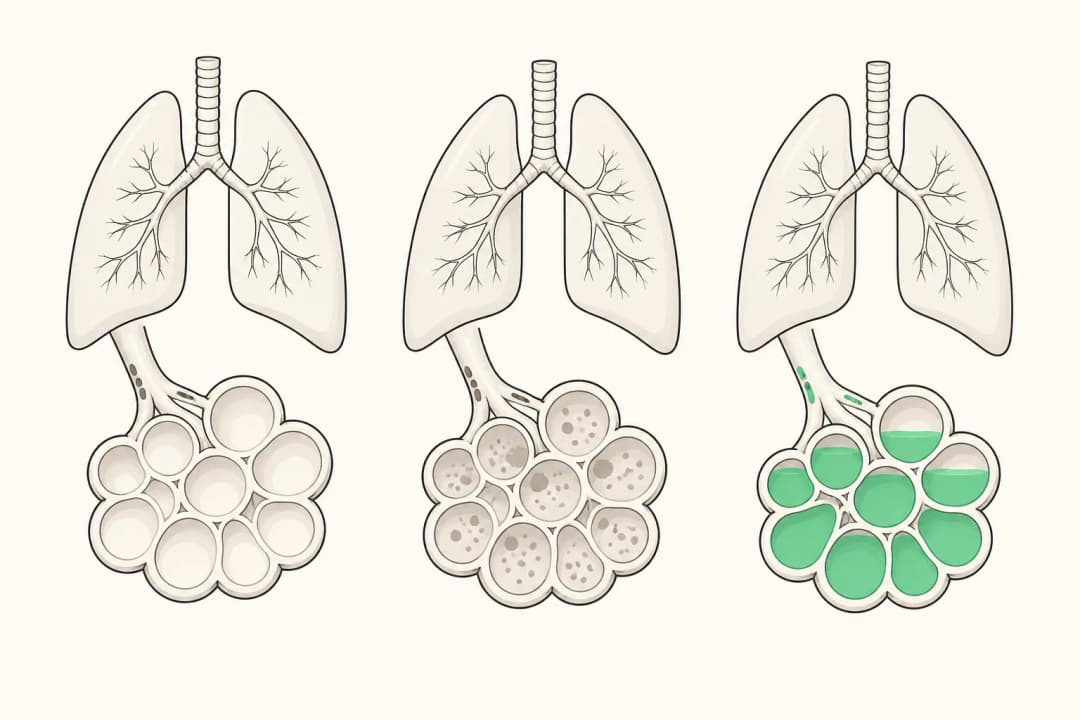
The infection inflames the tiny air sacs and may fill them with fluid or inflammatory material, making oxygen transfer less efficient. Pneumonia commonly presents with cough, fever or chills, breathlessness, fatigue, and pain that worsens with a deep breath or cough. Older adults may instead show new confusion or a sudden decline in function.
A clinician may examine breathing, measure oxygen level and temperature, and consider chest imaging or laboratory tests. Identifying the exact organism is not always possible, so the overall clinical picture guides early management.
Care and recovery
Seek a medical review if pneumonia is suspected, especially with breathlessness, chest pain, pregnancy, older age, or long-term heart, lung, kidney, or immune conditions. Take prescribed medicine exactly as directed and do not use leftover antibiotics. Rest, drink enough fluid unless fluid restriction has been advised, and avoid smoking or vaping.
Recovery can be gradual. Follow the clinician's plan for review and return sooner if symptoms stop improving or worsen after initial improvement. Limit close contact while feverish or acutely unwell, cover coughs, clean hands, and follow current advice for any identified respiratory virus.
Breathing and infection red flags
Call emergency services for severe trouble breathing, blue or grey lips or skin, persistent chest pressure, collapse, a seizure, new confusion, inability to wake normally, or rapidly worsening illness. Do not drive yourself if breathing is severely impaired or consciousness is affected.
Get urgent same-day care for increasing breathlessness, inability to keep fluids down, very little urine, coughing blood, or fever and cough that improve then return or worsen. These signs may indicate dehydration, spreading infection, or a complication requiring reassessment.
What to clarify with your clinician
Ask what findings support pneumonia, whether imaging or infection testing is needed, and what change should trigger urgent review. Confirm how to take each medicine, whether it interacts with your regular treatment, when normal activity can resume, and whether vaccination is appropriate after recovery.
Find care
General Clinics & Polyclinics in Abu Dhabi
That answer is general. If you want it applied to your own case, these are licensed general clinics & polyclinics listed in Abu Dhabi.
27 Ar Ruwwad St - Shakhbout City - MSH4 - Abu Dhabi - United Arab Emirates
Accepts: Daman, Thiqa, Cigna, MetLife +20 more
Al Ruwais, Al Dhafrah
Accepts: Daman, Thiqa, AXA, Cigna +16 more
Al Bahyah - Al Bahyah Old - Abu Dhabi - United Arab Emirates
Accepts: Daman, Thiqa, Cigna, Allianz Care +18 more
Abu Dhabi
Accepts: Daman, Thiqa, AXA, Cigna +27 more
Ordered by verification status and how complete each clinic's public record is, then alphabetically. This is a directory listing, not a ranking — Zavis does not rate or recommend providers.
A factual listing drawn from the DHA, DOH and MOHAP licence registers. It is not a referral, an endorsement, or advice that any of these providers is right for you.
Questions people ask
Does pneumonia always require antibiotics?
No. Antibiotics are used for bacterial infection, not viral infection. A clinician decides based on the examination, severity, and available test results.
Can pneumonia cause a cough with phlegm?
Yes. Pneumonia can present with a dry cough or phlegm-producing cough, alongside fever, chills, breathlessness, fatigue, or pain on breathing.
Why might follow-up be needed after treatment?
Follow-up can confirm that symptoms and oxygenation are improving, review medicine effects, and decide whether persistent or recurring symptoms need further investigation.
Medical disclaimer. This page is general health information, not medical advice, and it cannot diagnose you. Always consult a licensed healthcare provider about your own symptoms and treatment. In an emergency in the UAE, call 998 for an ambulance.