
Portable magnetic resonance imaging scanners for the brain
Short answer
A portable brain MRI scanner can produce images near the bedside, but image detail and clinical uses vary by device.
This answers one question. It is not a diagnosis and does not replace an assessment by a licensed doctor.
At a glance
- Radiation
- MRI does not use ionising radiation.
- Main advantage
- The scanner can be brought closer to a patient who may be difficult to move.
- Key limitation
- Some clinical questions require the detail or capabilities of a conventional scanner.
- Safety check
- Implants, devices, and possible metal fragments must be reported before scanning.
The short answer
It uses a magnetic field and radiofrequency signals rather than ionising radiation. A portable system may help when moving someone to a conventional scanner is difficult, although it does not replace every standard MRI examination.
What portable MRI means
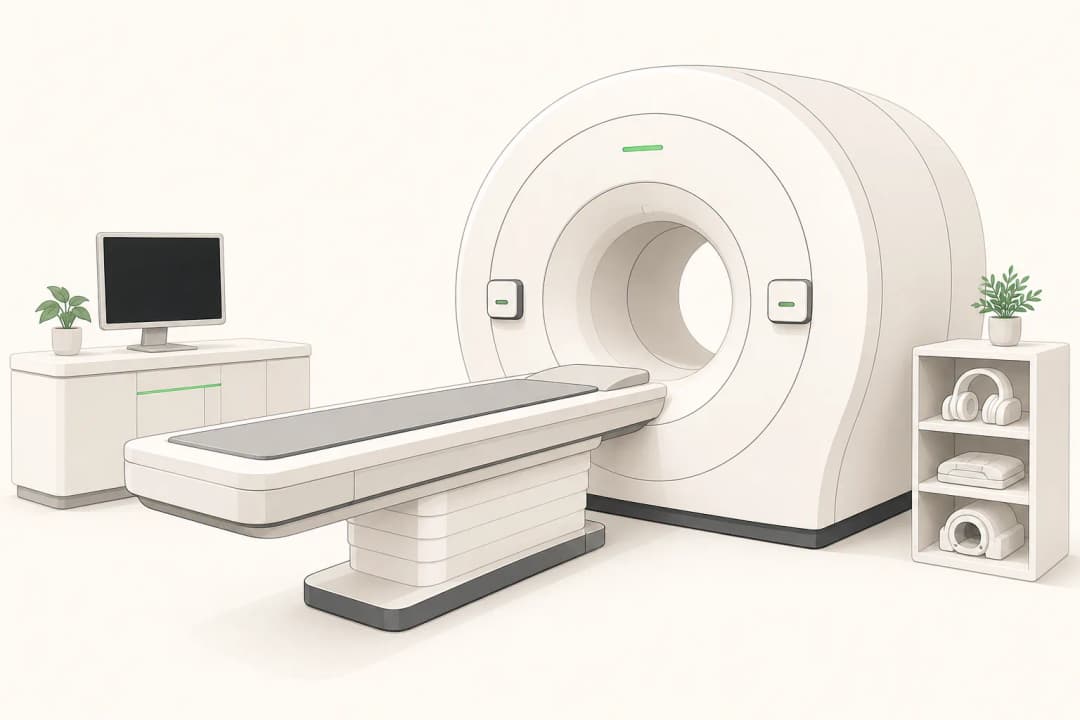
Portable refers to equipment that can be brought closer to the patient, including an intensive care area or ward. The scanner is generally smaller and may operate with a lower magnetic field than a fixed hospital MRI system. The patient’s head is positioned within the scanning unit while images are collected.
Clinicians may use these images to look for findings such as swelling, bleeding, fluid build-up, or a sizeable structural change. Whether the scan can answer a particular question depends on the device, the imaging sequence, movement during scanning, and the level of detail needed. A conventional MRI, CT scan, contrast-enhanced study, or another test may still be necessary.
How to prepare
Tell the imaging team about a pacemaker, implanted pump, aneurysm clip, hearing implant, metal fragment, surgical hardware, or any device attached to your body. Staff need the exact device information when possible because MRI compatibility differs between products. Remove metal objects when instructed, including jewellery, keys, removable hearing aids, and clothing with metal fasteners.
Let the team know if lying still is difficult, you feel anxious in enclosed spaces, or you cannot comfortably position your head. During the scan, follow instructions about movement and use hearing protection if it is offered. Ask what question the portable scan is intended to answer and whether further imaging may be needed if the result is unclear.
When symptoms need urgent care
A scan should not delay urgent assessment. Call local emergency services for a new seizure, sudden weakness or numbness on one side, sudden trouble speaking, loss of consciousness, or a sudden severe headache. These symptoms need prompt clinical evaluation, and the care team will choose the imaging method that can answer the urgent question safely and quickly.
Seek timely medical advice for worsening headaches, repeated vomiting, new balance problems, progressive confusion, or a new change in vision. These symptoms have several possible causes; their pattern and severity guide the next step rather than the availability of a portable scanner.
Questions for your care team
You may want to ask: What clinical question are you trying to answer? Is this portable scanner suitable for that question? Will contrast be used? Could an implant or metal item affect my safety? Who will interpret the images? What happens if the images do not provide enough detail?
Questions people ask
Does portable brain MRI use radiation?
No ionising radiation is used. The scanner forms images using a magnetic field, radiofrequency signals, and computer processing.
Is portable MRI the same as a conventional MRI scan?
Both use magnetic resonance, but their field strength, design, image detail, and available scanning sequences may differ. The care team selects the system according to the clinical question and the patient’s condition.
Can a portable MRI diagnose a brain tumour?
It may show an abnormal area, but the finding may need more detailed imaging and clinical assessment. Diagnosis can also require contrast imaging, comparison with earlier scans, or a tissue sample.
Related
Related reading
Keep reading
Cancer care in the UAE
Hospitals & Medical Centers in Abu Dhabi
Most UAE cancer care is delivered inside hospital services rather than by standalone oncology clinics, so these are licensed hospitals & medical centers listed in Abu Dhabi. Confirm the specific cancer service exists before you travel, and know that asking for a second opinion is routine.
Ahalia Hospital Musaffah Building - Musaffah - Musaffah Industrial - Abu Dhabi - United Arab Emirates
Accepts: Daman, Thiqa, AXA, Cigna +26 more
Al Ruwais Industrial City - Abu Dhabi - United Arab Emirates
Accepts: Daman, Thiqa, AXA, Cigna +30 more
Abu Dhabi, Abu Dhabi
Accepts: Daman, Thiqa, AXA, Cigna +30 more
Second opinions are routine in cancer care and asking for one does not affect your treatment. How to arrange a second opinion in the UAE.
Ordered by verification status and how complete each clinic's public record is, then alphabetically. This is a directory listing, not a ranking — Zavis does not rate or recommend providers.
A factual listing drawn from the DHA, DOH and MOHAP licence registers. It is not a referral, an endorsement, or advice that any of these providers is right for you.
Medical disclaimer. This page is general health information, not medical advice, and it cannot diagnose you. Always consult a licensed healthcare provider about your own symptoms and treatment. In an emergency in the UAE, call 998 for an ambulance.