
PET-CT Scanner and Cancer Imaging
At a glance
- Imaging types
- PET activity imaging plus CT anatomy
- Before scanning
- Tracer administration and a resting uptake period
- Stillness
- Keeping still helps produce clear images
What a PET-CT scanner is
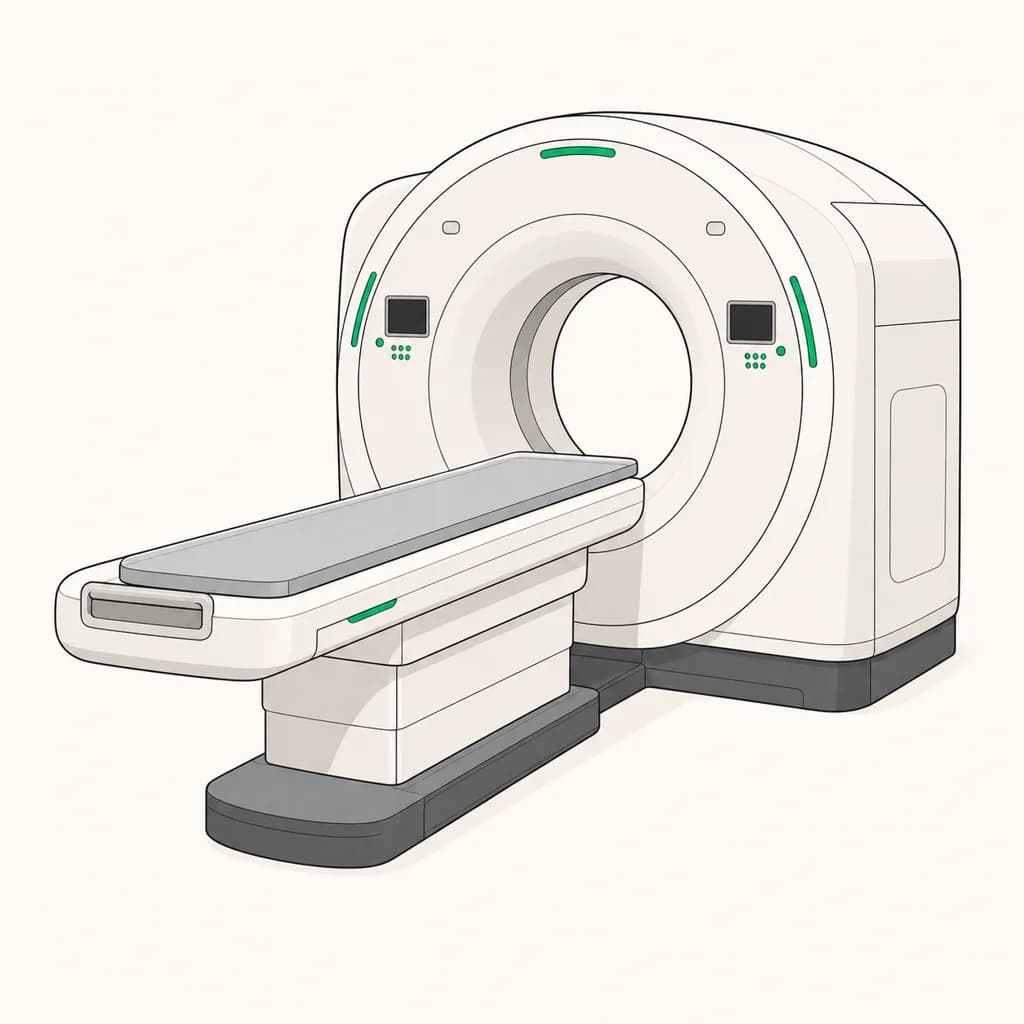
A PET-CT scanner combines a tracer-based picture of body activity with CT images that show anatomy and location.
How it is used
A healthcare professional gives the tracer, usually through a vein, and allows time for it to distribute. You then lie still on a narrow couch that moves through the scanner. The scan itself is quiet and does not involve the machine touching your body. Preparation may include fasting or changing usual medicines, so follow the instructions from the imaging team.
Limits and interpretation
Tracer activity is not specific to cancer. Infection, inflammation, healing, some medicines, and normal activity in certain organs can also change the image. Very small areas or tumours with low tracer uptake may be less visible. CT findings also have limits. A PET-CT result is interpreted with your symptoms, examination, prior scans, and other tests; it does not by itself establish every diagnosis.
Other imaging options
Depending on the clinical question, your team may use CT, MRI, ultrasound, or a bone scan instead of or alongside PET-CT. MRI is useful for detailed soft-tissue views in selected body regions, while ultrasound can assess some organs without ionising radiation. The choice depends on the area being assessed, the question being asked, and your health details.
What this means for you
Plan to rest quietly after the tracer is given and keep your body still during imaging. Drink fluids if the team advises this, and ask when you may resume normal activities. Tell staff about pregnancy, breastfeeding, diabetes, allergies, kidney problems, or difficulty lying flat before the appointment. The report is reviewed with the rest of your clinical information.
Safety
PET-CT involves a small radioactive tracer exposure and X-rays. The tracer leaves the body over time, mainly through urine. Follow any specific instructions about contact with infants or pregnant people. Tell the team about possible pregnancy and medicines affecting blood sugar, because preparation can need adjustment.
Questions people ask
Will a PET-CT scan show cancer with certainty?
No. Tracer uptake can have several causes, so the findings need interpretation alongside your history and other tests.
What should I tell the imaging team beforehand?
Tell them about possible pregnancy, breastfeeding, diabetes, medicines, allergies, kidney problems, or difficulty lying flat.
Related
Related reading
Keep reading
Cancer care in the UAE
Hospitals & Medical Centers in Abu Dhabi
Most UAE cancer care is delivered inside hospital services rather than by standalone oncology clinics, so these are licensed hospitals & medical centers listed in Abu Dhabi. Confirm the specific cancer service exists before you travel, and know that asking for a second opinion is routine.
Ahalia Hospital Musaffah Building - Musaffah - Musaffah Industrial - Abu Dhabi - United Arab Emirates
Accepts: Daman, Thiqa, AXA, Cigna +26 more
Al Ruwais Industrial City - Abu Dhabi - United Arab Emirates
Accepts: Daman, Thiqa, AXA, Cigna +30 more
Abu Dhabi, Abu Dhabi
Accepts: Daman, Thiqa, AXA, Cigna +30 more
Second opinions are routine in cancer care and asking for one does not affect your treatment. How to arrange a second opinion in the UAE.
Ordered by verification status and how complete each clinic's public record is, then alphabetically. This is a directory listing, not a ranking — Zavis does not rate or recommend providers.
A factual listing drawn from the DHA, DOH and MOHAP licence registers. It is not a referral, an endorsement, or advice that any of these providers is right for you.
Medical disclaimer. This page is general health information, not medical advice, and it cannot diagnose you. Always consult a licensed healthcare provider about your own symptoms and treatment. In an emergency in the UAE, call 998 for an ambulance.