
Silicone Gel Sheets for Scar Care
At a glance
- Form
- Flexible silicone dressing
- Use
- Healed scar care
- Do not use on
- Open or infected skin
What it is
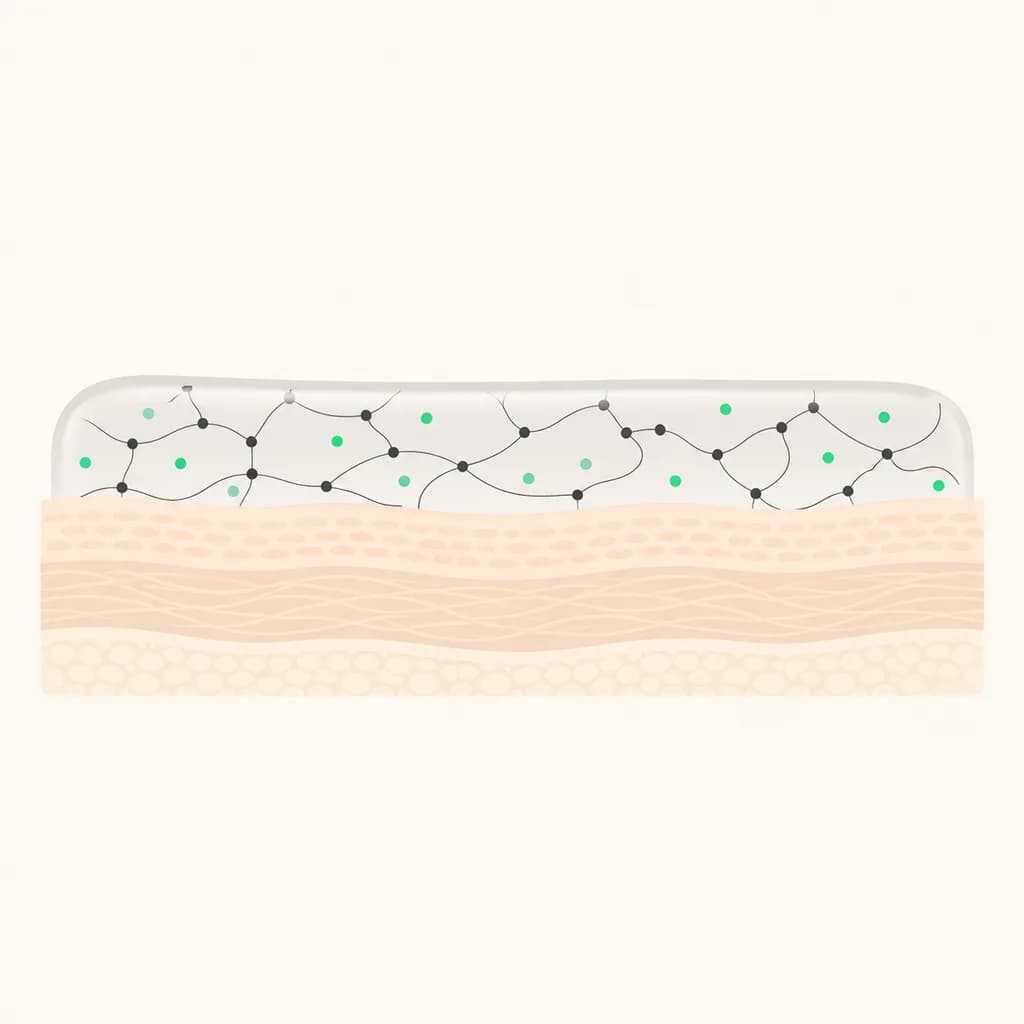
Silicone gel sheets are flexible dressings placed on fully healed scars to support scar care.
A sheet sits directly over the scar and forms a protective silicone layer. It is designed for scar tissue, not for treating an open cut, a draining wound, or an active skin infection.
How the sheet behaves on skin
The material is soft, flexible and usually lightly adhesive. By limiting water loss from the surface, it helps keep scar tissue hydrated and may make a scar feel softer and less tight over time.
Some people notice less itch or discomfort while using silicone. A sheet can be cut to follow the outline of a scar, but it should lie smoothly without stretching the skin across a joint.
Where it may be used
Clinicians may include silicone sheeting in a scar-care plan after surgery, injury or a burn once the skin surface has closed and healed. It is often considered for scars that are raised, firm, red, itchy, sensitive or restrictive.
Placement needs to suit the area. A moving, hairy or sharply curved site may need a different silicone format or an additional method of holding the sheet in place.
Other scar-care options
Silicone gel in a tube can be useful where a sheet is difficult to keep in place. Depending on the scar, a clinician may also recommend massage, pressure therapy, sun protection, injections or another procedure. The appropriate option depends on the scar’s age, location, symptoms and effect on movement.
What using one involves
Start only with guidance on how long to wear the sheet. A gradual build-up can help reveal irritation early. Wash both the scar area and the sheet as directed, dry them thoroughly, and store the sheet on its backing when it is not being worn.
Scar care is usually a routine followed over time, rather than a one-off application. Take a photo in consistent lighting if your clinician asks you to monitor changes in colour, height, texture or comfort.
Care and safety
Replace a sheet when it no longer adheres, is damaged, or cannot be cleaned properly. Stop using it if the surrounding skin becomes persistently red, itchy, painful or soggy. Seek prompt medical assessment for spreading redness, warmth, pus, fever or a wound that opens, as these need evaluation beyond scar care.
Find care
General Clinics & Polyclinics in Abu Dhabi
Licensed general clinics & polyclinics listed in Abu Dhabi, for the reader who wants this looked at in person.
27 Ar Ruwwad St - Shakhbout City - MSH4 - Abu Dhabi - United Arab Emirates
Accepts: Daman, Thiqa, Cigna, MetLife +20 more
Al Ruwais, Al Dhafrah
Accepts: Daman, Thiqa, AXA, Cigna +16 more
Al Bahyah - Al Bahyah Old - Abu Dhabi - United Arab Emirates
Accepts: Daman, Thiqa, Cigna, Allianz Care +18 more
Abu Dhabi
Accepts: Daman, Thiqa, AXA, Cigna +27 more
Ordered by verification status and how complete each clinic's public record is, then alphabetically. This is a directory listing, not a ranking — Zavis does not rate or recommend providers.
A factual listing drawn from the DHA, DOH and MOHAP licence registers. It is not a referral, an endorsement, or advice that any of these providers is right for you.
Questions people ask
Can a silicone gel sheet go on a new wound?
No. Use it only after the skin has fully healed and your clinician has confirmed that scar care can begin.
What if the sheet causes irritation?
Remove it, gently clean and dry the skin, and seek advice before trying again if irritation persists or is marked.
Related
Related reading
Keep reading
Medical disclaimer. This page is general health information, not medical advice, and it cannot diagnose you. Always consult a licensed healthcare provider about your own symptoms and treatment. In an emergency in the UAE, call 998 for an ambulance.