
GnRH Agonist: Uses, Effects and What Patients Can Expect
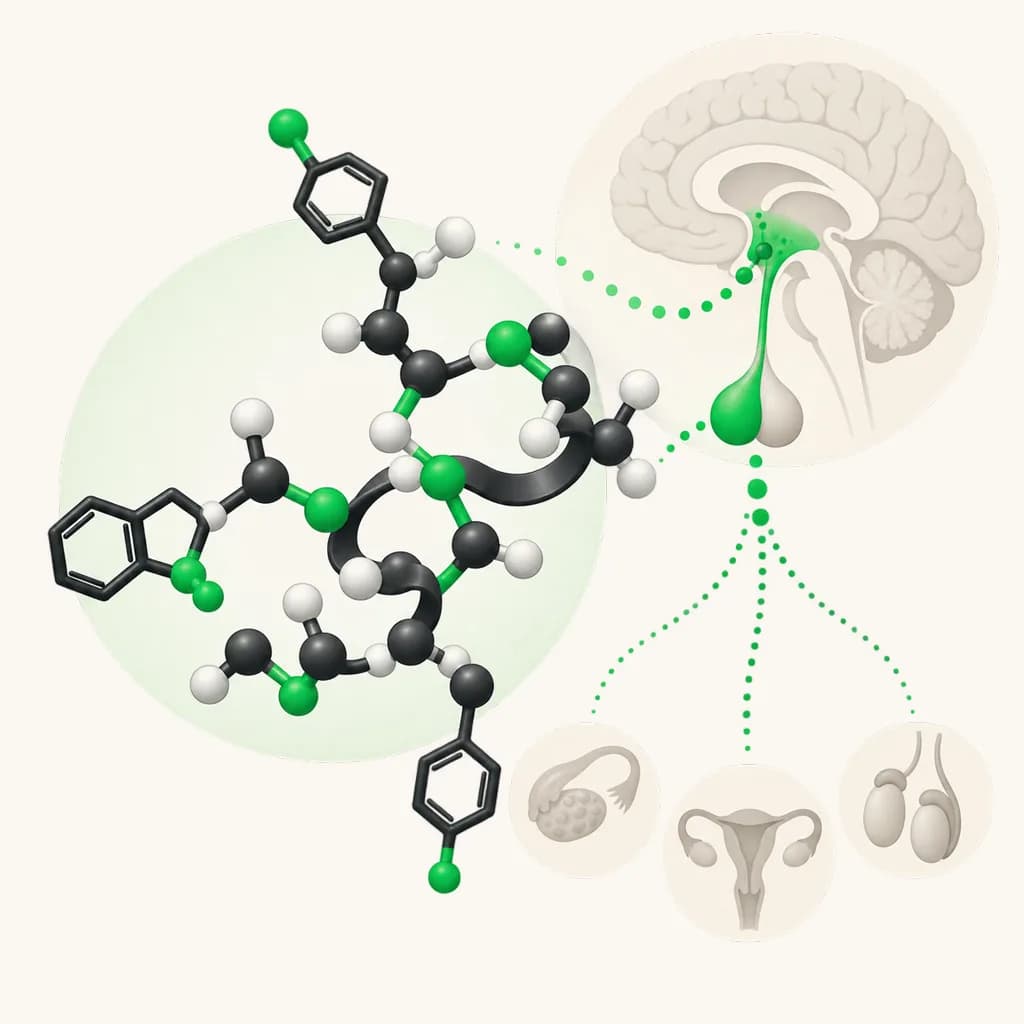
At a glance
- Medicine type
- Hormone-signalling medicine
- Main pathway
- Brain, pituitary gland and ovaries
- Common formats
- Injection or nasal preparation, depending on the product
- Effect
- Can coordinate ovarian activity or lower reproductive hormone production
What is a GnRH agonist?
A GnRH agonist is a medicine that changes pituitary hormone signalling to control ovarian activity or temporarily lower reproductive hormone production.
GnRH stands for gonadotropin-releasing hormone, a natural messenger released by the brain. A GnRH agonist first stimulates the pituitary gland, which can briefly increase signals to the ovaries. With continued exposure, the pituitary becomes less responsive and releases less follicle-stimulating hormone and luteinising hormone. The resulting reduction in ovarian stimulation is sometimes called pituitary suppression.
The medicine may be given as an injection or through a nasal preparation, depending on the product and treatment plan. The exact drug, dose, timing and length of treatment are selected for the purpose it needs to serve.
Properties and effects
GnRH agonists act through the hormone-control pathway between the brain, pituitary gland and ovaries. Their effect is reversible after the medicine is stopped, although the timing of hormone recovery varies between people and depends on the product and treatment plan.
As ovarian hormone levels change, some people notice hot flushes, night sweats, headache, mood changes, vaginal dryness or reduced sexual desire. Injection-site soreness or nasal irritation can occur with the relevant form. A short early hormone surge may temporarily affect symptoms before suppression develops.
Because these medicines alter hormone production, tell the prescribing team about pregnancy, breastfeeding, unexplained vaginal bleeding, osteoporosis risk, migraine symptoms or medicines you already take.
Where GnRH agonists are used
In fertility care, a GnRH agonist can help coordinate or suppress the body's own ovulation signals so that ovarian stimulation follows a planned schedule. The fertility team monitors response with appointments, hormone tests and ultrasound when appropriate. Read more about this approach in Ovarian Stimulation.
In medical gynaecology, the medicine may reduce ovarian hormone stimulation when treating conditions such as endometriosis or fibroids, or when a clinician needs temporary control of the menstrual cycle. It does not remove the underlying condition, so the wider treatment plan matters. More detail is available in GnRH Analogue Therapy.
The same medicine can therefore have different goals: coordinating follicle development in fertility treatment, or lowering hormone-driven activity in gynaecological care.
Other ways a clinician may manage the same goal
The alternative depends on why hormone control is needed. A clinician may consider a different GnRH analogue, another medicine that acts on reproductive hormones, a non-hormonal option, a procedure, or observation. Fertility protocols may also use a different method to control ovulation timing.
Choice is shaped by the diagnosis, fertility plans, symptoms, bleeding pattern, bone health, other medicines and how closely monitoring is available. Do not swap, stop or delay a hormone medicine without checking the plan, because timing can affect both symptoms and fertility treatment.
What treatment may mean for you
You may be asked to follow a precise schedule for injections or nasal doses and to attend monitoring visits. Keep a record of doses, bleeding, pain, headaches and hot flushes; this helps the team decide whether the plan needs adjustment.
A change in bleeding or a temporary pause in periods can occur when ovarian hormone production is lowered. This effect is not the same as permanent loss of fertility. If pregnancy is possible, ask when contraception is needed and how the medicine fits with your fertility goals.
Contact your treatment team promptly for severe or persistent headache, visual changes, marked mood deterioration, heavy bleeding, severe pelvic pain, or symptoms of an allergic reaction. Seek urgent care for trouble breathing or swelling of the face or throat.
Duration, follow-up and safety
The length of treatment varies by indication and product. When suppression continues, the clinician may review symptoms, side effects and factors such as bone health. Some treatment plans include add-back hormone therapy to reduce the effects of low oestrogen; this is only suitable for some people.
Tell the team if you develop new depression, severe headaches, unusual bleeding or symptoms suggesting pregnancy. Keep follow-up appointments even if symptoms improve, because monitoring helps balance the intended hormone effect with side effects.
Find care
Fertility & IVF in Dubai
Licensed fertility & ivf listed in Dubai, for the reader who wants this looked at in person.
Allahbadia Fertility Clinic - Best Fertility Doctor in Dubai | IVF Doctor in Dubai | ICSI | IUI | Family Balancing
Accepts: Daman, Thiqa, AXA, Cigna +22 more
Dubai Healthcare City, Dubai
Accepts: Daman, Cigna, Allianz Care, Aetna International +17 more
Al Razi Building 64, Block C - Unit 1017 1st Floor - أم هرير الثانية - Dubai Healthcare City - دبي - United Arab Emirates
Accepts: Daman, AXA, Cigna, MetLife +20 more
Jumeira St - Umm Suqeim Third - Umm Suqeim 3 - Dubai - United Arab Emirates
Accepts: Daman, Thiqa, AXA, Cigna +17 more
Ordered by verification status and how complete each clinic's public record is, then alphabetically. This is a directory listing, not a ranking — Zavis does not rate or recommend providers.
A factual listing drawn from the DHA, DOH and MOHAP licence registers. It is not a referral, an endorsement, or advice that any of these providers is right for you.
Questions people ask
Does a GnRH agonist cause permanent infertility?
No. Its hormone-suppressing effect is intended to be temporary, but recovery timing varies, so discuss fertility plans with the prescribing team.
Will I have a period during treatment?
Bleeding patterns can change and periods may pause when ovarian hormone production is reduced. Report heavy or unexpected bleeding to your clinician.
Why are monitoring visits needed?
Monitoring helps the team assess hormone response, ovarian activity, symptoms and side effects, then adjust timing or treatment when needed.
Related
Related reading
Keep reading
Medical disclaimer. This page is general health information, not medical advice, and it cannot diagnose you. Always consult a licensed healthcare provider about your own symptoms and treatment. In an emergency in the UAE, call 998 for an ambulance.