
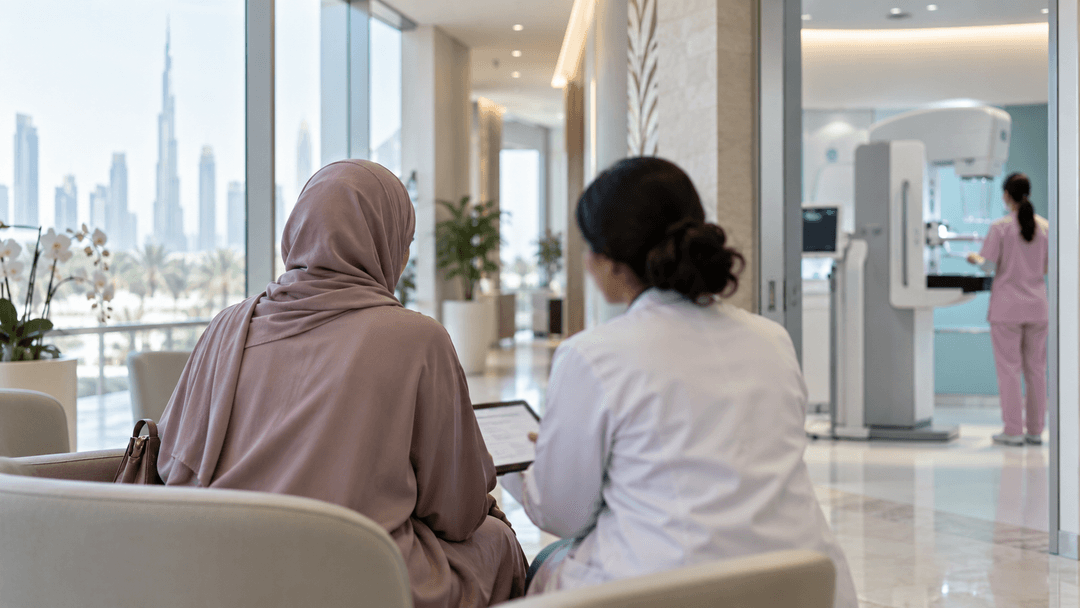
DHA cover, AED 300 mammograms: what Dubai breast cancer patients should check first
A practical Dubai-first guide to screening, insurance checks and oncology referral steps after a breast cancer concern.
How Zavis verifies this coverage
Editorial standards, source rules, methodology, and review provenance are public.
For a woman in Dubai, the first practical step after a breast change is to book a licensed breast assessment route, then confirm whether the visit is screening, diagnostic work-up, or cancer treatment under her insurance.
The patient stories reported by Gulf News on 11 October 2026 carry one operational message for patients: act before pain appears. In the article, Maelisa Hall described itchiness and a lump before a Stage 3 triple-negative breast cancer diagnosis, then said the treatment included 16 rounds of chemotherapy, immunotherapy every three weeks, three blood transfusions, a lumpectomy and 20 rounds of radiation.
What Dubai patients should do first
The Dubai Health Authority (DHA) guideline effective 11 May 2024 says women aged 40 years and over should attend breast screening by mammogram every two years. Women with family history or a known inherited genetic mutation may need earlier screening on a clinician’s advice, according to the Dubai Periodic Health Screening Guideline.
Patients should separate two situations. A well woman asking for routine screening can book a mammogram through a DHA-licensed facility. A woman with a lump, nipple inversion, discharge, skin change, persistent itchiness or new breast asymmetry needs a diagnostic appointment, because the visit may require ultrasound, biopsy, pathology and oncology referral.
- Routine screening: ask whether the package includes a doctor consultation, mammogram report and follow-up visit.
- Symptoms: ask for a diagnostic breast pathway rather than a low-cost awareness campaign slot.
- Insurance: ask the facility to obtain pre-approval before biopsy, MRI, chemotherapy or radiation.
- Records: keep the BI-RADS report, pathology report and image files before changing hospitals.
Published self-pay prices vary. Emirates Hospitals advertises a mammogram breast cancer screening package at AED 300, Mediclinic lists mammogram plus breast ultrasound at AED 725, and Cleveland Clinic Abu Dhabi lists a breast cancer screening package from AED 1,700 and a fast breast MRI package from AED 2,000. These package prices cover screening components and exclude full cancer treatment estimates.
Insurance questions that change the bill
Dubai patients should ask whether they are eligible for the Basmah Patient Support Program. A DHA-linked circular says Basmah covers breast, cervical and colorectal cancers for eligible insured members holding a Dubai residence visa valid for at least one year. The same circular says the Essential Benefits Plan was updated so eligible Dubai residents can receive cancer screening and treatment irrespective of the annual coverage limit.
That language matters for patients with employer insurance. Before starting treatment, ask the insurer or third-party administrator for the written approval route, the network cancer centre, co-insurance, pharmacy coverage, day-care chemotherapy rules and whether any pre-existing-condition declaration issue has been raised. If the answer is verbal, request an email or portal note.
For Abu Dhabi and Al Ain, the relevant regulator is the Department of Health Abu Dhabi (DOH). DOH’s breast cancer screening standard says routine outpatient mammogram reports should be ready within five working days, positive results should be reported immediately, and confirmed cancer cases should be referred for treatment within 10 working days. The same standard says Thiqa reimbursement follows the DOH preventive list, while non-Thiqa payment depends on the individual insurance plan.
What to check outside Dubai
In Sharjah, Ajman, Ras Al Khaimah, Fujairah and Umm Al Quwain, the relevant federal regulator is the Ministry of Health and Prevention (MOHAP). MOHAP’s national breast cancer screening and diagnosis guideline is the reference document to ask about when comparing providers in the northern emirates.
Patients should treat social media awareness posts as an entry point before selecting a complete pathway. A screening offer may help a low-risk woman aged 40+. A suspicious finding needs a licensed diagnostic breast assessment route, biopsy capacity, pathology turnaround, medical oncology, breast surgery and radiation access. The provider should be able to explain which services are onsite and which require referral.
The practical close is simple. Book early, define whether the visit is screening or diagnostic, obtain insurance approval in writing and keep the clinical file portable. To compare licensed oncology options, start with the UAE Open Healthcare Directory, which is anchored to DHA Sheryan, DOH and MOHAP licensing data, then verify the provider’s oncology service and insurance network before attending.
Zavis Intelligence
Healthcare Industry Desk
Contributing to UAE healthcare industry coverage
Related coverage

FAQ
What is happening in UAE healthcare industry?
A practical Dubai-first guide to screening, insurance checks and oncology referral steps after a breast cancer concern.