
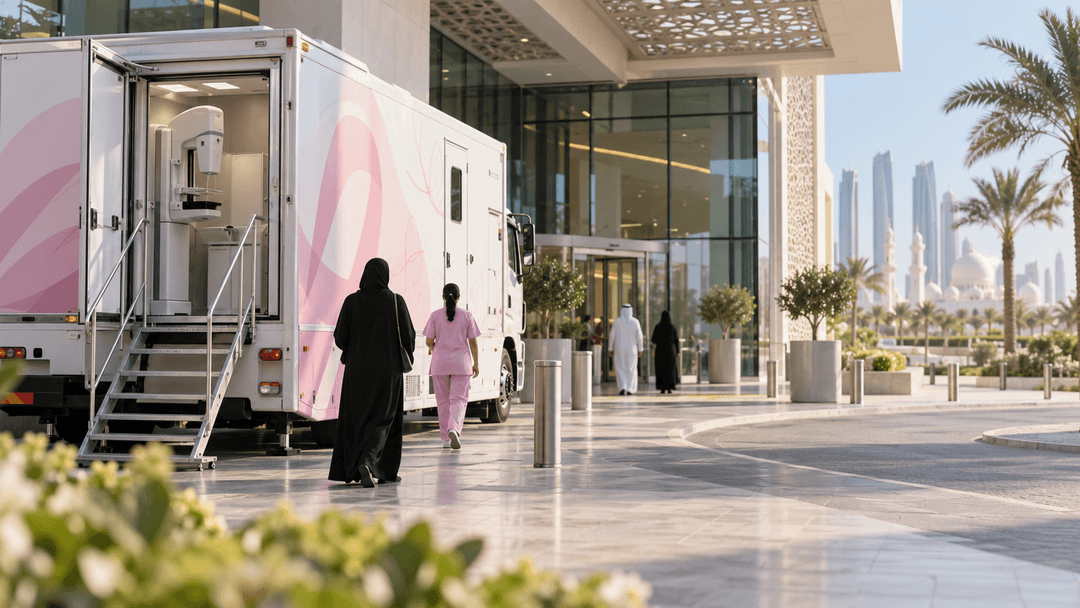
Burjeel sends mobile mammography truck to dozens of Abu Dhabi sites in October 2026
Burjeel Cancer Institute is taking mammography into Abu Dhabi workplaces and malls. Clinics, insurers and patients should watch access, pricing and referrals.
How Zavis verifies this coverage
Editorial standards, source rules, methodology, and review provenance are public.
Burjeel Cancer Institute will send a mobile mammography truck to dozens of workplaces, schools, malls and community sites across Abu Dhabi, Al Ain and Al Dhafra during October 2026, expanding breast screening access during Breast Cancer Awareness Month.
For UAE operators, the practical point is capacity outside the hospital. Dubai clinics regulated by the Dubai Health Authority (DHA), Abu Dhabi providers regulated by the Department of Health – Abu Dhabi (DOH), and northern emirates providers regulated by the Ministry of Health and Prevention (MOHAP) are all competing for preventive oncology volumes. A mobile unit changes the front door: the screening encounter can begin at an employer site, mall or school, then move into imaging review, biopsy, oncology referral or surgery.
Where the truck will go
Burjeel said the campaign is supported by DOH and the Abu Dhabi Public Health Centre (ADPHC). The route includes government and private-sector institutions, educational facilities, shopping malls, residential communities and several locations in Al Ain. Named stops include Daman, Emirates National Schools, EDGE, Silal, ADNOC in Al Ain, Etihad Airways sites in Abu Dhabi and Al Ain, Zayed Port, Khalifa Port, KEZAD, Umm Al Emarat Park and Deerfields Mall.
The campaign follows a recent DOH designation of Burjeel Cancer Institute as a Center of Excellence for breast cancer, according to a 30 September 2026 WAM report. The truck will provide mammogram screenings under a specialized medical and technical team, with privacy built into the unit.
“Early detection is one of the most important tools we have in the fight against breast cancer.” — Prof. Humaid Al Shamsi, Chief Executive Officer, Burjeel Cancer Institute
What clinics and insurers should price
The eligibility baseline is clear. ADPHC advises women aged 40 to 75 to have a mammogram every two years; DHA’s 2024 periodic screening guideline also cites breast screening every two years for females aged 40 and over, with earlier screening for higher-risk women on clinician advice. ADPHC says breast cancer was the most diagnosed cancer in Abu Dhabi in 2023 and the fourth leading cause of cancer deaths in the emirate.
Published self-pay pricing gives CFOs a benchmark before payer rules are checked. Mediclinic lists a mammogram at AED 375, breast ultrasound at AED 350, and a combined mammogram and ultrasound package at AED 725. Cleveland Clinic Abu Dhabi lists a breast cancer screening package from AED 1,700, including digital consultation, mammography and digital follow-up. Emirates Hospitals lists a Dubai mammogram package at AED 300. Coverage terms vary by policy, network and indication, so clinics should confirm benefits through the patient’s insurer portal before booking.
- COOs should prepare same-week pathways for abnormal screening results, including ultrasound, biopsy and breast surgeon slots.
- CFOs should separate complimentary campaign activity from billable diagnostic follow-up, since margin moves after recall.
- CMOs should target women aged 40 and over through employers, schools and community groups, where mobile uptake is easiest to convert.
- CIOs should check whether mobile images, reports and consent forms flow into the provider EHR without manual re-entry.
Why it matters beyond Abu Dhabi
Dubai has dense private imaging capacity, but access still depends on appointment friction, price visibility and payer pre-authorisation. Abu Dhabi’s mobile model shifts the screening conversation into corporate health and public health settings. In Sharjah, Ajman, Ras Al Khaimah, Fujairah and Umm Al Quwain, MOHAP-regulated operators can read the signal as a demand-generation model for preventive oncology, especially where women delay screening until symptoms appear.
Patients should check age, risk and insurance eligibility before attending any mobile or clinic-based screening. Average-risk women aged 40 and over should ask whether the appointment is a screening mammogram or diagnostic mammogram, whether ultrasound is included, and when the written report will be issued. Women with symptoms, a prior abnormal scan, dense breasts, BRCA mutations, or a strong family history need clinician-led triage rather than a basic campaign booking.
For licensed oncology, breast imaging and cancer care providers across Dubai, Abu Dhabi, Al Ain and the northern emirates, readers can use the UAE Open Healthcare Directory to check facilities against DHA, DOH and MOHAP licensing data.
Zavis Intelligence
Healthcare Industry Desk
Contributing to UAE healthcare industry coverage
Related coverage


FAQ
What is happening in UAE healthcare industry?
Burjeel Cancer Institute is taking mammography into Abu Dhabi workplaces and malls. Clinics, insurers and patients should watch access, pricing and referrals.