
Hives (Urticaria)
At a glance
- Also called
- Urticaria or nettle rash
- Typical skin change
- Raised, itchy welts
- Urgent warning
- Tongue or throat swelling with breathing symptoms
What are hives?
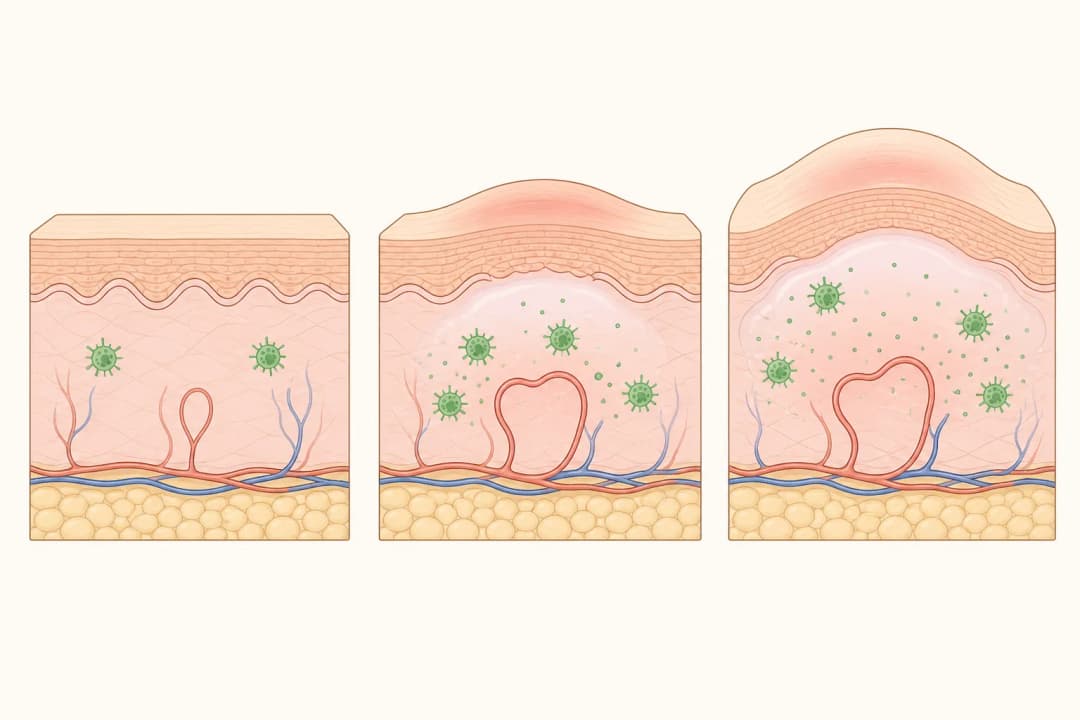
Hives, also called urticaria, are raised areas of skin that may look pink, red, or similar to your usual skin tone. They can appear on one body area or several, and individual welts may join into larger patches. A hive often changes shape or fades while another appears elsewhere. Hives are different from a fixed rash because they are typically transient and itchy.
Symptoms of hives
Most people with hives notice itching and a visible skin rash. The welts may be small or broad, raised at the edges, and lighter in the centre. They can affect the face, trunk, arms, legs, or other skin. Swelling deeper in the skin may occur around the lips, eyelids, hands, or feet; this is called angioedema. Seek urgent help for swelling of the tongue or throat, trouble breathing, faintness, or difficulty swallowing.
What can trigger hives?
Hives develop when inflammatory chemicals are released in the skin. Triggers can include an infection, a medicine, a food, an insect sting, pressure, heat, cold, exercise, or emotional stress. In many episodes, no single trigger is found. A clinician can help distinguish hives from other causes of itchy skin or skin rash.
How hives can change over time
A hive may appear quickly, shift in shape, and fade before another welt forms. An episode may settle after the trigger is removed, while repeated or ongoing episodes need assessment. Hives lasting or recurring over a longer period are often described as chronic hives, including chronic spontaneous urticaria when no clear external trigger explains them.
Factors that can make hives more likely
A history of allergies, previous hives, infections, or sensitive skin can be relevant. Physical triggers such as rubbing, tight clothing, temperature changes, or exertion may bring on welts in some people. Keeping a record of foods, medicines, activities, illness, and timing can reveal patterns without assuming that every episode has the same cause.
How hives are diagnosed
Diagnosis usually begins with the appearance and movement of the welts and a detailed history. Your clinician may ask when each mark starts and fades, what medicines or foods preceded it, and whether swelling or breathing symptoms occurred. Examination may look for signs of another skin condition. Tests are selected when the history suggests a particular trigger or another medical explanation.
Treatment options for hives
Treatment aims to control itching, reduce new welts, and address an identifiable trigger. An oral antihistamine may calm the skin signals that drive itching and swelling. A clinician may consider an oral corticosteroid for selected short-term situations, weighing its possible effects and the reason for use. Do not stop a prescribed medicine or test a suspected trigger on your own.
Living with hives
Use gentle skin care and avoid scratching, overheating, or tight clothing if these worsen your welts. Photograph changing skin findings and note timing, exposures, and medicines for appointments. Choose loose, comfortable fabrics and ask a pharmacist or clinician before adding an over-the-counter product, especially if you take other medicines.
When hives need prompt attention
The main urgent concern is swelling that affects the tongue, throat, or breathing. Call emergency services if you have breathing difficulty, throat tightness, faintness, confusion, or rapidly worsening swelling. Swelling without breathing symptoms still deserves prompt medical advice, particularly when it is new, severe, or follows a medicine or sting.
Can hives be prevented?
Prevention depends on the pattern. If a clear trigger is identified, avoiding it may reduce recurrences. Avoid broad food restrictions or stopping medicines without professional guidance. A written action plan can help you recognise mouth or throat swelling, know which treatment has been recommended, and seek urgent help at the right time.
Finding the right specialist
A dermatologist can assess recurring or difficult-to-control hives and check whether another skin condition is present. An allergy specialist may be useful when a specific food, medicine, sting, or environmental exposure is suspected. Bring photographs, a symptom diary, and a complete medicine list so the consultation can focus on your pattern.
Prescribing reference
Medications used for urticaria
- CetirizineNon-drowsy antihistamine for allergies, hay fever, and hives · Over the counter
- DesloratadineActive metabolite of loratadine with longer duration of action · Over the counter
- FexofenadineNon-sedating antihistamine (Telfast) for allergies and chronic hives · Over the counter
- LoratadineNon-drowsy antihistamine (Claritin) for seasonal allergies · Over the counter
- Full prescribing referenceRx status, monitoring and specialties for urticaria.
Questions people ask
Are hives contagious?
No. Hives are a skin reaction and do not spread from person to person by ordinary contact.
Can hives affect the lips or eyelids?
Yes. Deeper swelling can affect the lips or eyelids; swelling of the tongue or throat, or any breathing difficulty, needs emergency care.
Why do my hives keep returning?
Recurrences may follow repeated triggers, physical stimulation, or an unclear cause. A clinician can assess the pattern and treatment options.
Related
Related reading
Keep reading
Find care
General Clinics & Polyclinics in Abu Dhabi
Where hives (urticaria) is assessed depends on what is causing it. These are licensed general clinics & polyclinics listed in Abu Dhabi.
27 Ar Ruwwad St - Shakhbout City - MSH4 - Abu Dhabi - United Arab Emirates
Accepts: Daman, Thiqa, Cigna, MetLife +20 more
Al Ruwais, Al Dhafrah
Accepts: Daman, Thiqa, AXA, Cigna +16 more
Al Bahyah - Al Bahyah Old - Abu Dhabi - United Arab Emirates
Accepts: Daman, Thiqa, Cigna, Allianz Care +18 more
Abu Dhabi
Accepts: Daman, Thiqa, AXA, Cigna +27 more
Ordered by verification status and how complete each clinic's public record is, then alphabetically. This is a directory listing, not a ranking — Zavis does not rate or recommend providers.
A factual listing drawn from the DHA, DOH and MOHAP licence registers. It is not a referral, an endorsement, or advice that any of these providers is right for you.
Medical disclaimer. This page is general health information, not medical advice, and it cannot diagnose you. Always consult a licensed healthcare provider about your own symptoms and treatment. In an emergency in the UAE, call 998 for an ambulance.