
Rotator Cuff Tendinitis
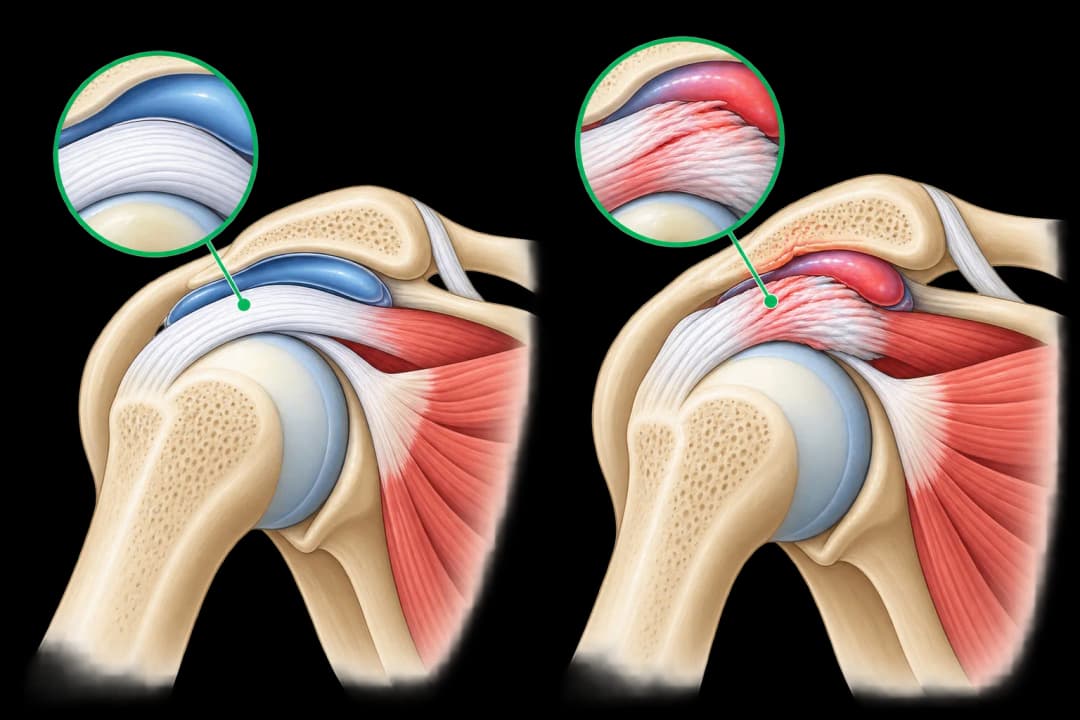
At a glance
- Main tissue
- Rotator cuff tendons
- Typical trigger
- Repeated or increased shoulder loading
- Core treatment
- Graded exercise and activity adjustment
What is rotator cuff tendinitis?
Rotator cuff tendinitis is irritation of the tendons that help lift and stabilise the shoulder.
It is often linked to repeated loading, reduced space for tendon movement or a sudden increase in activity. The condition can cause pain without a tendon tear, although symptoms may overlap with a rotator cuff tear or frozen shoulder.
Symptoms and presentation
Rotator cuff tendinitis very commonly presents with shoulder pain and pain when lifting the arm. Pain may be felt at the outer shoulder and can increase with reaching overhead, fastening clothing or lying on that side.
The shoulder may feel weak because pain inhibits effort, even when the tendon is not torn. Stiffness after rest can occur, but marked or sudden loss of strength needs a clinical assessment rather than self-diagnosis.
Why it happens
Repeated overhead work, throwing, swimming or racquet sports can load the tendons faster than they adapt. A sudden change in training, poor recovery between demanding tasks or altered shoulder movement may add irritation. Tendon changes can also develop gradually without one clear injury.
How symptoms can change
Symptoms may fluctuate with activity. Continuing the same painful load can keep the tendon irritable, while complete rest for too long may reduce shoulder capacity. A gradual programme usually adjusts movement, load and strength together, using pain response and function to guide progression.
Risk factors
Repeated overhead tasks, limited shoulder strength, a sudden training increase and previous shoulder problems can raise the chance of tendon irritation. Work that keeps the arm elevated for long periods may be relevant. These factors increase strain but do not establish the diagnosis.
How clinicians diagnose it
A clinician asks when pain started, which movements provoke it and how it affects sleep, work and sport. They assess posture, active range, resisted strength and the response to specific shoulder movements.
Imaging is not always needed at the first visit. Ultrasound or magnetic resonance imaging may be considered when symptoms persist, the examination suggests a tear or another condition needs to be excluded. The scan is interpreted alongside the examination.
Treatment options
Exercise therapy is commonly used to restore shoulder capacity. A physiotherapist may prescribe mobility work, rotator cuff and shoulder-blade strengthening, and a staged return to overhead activity. Physiotherapy can also address technique, work setup and pacing.
A cortisone injection may be discussed when pain is limiting rehabilitation; it can reduce symptoms for a period but does not rebuild tendon capacity. Shockwave therapy is another option some clinicians consider for persistent tendon pain. Treatment is selected after examining the shoulder and discussing benefits and limitations.
Managing daily activity
Keep using the shoulder within a tolerable range and modify, rather than abruptly repeat, painful overhead tasks. Use brief breaks, change positions and increase load in small stages. A symptom diary can reveal which activities exceed current capacity.
If symptoms persist
Ongoing pain can lead to guarding, reduced movement and loss of conditioning. Persistent symptoms may also reflect a tear, frozen shoulder or another shoulder problem, so reassessment is useful when progress stalls or strength declines.
Preventing flare-ups
Increase overhead activity gradually, prepare the shoulder before demanding work and keep strength training consistent. Alternate repetitive tasks where possible and allow recovery after unusually heavy loading. Early advice can help adjust technique before pain becomes limiting.
Who can help
A physiotherapist, sports-medicine clinician or orthopaedic shoulder specialist can assess rotator cuff symptoms. Describe the painful movement, recent changes in activity, night discomfort and any weakness. Seek prompt review after an injury that causes sudden inability to lift the arm.
Questions people ask
Is rotator cuff tendinitis the same as a tear?
No. Tendinitis describes tendon irritation, while a tear means the tendon fibres are partly or completely split. Symptoms can overlap, so examination may be needed.
Should I stop all shoulder exercise?
Usually, the aim is to modify painful loading and maintain suitable movement while gradually rebuilding strength under an individual plan.
Related
Related reading
Keep reading
Find care
Physiotherapy & Rehabilitation in Dubai
Where rotator cuff tendinitis is assessed depends on what is causing it. These are licensed physiotherapy & rehabilitation listed in Dubai.
Office 1510, SIT Tower, Dubai Silicon Oasis, Dubai, United Arab Emirates
Accepts: Daman, Thiqa, AXA, Cigna +23 more
- Physio Expert DubaiVerified
Renew and Revive Polyclinic, Al Wasl Rd, opposite J3 Mall, Umm Suqeim 2, Dubai, United Arab Emirates
Accepts: Insurance accepted
Kent Healthcare LLC, Nashwan Building - 208C Al Mankhool Rd, Al Raffa, Dubai, United Arab Emirates
Accepts: Thiqa, AXA, Cigna, MetLife +23 more
Index Building, Nad Al Hamar Road, Dubai Festival City, Dubai
Accepts: Thiqa, AXA, Cigna, MetLife +30 more
Ordered by verification status and how complete each clinic's public record is, then alphabetically. This is a directory listing, not a ranking — Zavis does not rate or recommend providers.
A factual listing drawn from the DHA, DOH and MOHAP licence registers. It is not a referral, an endorsement, or advice that any of these providers is right for you.
Medical disclaimer. This page is general health information, not medical advice, and it cannot diagnose you. Always consult a licensed healthcare provider about your own symptoms and treatment. In an emergency in the UAE, call 998 for an ambulance.