
Prostatitis: symptoms, causes and treatment
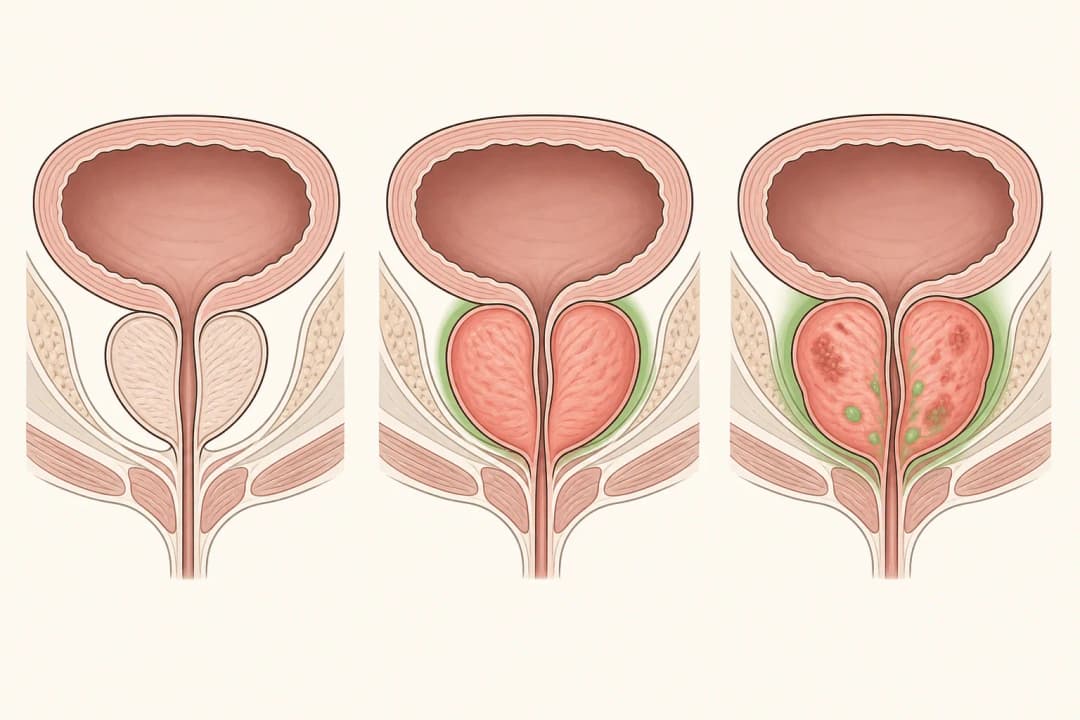
At a glance
- Body area
- Prostate and lower urinary tract
- Common presentations
- Pelvic pain and urinary changes
- Urgent sign
- Inability to pass urine, especially with fever or severe pain
What prostatitis is
Prostatitis is inflammation of the prostate that can cause pelvic pain and troublesome urinary symptoms.
The prostate sits below the bladder and surrounds part of the urethra, the tube that carries urine out of the body. Inflammation can begin suddenly or persist and fluctuate over time. Some forms involve a bacterial infection; others do not have an infection found. The pattern of symptoms and test results helps guide care.
Symptoms to notice
Painful urination and difficulty passing urine are very common presentations of prostatitis. Frequent urination, urgency, discomfort in the lower abdomen or pelvis, pain between the scrotum and anus, and discomfort during or after ejaculation can occur. Blood in the urine may also occur and needs medical assessment.
A sudden illness with fever, chills, marked pelvic pain or an inability to pass urine needs urgent medical attention. These signs can occur with acute inflammation or infection and should not be managed by waiting at home.
Possible causes
Bacteria can enter the prostate from the urinary tract and cause acute or ongoing bacterial prostatitis. In other people, inflammation, pelvic-floor muscle tension, nerve sensitivity or prior irritation may contribute even when urine tests do not show infection. A urinary tract infection can produce overlapping symptoms, so testing matters.
How it can develop
Acute bacterial prostatitis often begins quickly and can make a person feel systemically unwell. Longer-lasting pelvic pain syndromes may wax and wane, with flares linked to sitting, stress, bladder irritation or muscle tension. A tailored plan can focus on the factors that are active for that individual.
Factors that can raise the chance
Recent urinary infection, a catheter or urinary procedure, difficulty emptying the bladder and previous prostatitis can raise the chance of bacterial disease. Pelvic injury and tension in pelvic muscles may be relevant in persistent pain patterns. A clinician will also ask about medicines and sexual health where relevant.
How clinicians assess it
Assessment usually starts with the symptom history, an examination and a urine sample. Depending on the presentation, clinicians may arrange urine culture, blood tests, a sexual health test, imaging or a review by a urology specialist. The goal is to identify infection, poor bladder emptying or another cause that needs different treatment.
Treatment options
If bacterial infection is suspected or confirmed, antibiotic treatment may be prescribed and should be taken exactly as directed. Pain relief, medicines that improve urine flow, hydration advice and avoiding triggers may also help. Persistent pelvic pain can benefit from pelvic-floor physiotherapy or other pain-management approaches after assessment.
Do not use leftover antibiotics or stop a prescribed course early without clinical advice. Contact the treating clinician if symptoms worsen, fever develops or urine cannot be passed.
Living with ongoing symptoms
Keep a short record of pain, urine symptoms, fluids, activities and medicines so patterns can be discussed at review. During a flare, breaks from prolonged sitting, gentle movement and managing constipation may reduce pelvic strain. Ongoing symptoms can affect sleep, work and intimacy, so mention these impacts during a GP consultation.
When complications need attention
Acute infection can occasionally lead to urinary retention or spread of infection, which requires urgent care. Seek same-day help for fever with severe urinary symptoms, confusion, worsening weakness, severe pain, or inability to pass urine. Blood in urine that persists or recurs also merits prompt assessment.
Reducing future urinary irritation
Drink regularly unless a clinician has advised a fluid limit, avoid holding urine for long periods, and address constipation. If recurrent infections or emptying problems are suspected, follow-up can identify treatable contributors. Prevention plans differ between bacterial prostatitis and persistent pelvic pain syndromes.
Getting the right support
A GP can assess new urinary or pelvic symptoms and arrange tests or treatment. Referral to urology may be appropriate for recurrent infection, urinary retention, blood in urine or symptoms that do not improve. A pelvic-health physiotherapist may be included when muscle tension contributes to pain.
Questions people ask
Can prostatitis occur without an infection?
Yes. Persistent prostatitis-type symptoms may occur without bacteria being found, and treatment can address pain, urine flow and pelvic-floor contributors.
When should I seek urgent help?
Seek urgent help for fever with severe urinary symptoms, rapidly worsening pain, confusion, or inability to pass urine.
Related
Related reading
Keep reading
Find care
General Clinics & Polyclinics in Abu Dhabi
Where prostatitis: symptoms, causes and treatment is assessed depends on what is causing it. These are licensed general clinics & polyclinics listed in Abu Dhabi.
27 Ar Ruwwad St - Shakhbout City - MSH4 - Abu Dhabi - United Arab Emirates
Accepts: Daman, Thiqa, Cigna, MetLife +20 more
Al Ruwais, Al Dhafrah
Accepts: Daman, Thiqa, AXA, Cigna +16 more
Al Bahyah - Al Bahyah Old - Abu Dhabi - United Arab Emirates
Accepts: Daman, Thiqa, Cigna, Allianz Care +18 more
Abu Dhabi
Accepts: Daman, Thiqa, AXA, Cigna +27 more
Ordered by verification status and how complete each clinic's public record is, then alphabetically. This is a directory listing, not a ranking — Zavis does not rate or recommend providers.
A factual listing drawn from the DHA, DOH and MOHAP licence registers. It is not a referral, an endorsement, or advice that any of these providers is right for you.
Medical disclaimer. This page is general health information, not medical advice, and it cannot diagnose you. Always consult a licensed healthcare provider about your own symptoms and treatment. In an emergency in the UAE, call 998 for an ambulance.