
Kidney Stones: Symptoms, Causes and Treatment
At a glance
- Also called
- Renal calculi or nephrolithiasis
- Where they form
- Kidneys and urinary tract
- Urgent concern
- Fever, blocked urine flow or uncontrolled pain
What kidney stones are
Kidney stones are hard deposits that can form in the kidneys and cause pain when they move through the urinary tract.
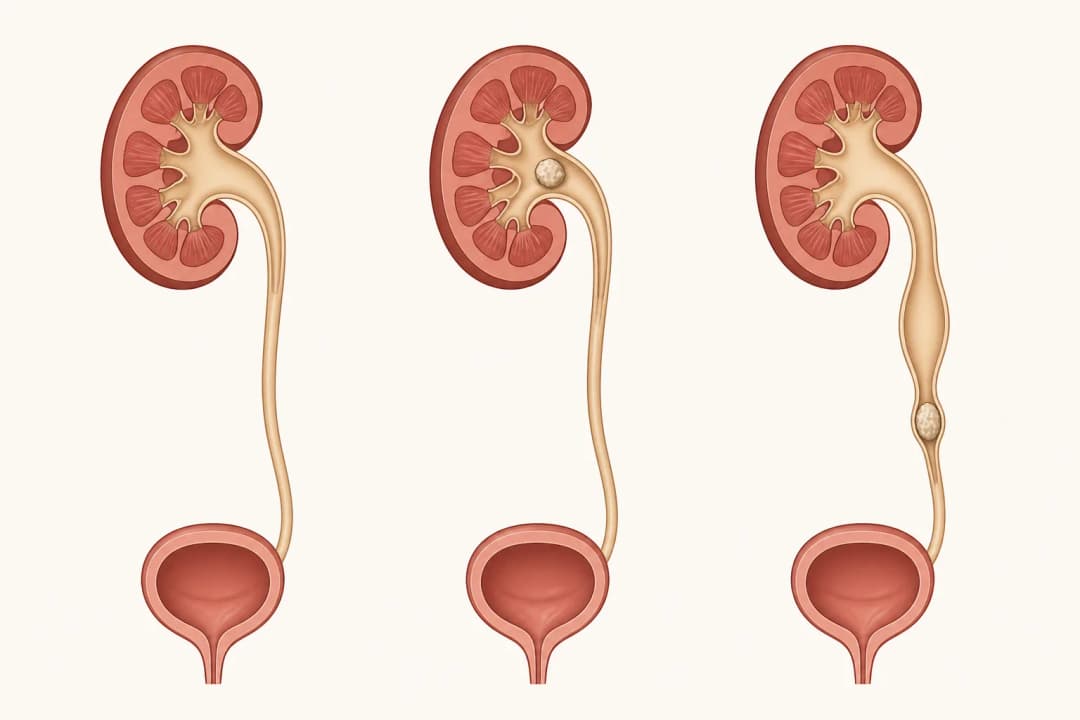
They develop when substances normally dissolved in urine become concentrated and form crystals. A stone may stay in the kidney without causing symptoms, or travel into the ureter, the narrow tube from kidney to bladder. Stone size, position and whether urine can drain all influence the next steps.
Symptoms that can occur
Flank pain and abdominal pain are very common presentations of kidney stones. Pain may come in waves as the ureter contracts, and can spread towards the lower abdomen or groin.
Blood in the urine is also very common with kidney stones. Some people notice painful urination or difficulty passing urine, particularly when a stone is close to the bladder. Seek urgent care for fever or chills with urinary pain, persistent vomiting, inability to pass urine, or pain that cannot be managed.
How stones form
Urine contains minerals and waste products. When there is not enough fluid to keep them diluted, crystals can join together and grow. Different stone types form from different materials, so a recovered stone or urine testing can help guide prevention.
Low fluid intake, heavy sweating, repeated vomiting or diarrhoea, and some dietary patterns can make urine more concentrated. Certain medicines and medical conditions can also change the balance of substances in urine.
Course and progression
A small stone may pass in urine, sometimes with intermittent discomfort. A stone lodged in the ureter can obstruct urine flow and cause stronger pain. Symptoms can change as the stone moves, so worsening pain or new urinary difficulty should not be ignored.
Factors that can raise the chance of stones
A previous stone can make another episode more likely. Family history, regular dehydration, diets high in salt, and conditions that affect the bowel or parathyroid glands may contribute. A clinician can look at individual factors rather than assuming one cause applies to everyone.
How kidney stones are assessed
Assessment starts with the pattern and location of pain, urinary symptoms, medicines and previous stones. A urine sample can look for blood or signs of infection, while blood tests may check kidney function and related chemistry.
Imaging is used to locate a suspected stone and check for blockage. An abdominal ultrasound may be appropriate in some situations; the clinician chooses imaging based on symptoms and the information needed.
Treatment options
Treatment depends on stone position, symptoms, infection risk and whether urine drainage is affected. Pain relief, fluids when appropriate, and observation may be used while a stone passes. Medication can sometimes help the ureter relax.
A stone that is unlikely to pass, causes obstruction, or is linked with infection may need a urology procedure to remove it or break it into smaller pieces. Infection with obstruction needs urgent hospital treatment because drainage may be required.
While waiting for a stone to pass
Follow the pain-relief and fluid advice given for you, and note any change in pain, temperature, urine output or vomiting. If you pass a stone, keeping it in a clean container can allow analysis. Arrange follow-up when advised, even if symptoms settle.
Possible complications
A blocked ureter can put pressure on the kidney. When bacteria are present behind a blockage, infection can become serious quickly. Repeated stones may also lead to repeated procedures or ongoing kidney concerns, which is why follow-up and prevention matter.
Reducing future stone risk
Regular fluid intake that keeps urine pale is often a practical starting point, unless you have been given fluid restrictions. Prevention can be tailored after stone analysis or urine testing. Changes may include adjusting salt intake, maintaining calcium from food as advised, or using medication for a particular stone type.
When to seek specialist care
A GP can coordinate initial assessment and referral. Urology input is useful for recurrent stones, large or obstructing stones, ongoing symptoms, kidney impairment, or a need to identify the stone type and a prevention plan.
Questions people ask
Can a kidney stone cause blood in urine?
Yes. Blood in the urine is a very common presentation of kidney stones because a moving stone can irritate the urinary tract lining.
When is a suspected kidney stone urgent?
Seek urgent assessment for fever or chills, inability to pass urine, persistent vomiting, or severe pain that is not settling.
Related
Related reading
Keep reading
Find care
Radiology & Imaging in Dubai
Where kidney stones: symptoms, causes and treatment is assessed depends on what is causing it. These are licensed radiology & imaging listed in Dubai.
First Gulf Real Estate Building, Amman Street, AL NAHDA FIRST, Dubai
Accepts: Daman, Thiqa, AXA, Cigna +28 more
LEADER, 3 Street 99, DUBAI INVESTMENT PARK FIRST, Dubai
Accepts: Daman, Thiqa, AXA, Cigna +29 more
villa, Al Wasl Road, JUMEIRAH FIRST, Dubai
Accepts: Daman, Thiqa, AXA, Cigna +16 more
Aletihad Diagnostic Center, Alwasl Road, AL SAFFA SECOND, Dubai
Accepts: AXA, Cigna, MetLife, Allianz Care +17 more
Ordered by verification status and how complete each clinic's public record is, then alphabetically. This is a directory listing, not a ranking — Zavis does not rate or recommend providers.
A factual listing drawn from the DHA, DOH and MOHAP licence registers. It is not a referral, an endorsement, or advice that any of these providers is right for you.
Medical disclaimer. This page is general health information, not medical advice, and it cannot diagnose you. Always consult a licensed healthcare provider about your own symptoms and treatment. In an emergency in the UAE, call 998 for an ambulance.