
Benign Prostatic Hyperplasia (BPH)
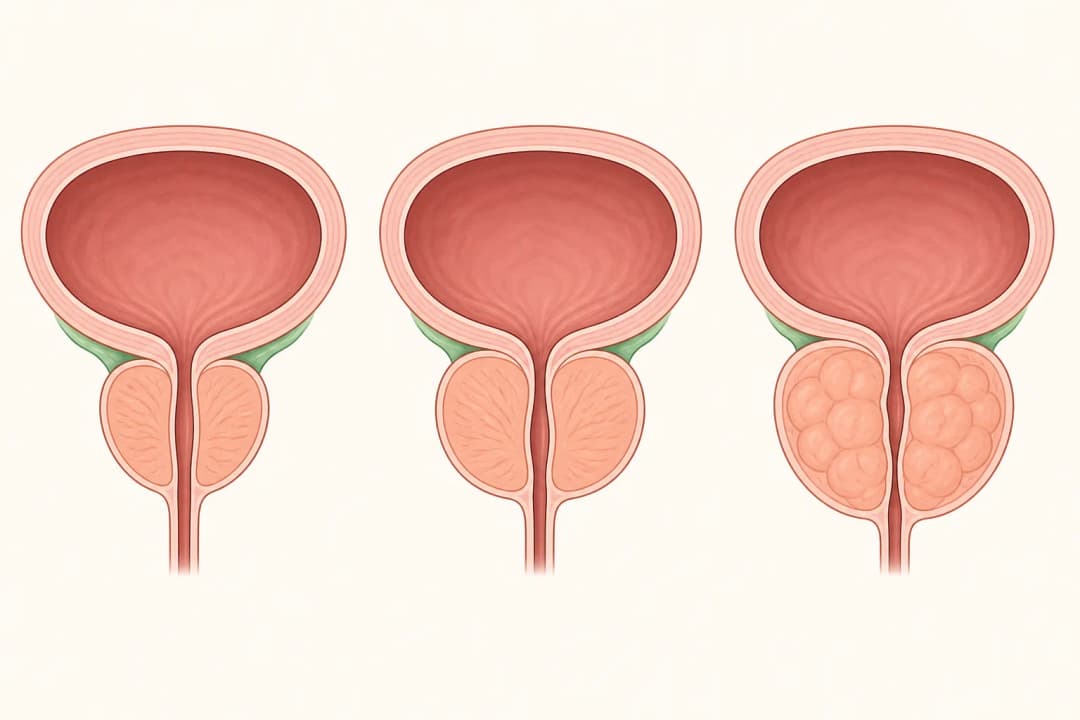
At a glance
- Also known as
- Enlarged prostate or BPH
- Affected organ
- Prostate gland
- Main effect
- Can obstruct urine flow
What an enlarged prostate means
Benign prostatic hyperplasia is a non-cancerous enlargement of the prostate that can narrow the urine channel.
The prostate sits below the bladder and surrounds part of the urethra, the tube that carries urine out. As the gland enlarges, urine flow may become slower or the bladder may need to work harder. BPH and prostate cancer are different conditions, although urinary symptoms still deserve proper assessment.
Urinary changes to notice
Difficulty passing urine, frequent urination and urinary urgency are very common presentations of BPH. A weak stream, straining, a stop-start flow, dribbling afterward, or waking from sleep to urinate can also occur. Some people feel that the bladder has not emptied fully.
Seek urgent care if you cannot pass urine, have fever with urinary symptoms, develop severe lower abdominal pain, or pass visible blood in urine. These symptoms need timely assessment regardless of their cause.
Why the prostate enlarges
BPH is linked to age-related changes in the prostate and hormone signalling. The prostate can grow gradually over time, but gland size alone does not predict how troublesome symptoms will be. Bladder function, medicines, constipation, fluid intake and other urinary conditions can influence the symptom pattern.
Course and progression
Symptoms may remain mild, fluctuate, or become more disruptive over time. Delaying urination because of travel or work can make urgency harder to manage, while drinking large volumes late in the evening may increase night-time trips. A review is helpful when the pattern changes rather than assuming it is solely due to BPH.
Factors clinicians consider
Ageing is the main background factor for BPH. A family history of prostate enlargement and some long-term health conditions may also be relevant. Clinicians will consider medicines that can affect bladder emptying, including some cold remedies and drugs with anticholinergic effects.
Assessment and tests
Assessment usually starts with a discussion of symptoms, medicines and medical history. A clinician may examine the abdomen and perform a prostate examination when appropriate. A urine test can look for blood, infection or other changes that might explain urinary symptoms. Further tests may assess urine flow, retained urine, kidney function or the prostate depending on the findings.
Ways symptoms can be managed
Management is matched to symptom burden, examination findings and personal priorities. Mild symptoms may be managed with monitoring and changes to drinking habits. Medicines can relax prostate and bladder-neck muscle or reduce prostate size in selected people. Procedures may be discussed when symptoms are severe, complications occur, or medicine is unsuitable.
A GP consultation can help organise the first assessment and decide whether specialist urology input is needed.
Daily measures
Spread fluids through the day rather than drinking a large amount at once, and consider reducing caffeine or alcohol if either worsens urgency. Empty the bladder before a long journey, allow enough time at the toilet, and treat constipation. Do not stop prescribed medicines without discussing them with a clinician.
Possible complications
Incomplete emptying can contribute to urinary retention, repeated urinary infection, bladder stones or pressure on the urinary tract. These outcomes are reasons for clinical follow-up, especially when symptoms are worsening or urine flow changes suddenly.
When to see a specialist
A urology referral may be appropriate for persistent troublesome symptoms, recurrent retention, recurrent infection, blood in urine, abnormal examination findings, or a need to discuss procedural treatment. The referral decision is based on the whole clinical picture.
Questions people ask
Is BPH the same as prostate cancer?
No. BPH is non-cancerous prostate enlargement, but new urinary symptoms should still be assessed.
Can BPH cause urinary leakage?
Urinary incontinence can occur when the bladder is irritated or does not empty effectively, and it warrants discussion with a clinician.
Related
Related reading
Keep reading
Find care
General Clinics & Polyclinics in Abu Dhabi
Where benign prostatic hyperplasia (BPH) is assessed depends on what is causing it. These are licensed general clinics & polyclinics listed in Abu Dhabi.
27 Ar Ruwwad St - Shakhbout City - MSH4 - Abu Dhabi - United Arab Emirates
Accepts: Daman, Thiqa, Cigna, MetLife +20 more
Al Ruwais, Al Dhafrah
Accepts: Daman, Thiqa, AXA, Cigna +16 more
Al Bahyah - Al Bahyah Old - Abu Dhabi - United Arab Emirates
Accepts: Daman, Thiqa, Cigna, Allianz Care +18 more
Abu Dhabi
Accepts: Daman, Thiqa, AXA, Cigna +27 more
Ordered by verification status and how complete each clinic's public record is, then alphabetically. This is a directory listing, not a ranking — Zavis does not rate or recommend providers.
A factual listing drawn from the DHA, DOH and MOHAP licence registers. It is not a referral, an endorsement, or advice that any of these providers is right for you.
Medical disclaimer. This page is general health information, not medical advice, and it cannot diagnose you. Always consult a licensed healthcare provider about your own symptoms and treatment. In an emergency in the UAE, call 998 for an ambulance.