
PUVA Therapy vs Topical Corticosteroids
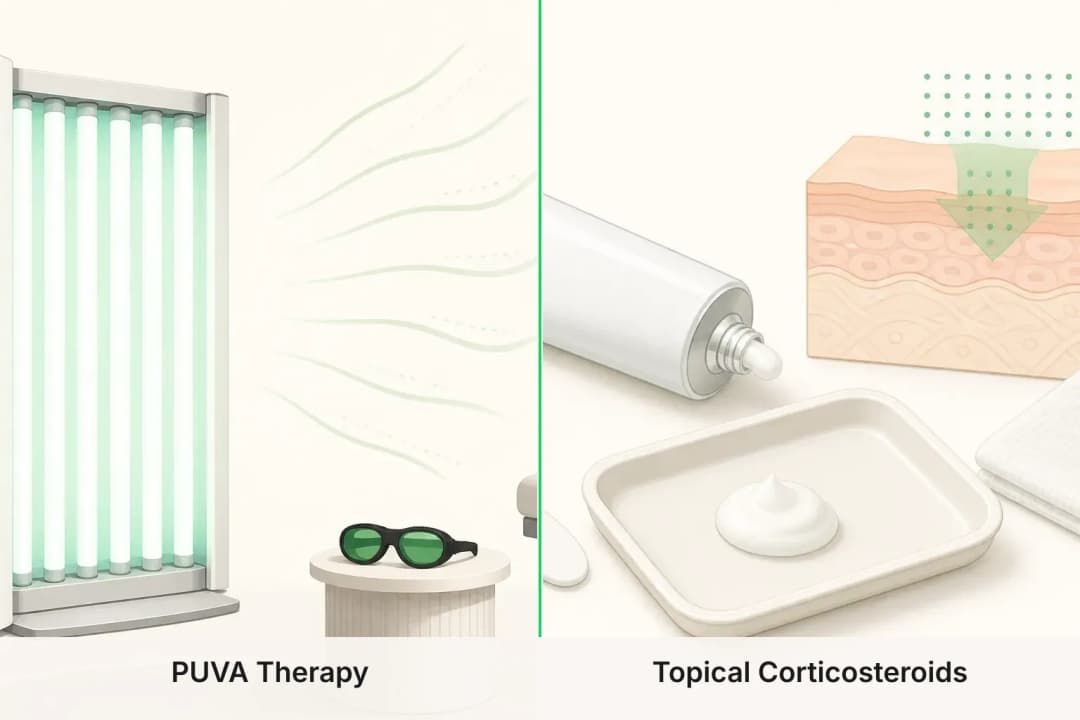
At a glance
- PUVA
- Clinic-based UVA treatment paired with a light-sensitising medicine
- Topical corticosteroids
- Anti-inflammatory medicines applied directly to affected skin
- Choice
- Depends on diagnosis, distribution, skin site, prior response, and safety factors
Find care
General Clinics & Polyclinics in Abu Dhabi
Licensed general clinics & polyclinics listed in Abu Dhabi. Appearing here means a provider holds a UAE licence in this category — not that it offers PUVA therapy vs topical corticosteroids, which is worth confirming with the clinic before you book.
27 Ar Ruwwad St - Shakhbout City - MSH4 - Abu Dhabi - United Arab Emirates
Accepts: Daman, Thiqa, Cigna, MetLife +20 more
Al Ruwais, Al Dhafrah
Accepts: Daman, Thiqa, AXA, Cigna +16 more
Al Bahyah - Al Bahyah Old - Abu Dhabi - United Arab Emirates
Accepts: Daman, Thiqa, Cigna, Allianz Care +18 more
Abu Dhabi
Accepts: Daman, Thiqa, AXA, Cigna +27 more
The New EMI State Tower - 3rd Floor 303 Kan’ad Street - Hamdan Bin Mohammed St - Al Danah - Zone 1 - Abu Dhabi - United Arab Emirates
Accepts: Daman, Thiqa, Cigna, MetLife +22 more
Taj Resorts RV-1, Al Nasser Properties - Mafraq-2 - Mafraq Industrial Area - Abu Dhabi - United Arab Emirates
Accepts: Daman, Thiqa, AXA, Cigna +14 more
Ordered by verification status and how complete each clinic's public record is, then alphabetically. This is a directory listing, not a ranking — Zavis does not rate or recommend providers.
A factual listing drawn from the DHA, DOH and MOHAP licence registers. It is not a referral, an endorsement, or advice that any of these providers is right for you.
How the treatments differ
PUVA combines a light-sensitising medicine with carefully measured UVA exposure. It is delivered in a dermatology setting and may be considered when disease covers larger areas or has not settled with simpler measures. Topical corticosteroids are anti-inflammatory medicines applied to affected skin, making them useful for focused flares and accessible home treatment when prescribed.
PUVA treats selected widespread or persistent skin disease with controlled ultraviolet exposure, while topical corticosteroids calm inflammation directly where they are applied.
When PUVA may be considered
PUVA may be discussed when patches are widespread, thickened, or repeatedly returning despite appropriate topical treatment. It can be practical when applying medicine over a large body area is difficult. The dermatologist must first check the diagnosis, medicines, light sensitivity, and ability to attend scheduled sessions. Protective eyewear and exposure instructions form part of the treatment plan.
When topical corticosteroids may be considered
Topical corticosteroids may suit a small or clearly defined area that needs inflammation controlled without clinic-based light exposure. The product strength, amount, body site, and treatment length matter: thin skin such as the face and skin folds needs different guidance from thicker skin on the palms or soles. Application should follow the prescribed plan rather than continuing automatically after the flare improves.
Risks and practical cautions
PUVA can cause redness, warmth, tanning, or irritation, and the sensitising medicine can increase light sensitivity. Eyes and treated skin need protection as instructed, including around treatment sessions. Topical corticosteroids can irritate skin and, with unsuitable strength or prolonged unsupervised use, may thin the skin or make some infections harder to recognise. Tell the clinician about new burning, blistering, spreading rash, or eye symptoms.
When neither option is the right next step
Neither treatment should be selected until an uncertain rash has been assessed. A rash that is rapidly spreading, painful, blistered, infected-looking, or associated with fever needs prompt medical review. A clinician may instead recommend a different anti-inflammatory medicine, an antimicrobial treatment, another light approach, or testing such as a skin sample, depending on the diagnosis.
How a dermatologist makes the recommendation
The decision usually starts with the diagnosis and the pattern of disease, then considers affected sites, extent, thickness, prior response, daily routine, pregnancy or breastfeeding status, other medicines, and follow-up access. The clinician may use a topical corticosteroid for a defined flare and reserve PUVA for a broader or more persistent pattern, or use a staged plan. Bring a list of medicines and describe what has helped, irritated, or failed before.
Questions people ask
Can PUVA and a topical corticosteroid be used in the same treatment plan?
Sometimes, but timing and application need dermatologist guidance because irritated skin and light sensitivity can change the plan.
Is PUVA suitable for every itchy rash?
No. PUVA is used for selected diagnosed conditions, and an unexplained or rapidly changing rash should be assessed before light treatment.
Related
Related reading
Keep reading
Medical disclaimer. This page is general health information, not medical advice, and it cannot diagnose you. Always consult a licensed healthcare provider about your own symptoms and treatment. In an emergency in the UAE, call 998 for an ambulance.