
Medicated Shampoo Treatment vs Topical Corticosteroids
At a glance
- Treatment role
- Shampoo is wash-based; corticosteroids are leave-on anti-inflammatory medicines.
- Important distinction
- A diagnosis guides whether inflammation, infection or irritation is being treated.
- Review trigger
- Seek assessment for pus, pain, broken hairs or patchy hair loss.
Find care
General Clinics & Polyclinics in Abu Dhabi
Licensed general clinics & polyclinics listed in Abu Dhabi. Appearing here means a provider holds a UAE licence in this category — not that it offers medicated shampoo treatment vs topical corticosteroids, which is worth confirming with the clinic before you book.
27 Ar Ruwwad St - Shakhbout City - MSH4 - Abu Dhabi - United Arab Emirates
Accepts: Daman, Thiqa, Cigna, MetLife +20 more
Al Ruwais, Al Dhafrah
Accepts: Daman, Thiqa, AXA, Cigna +16 more
Al Bahyah - Al Bahyah Old - Abu Dhabi - United Arab Emirates
Accepts: Daman, Thiqa, Cigna, Allianz Care +18 more
Abu Dhabi
Accepts: Daman, Thiqa, AXA, Cigna +27 more
The New EMI State Tower - 3rd Floor 303 Kan’ad Street - Hamdan Bin Mohammed St - Al Danah - Zone 1 - Abu Dhabi - United Arab Emirates
Accepts: Daman, Thiqa, Cigna, MetLife +22 more
Taj Resorts RV-1, Al Nasser Properties - Mafraq-2 - Mafraq Industrial Area - Abu Dhabi - United Arab Emirates
Accepts: Daman, Thiqa, AXA, Cigna +14 more
Ordered by verification status and how complete each clinic's public record is, then alphabetically. This is a directory listing, not a ranking — Zavis does not rate or recommend providers.
A factual listing drawn from the DHA, DOH and MOHAP licence registers. It is not a referral, an endorsement, or advice that any of these providers is right for you.
Different targets, different roles
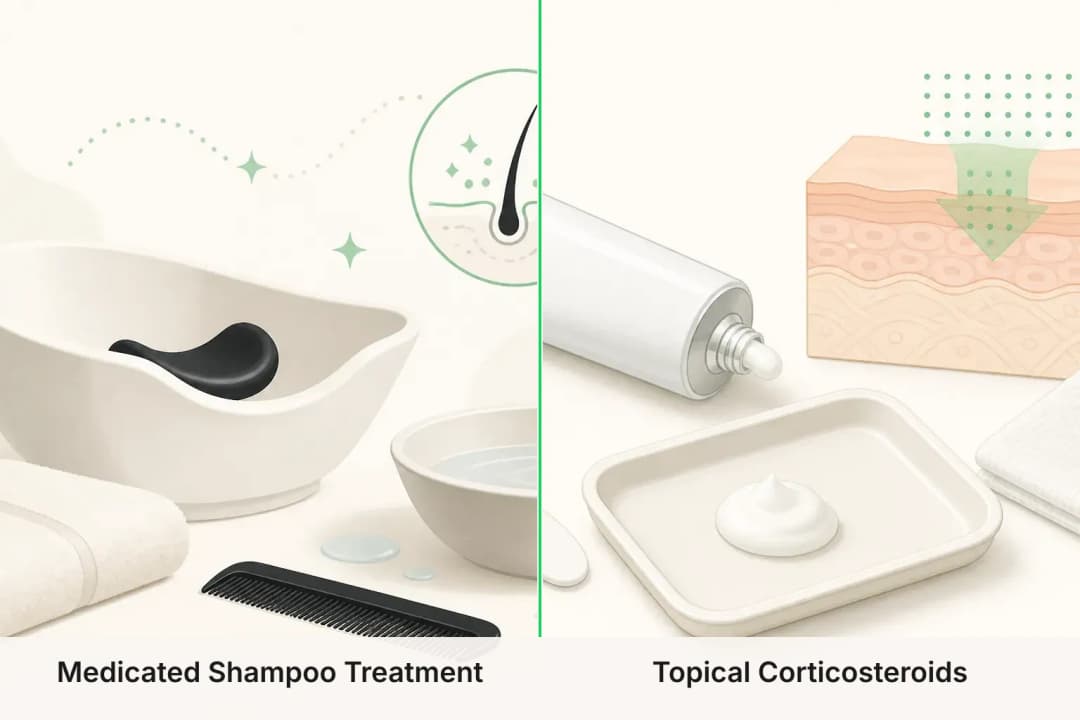
Medicated shampoo may address a scalp trigger or scale, while topical corticosteroids are prescribed to calm inflammation in selected conditions.
These treatments are not interchangeable simply because both can be used on the scalp. A shampoo is usually part of a washing routine. A corticosteroid is a leave-on medicine chosen for its anti-inflammatory effect, formulation and treatment site.
When shampoo may be the practical option
A medicated shampoo can be useful when flakes or scale are spread across the scalp and a wash product can reach the skin under the hair. Consistent technique matters: wet the scalp, distribute the product to the skin, allow the instructed contact period, then rinse thoroughly.
This approach may also be easier to incorporate into a routine than applying a leave-on medicine across a large hair-bearing area. Use a gentle non-medicated cleanser on other wash days if that fits the directions you were given.
When a corticosteroid may be considered
A topical corticosteroid may be prescribed for an inflamed, itchy, red or thickened area when the clinician identifies an inflammatory condition that can respond to it. The strength and vehicle matter: a solution, foam, lotion or ointment may be selected according to the body site and the amount of hair present.
Apply it only to the affected skin in the prescribed way. Tell the prescriber if you are also using antifungal, acne, hair-colouring or other medicated products, since the full routine may need adjusting.
Using each product carefully
Medicated shampoos can dry or irritate the scalp, particularly if used more frequently than directed or combined with harsh hair products. Avoid eye contact and seek advice if burning, swelling or a widespread rash occurs.
Topical corticosteroids need particular attention to potency, area treated and duration. Excess use, use on the wrong site, or use without a clear diagnosis can cause unwanted skin changes and can mask an infection. Follow the prescribed plan and do not use someone else's medicine.
When reassessment matters more than another product
Scalp redness and scale can arise from several causes, including fungal infection, seborrhoeic dermatitis, psoriasis, contact allergy and bacterial infection. A corticosteroid is not a substitute for diagnosis when there is pus, increasing pain, patchy hair loss, broken hairs, or a rash that spreads despite care.
Get urgent help for trouble breathing, swelling of the face or mouth, or a rapidly worsening widespread skin reaction. These symptoms require prompt assessment.
How the treatment plan is selected
The clinician considers the pattern of scale, itch, redness and hair involvement, then asks about timing, triggers, other skin areas and products that have already been used. They may examine the scalp closely to distinguish inflammation from infection or irritation.
A plan can include scalp care instructions, a medicated shampoo, a short course of a corticosteroid, or a different treatment based on the findings. At follow-up, the response and any side effects help determine whether the plan should change.
Questions people ask
Can I use a topical corticosteroid for any itchy scalp?
No. Itchy scalp has different causes, and corticosteroids can be unsuitable when an infection or contact reaction is present. A clinician can identify the likely cause.
Can medicated shampoo and a corticosteroid be part of the same plan?
They can be used together when a clinician directs it, with clear instructions on each product's timing, placement and duration.
Related
Related reading
Keep reading
Medical disclaimer. This page is general health information, not medical advice, and it cannot diagnose you. Always consult a licensed healthcare provider about your own symptoms and treatment. In an emergency in the UAE, call 998 for an ambulance.