
Low-Level Laser Therapy for Hair vs PRP Hair Treatment
At a glance
- Treatment type
- Laser therapy uses light; PRP uses a prepared sample of your own blood.
- Where it happens
- Laser therapy may be home-based or clinic-based; PRP is performed in a clinic.
- Before treatment
- Confirm the cause of thinning and check for scalp disease.
Find care
Dermatology & Skin Care in Dubai
Licensed dermatology & skin care listed in Dubai. Appearing here means a provider holds a UAE licence in this category — not that it offers low-level laser therapy for hair vs PRP hair treatment, which is worth confirming with the clinic before you book.
Wafi Mall - 1st Floor - Code “B”/ Entrance - Gate 3 Oud Metha Rd - inside the mall - Umm Hurair Second - Dubai Healthcare City - Dubai - United Arab Emirates
Accepts: Insurance Accepted
Al Ferdous 4, Al Wasl Road 603, AL SAFFA FIRST, Dubai
Accepts: Daman, Thiqa, AXA, Cigna +24 more
The mall, Jumeira Street 856a, UM SUQAIM SECOND, Dubai
Accepts: Thiqa, AXA, Bupa Global, Dubai Insurance Company +10 more
The Arcade, 4 Street 8, Al Garhoud, Dubai
Accepts: Daman, Thiqa, AXA, Cigna +26 more
Office # 102, SMJ-1, 1st Floor - شارع الشيخ زايد - الصفا 1 - الصفا - دبي - United Arab Emirates
Accepts: AXA, Cigna, MetLife, Allianz Care +19 more
Commercial Entrance, The Onyx Tower - 2 Sheikh Zayed Rd - Al Thanyah Third - The Greens - Dubai - United Arab Emirates
Accepts: Daman, Thiqa, AXA, Cigna +23 more
Ordered by verification status and how complete each clinic's public record is, then alphabetically. This is a directory listing, not a ranking — Zavis does not rate or recommend providers.
A factual listing drawn from the DHA, DOH and MOHAP licence registers. It is not a referral, an endorsement, or advice that any of these providers is right for you.
What separates these options
Low-level laser therapy is a light-based home or clinic approach, while PRP hair treatment uses a prepared sample of your own blood and is performed as a procedure.
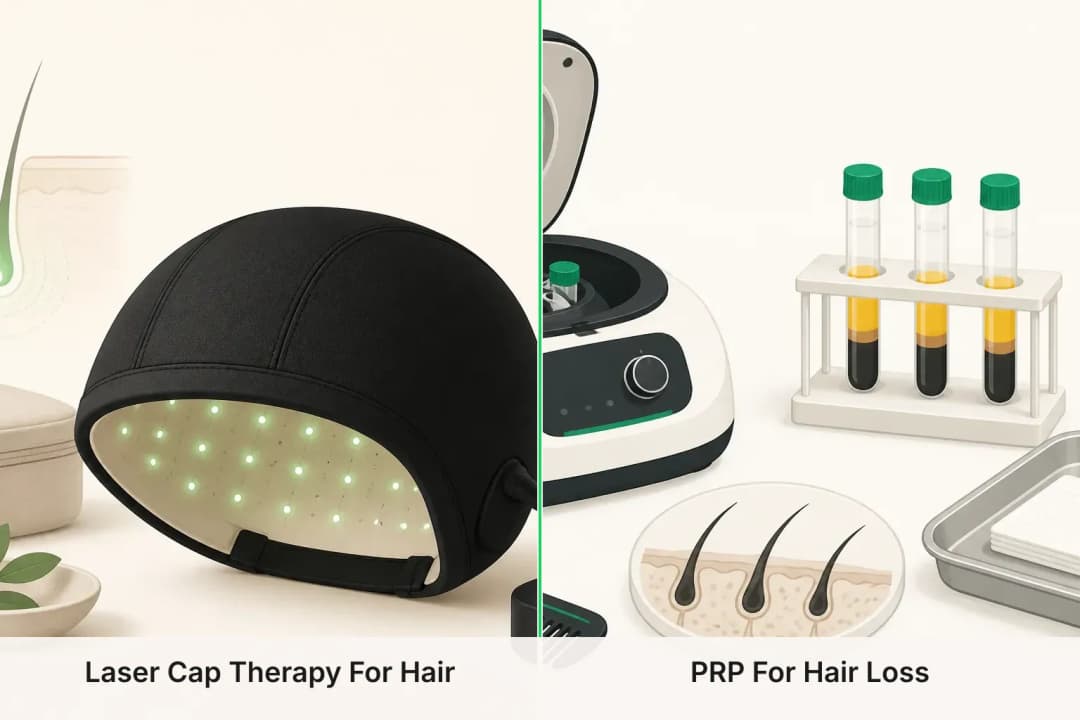
Low-level laser therapy for hair exposes the scalp to low-intensity light through a cap, helmet, comb, or clinic device. PRP hair treatment involves taking a blood sample, preparing a platelet-rich portion, and placing it into targeted scalp areas. One is usually built around repeated device use; the other is an in-clinic procedure.
Both are often discussed for pattern hair thinning, but the cause of shedding matters. Hair loss can also follow illness, major stress, nutritional deficiency, scalp inflammation, medication changes, traction, or an autoimmune process. Those causes need their own assessment and treatment plan.
When low-level laser therapy may fit
Laser cap therapy may suit someone with a diagnosed, stable pattern of thinning who wants a non-invasive option that can be incorporated into a routine. It depends on using the correct device as directed and maintaining realistic expectations about gradual change. It does not replace assessment of sudden or patchy shedding.
Check practical details before committing: head coverage, comfort, hair and scalp products, charging or maintenance, and whether the planned routine is genuinely manageable. Consistency is a more useful decision point than choosing a device based on appearance alone.
When PRP hair treatment may fit
PRP for hair loss may suit someone who prefers an in-clinic plan after their clinician has evaluated the pattern of thinning and scalp health. The procedure uses the person's own blood product, so the visit includes a blood draw and injections or placement into selected scalp areas. A clinician can explain the technique, comfort measures, and follow-up plan.
It can be reasonable to discuss PRP alongside other treatment options when androgen-related thinning has been diagnosed. The decision should consider medical history, scalp findings, needle tolerance, and whether there is active inflammation that should be controlled first.
Side effects and safety points
A laser device may cause scalp warmth, itch, irritation, or headache in some users. It should not be used over broken or infected skin unless a clinician has advised it. PRP treatment can cause temporary tenderness, swelling, bruising, pinpoint bleeding, or headache after the procedure. Infection and an inflammatory reaction are uncommon but possible procedure-related concerns.
Tell the clinician about bleeding disorders, medicines that affect bleeding, scalp infections, allergies, pregnancy, and previous fainting with blood draws or injections. Seek prompt medical advice for spreading redness, fever, discharge, severe pain, or a rapidly worsening scalp reaction after a procedure.
When a different first step is needed
Neither option should delay evaluation of sudden shedding, patchy bald areas, scalp pain, scaling, pustules, or loss of eyebrows or body hair. These signs can occur with conditions that need diagnosis before a cosmetic hair-restoration plan. A clinician may examine the scalp, review medical history, and decide whether tests or specialist care are appropriate.
Hairstyles that pull tightly, harsh chemical processing, and untreated scalp dermatitis can continue to damage hair or make treatment uncomfortable. Addressing those contributors can be more useful than adding a device or procedure immediately.
How clinicians match treatment to the person
The consultation should establish the pattern, speed, and distribution of hair change, then examine the scalp and hair shafts. A clinician may ask about family history, recent illness, dietary restriction, hair practices, medicines, and symptoms such as itch or burning. This separates gradual pattern thinning from conditions requiring a different route.
If either option is appropriate, the recommendation should state what it is intended to support, how progress will be reviewed, and what to do if shedding changes. Standardised scalp photographs and the same hair parting can make comparisons more meaningful over time.
Questions people ask
Can I use a laser cap for sudden hair shedding?
Sudden shedding has several possible causes. Arrange an assessment first so the cause and any needed treatment are not missed.
Does PRP use donor blood?
No. PRP hair treatment prepares a platelet-rich portion from your own blood sample.
Can I combine PRP and laser therapy?
Sometimes a clinician may discuss both within a wider plan, but the decision depends on the diagnosis, scalp condition, and your ability to follow the plan.
Related
Related reading
Keep reading
Medical disclaimer. This page is general health information, not medical advice, and it cannot diagnose you. Always consult a licensed healthcare provider about your own symptoms and treatment. In an emergency in the UAE, call 998 for an ambulance.