
Fatigue vs joint pain: how they differ
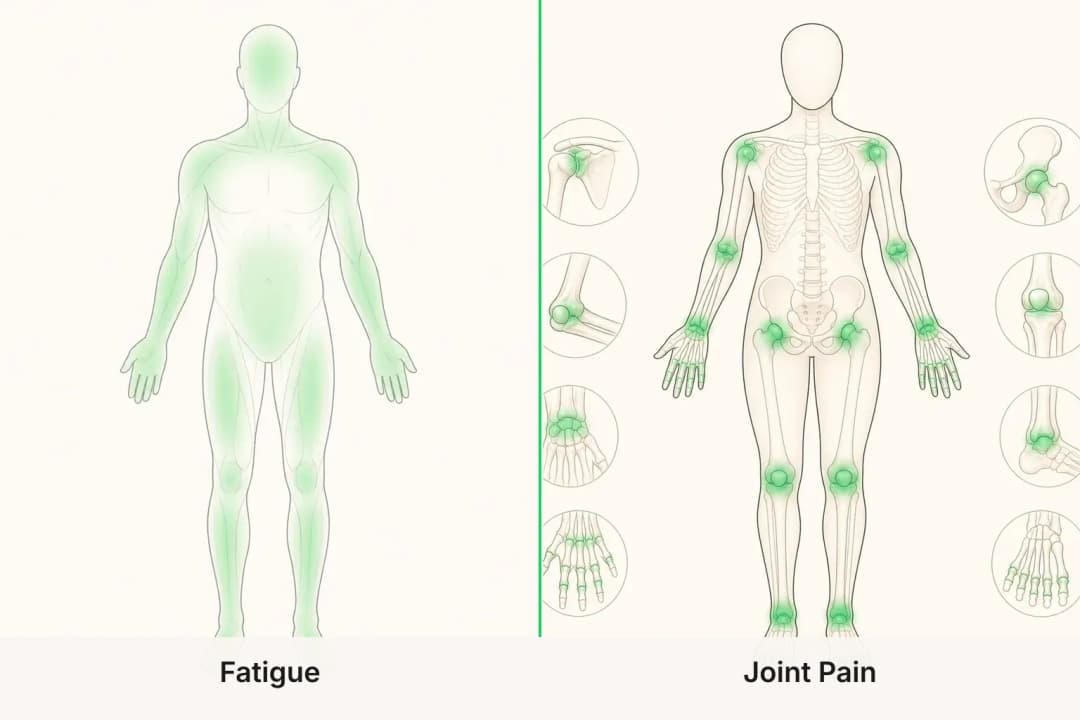
At a glance
- Fatigue
- A reduced capacity to sustain physical or mental effort.
- Joint pain
- Pain, stiffness, or discomfort centred in or around a joint.
- Useful detail
- For pain, note the exact joint and any swelling or injury.
Find care
General Clinics & Polyclinics in Abu Dhabi
Licensed general clinics & polyclinics listed in Abu Dhabi. Appearing here means a provider holds a UAE licence in this category — not that it offers fatigue vs joint pain: how they differ, which is worth confirming with the clinic before you book.
27 Ar Ruwwad St - Shakhbout City - MSH4 - Abu Dhabi - United Arab Emirates
Accepts: Daman, Thiqa, Cigna, MetLife +20 more
Al Ruwais, Al Dhafrah
Accepts: Daman, Thiqa, AXA, Cigna +16 more
Al Bahyah - Al Bahyah Old - Abu Dhabi - United Arab Emirates
Accepts: Daman, Thiqa, Cigna, Allianz Care +18 more
Abu Dhabi
Accepts: Daman, Thiqa, AXA, Cigna +27 more
The New EMI State Tower - 3rd Floor 303 Kan’ad Street - Hamdan Bin Mohammed St - Al Danah - Zone 1 - Abu Dhabi - United Arab Emirates
Accepts: Daman, Thiqa, Cigna, MetLife +22 more
Taj Resorts RV-1, Al Nasser Properties - Mafraq-2 - Mafraq Industrial Area - Abu Dhabi - United Arab Emirates
Accepts: Daman, Thiqa, AXA, Cigna +14 more
Ordered by verification status and how complete each clinic's public record is, then alphabetically. This is a directory listing, not a ranking — Zavis does not rate or recommend providers.
A factual listing drawn from the DHA, DOH and MOHAP licence registers. It is not a referral, an endorsement, or advice that any of these providers is right for you.
Identify what stops you first
Fatigue reduces your energy for activity, whereas joint pain is discomfort in or around a joint that may make movement difficult.
The distinction matters because tiredness can make your whole body feel slow without a particular painful point, while joint pain is often easier to locate at a knee, hip, shoulder, hand, ankle, or another joint. Both can reduce exercise and concentration. Pain can also disturb sleep and leave you exhausted the next day, so it is useful to separate the main physical sensation from its consequences.
Make fatigue the priority when energy is broadly reduced
Start with fatigue when you feel drained even without a clear painful joint, or when your ability to complete usual tasks has fallen across the day. Record when it began, whether rest helps, and whether there are changes in sleep, mood, appetite, breathlessness, or concentration. Note recent illness, shifts in activity, and any new medicines or supplements. This detail can distinguish low energy from reduced activity caused by pain.
Make joint pain the priority when a joint directs your choices
Lead with joint pain if walking, climbing stairs, reaching, opening containers, or sleeping positions are limited by a particular area. Describe whether the pain followed an injury, started gradually, moves between joints, or comes with stiffness after rest. Look for visible swelling, redness, warmth, bruising, locking, or a feeling that the joint gives way. Avoid pushing through severe pain or returning to sport after an injury before you can use the joint safely.
Signs that require faster care
Seek urgent medical help for joint pain after a major injury, a visibly deformed joint, inability to bear weight, sudden loss of movement, or a hot swollen joint with fever or feeling unwell. Seek urgent help for fatigue with chest pain, trouble breathing, fainting, confusion, a seizure, new weakness on one side, or a severe sudden headache. Arrange a timely review when either symptom persists, worsens, interrupts sleep, or substantially limits normal life.
When the description is more complicated
Some people describe widespread muscle aching, stiffness, numbness, poor sleep, low mood, or a general sense of being unwell rather than fatigue or pain in one joint. Those details still matter. Write down where symptoms occur, what you were doing when they began, whether they wake you at night, and what makes them better or worse. A clinician can then consider the full pattern rather than treating a vague ache and low energy as unrelated complaints.
What an assessment may include
During an assessment, a clinician may ask about work, exercise, sleep, infections, injuries, travel, medicines, and other symptoms. They may examine the painful joint for movement, swelling, tenderness, and stability, while also checking for signs related to low energy. Tests or imaging are chosen from the history and examination rather than from the symptom name alone. Bring a medicine list and, if possible, a short record of activities that trigger pain or exhaustion.
Questions people ask
Can joint pain cause fatigue?
It can contribute when pain limits activity or interrupts sleep. The two symptoms can also have separate contributors, which is why the timing and full symptom pattern are useful.
Should I exercise with joint pain?
The answer depends on the joint, the cause, and the severity. Stop and seek advice for severe pain, a new injury, swelling, instability, or pain that makes normal use unsafe.
Related
Related reading
Keep reading
Medical disclaimer. This page is general health information, not medical advice, and it cannot diagnose you. Always consult a licensed healthcare provider about your own symptoms and treatment. In an emergency in the UAE, call 998 for an ambulance.