
Difficulty sleeping vs feeling anxious
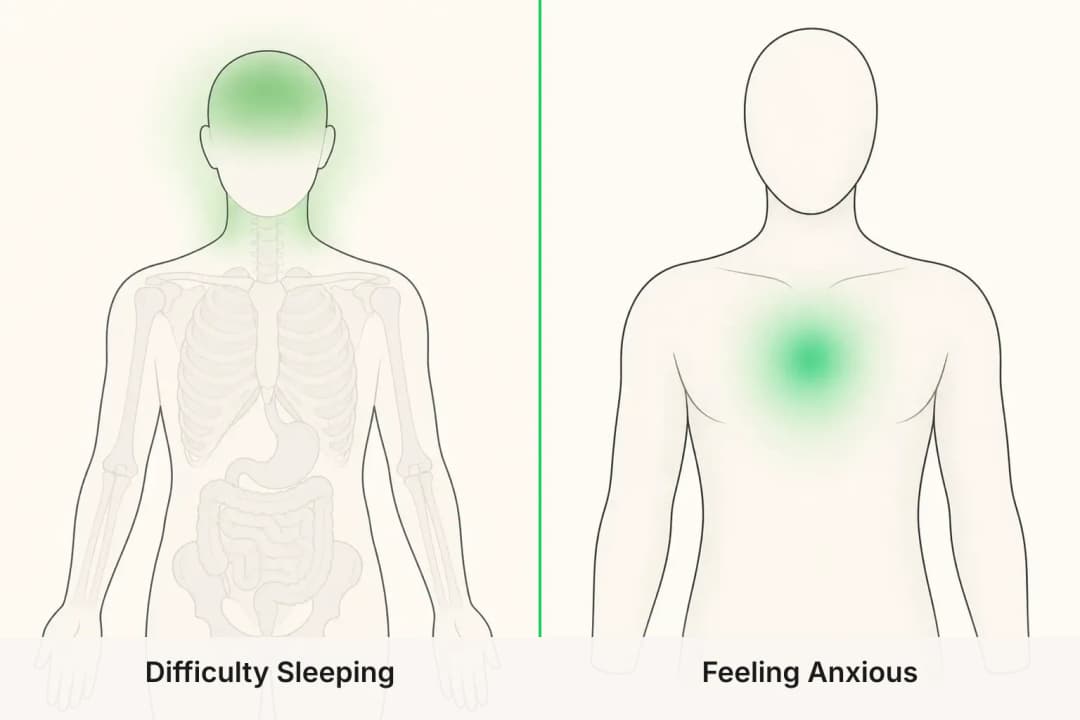
At a glance
- Core difference
- Sleep difficulty concerns sleep; anxiety concerns worry, fear, or tension.
- Shared pattern
- Either can worsen the other, especially around bedtime.
- Helpful detail
- Note daytime anxiety, night waking, triggers, and substances used to cope.
Find care
General Clinics & Polyclinics in Abu Dhabi
Licensed general clinics & polyclinics listed in Abu Dhabi. Appearing here means a provider holds a UAE licence in this category — not that it offers difficulty sleeping vs feeling anxious, which is worth confirming with the clinic before you book.
27 Ar Ruwwad St - Shakhbout City - MSH4 - Abu Dhabi - United Arab Emirates
Accepts: Daman, Thiqa, Cigna, MetLife +20 more
Al Ruwais, Al Dhafrah
Accepts: Daman, Thiqa, AXA, Cigna +16 more
Al Bahyah - Al Bahyah Old - Abu Dhabi - United Arab Emirates
Accepts: Daman, Thiqa, Cigna, Allianz Care +18 more
Abu Dhabi
Accepts: Daman, Thiqa, AXA, Cigna +27 more
The New EMI State Tower - 3rd Floor 303 Kan’ad Street - Hamdan Bin Mohammed St - Al Danah - Zone 1 - Abu Dhabi - United Arab Emirates
Accepts: Daman, Thiqa, Cigna, MetLife +22 more
Taj Resorts RV-1, Al Nasser Properties - Mafraq-2 - Mafraq Industrial Area - Abu Dhabi - United Arab Emirates
Accepts: Daman, Thiqa, AXA, Cigna +14 more
Ordered by verification status and how complete each clinic's public record is, then alphabetically. This is a directory listing, not a ranking — Zavis does not rate or recommend providers.
A factual listing drawn from the DHA, DOH and MOHAP licence registers. It is not a referral, an endorsement, or advice that any of these providers is right for you.
Start with the symptom that comes first
Difficulty sleeping describes a problem with sleep, whereas feeling anxious describes worry, fear, or physical tension.
The two often influence one another without being interchangeable. Someone may feel alert and unsettled at night because their mind is racing, or may become worried after several difficult nights. Identifying what happens first, what happens during the day, and what your body feels like helps describe the pattern accurately.
Choose difficulty sleeping when the night is the focus
This label fits when the main problem is your ability to sleep at a suitable time or get back to sleep after waking. You may not feel especially worried during the day, yet still be kept awake by discomfort, a disrupted schedule, noise, caffeine, or a habit of checking the clock and becoming more awake.
Describe the sleep pattern in practical terms: when you go to bed, how long you lie awake, what wakes you, whether you nap, and how you feel on waking. This gives a clinician information about the sleep problem without assuming a single cause.
Choose feeling anxious when worry follows you through the day
Feeling anxious may be the better starting point when unease, fear, irritability, or a sense of danger occurs in many settings rather than only in bed. Physical signs can include a pounding heart, sweating, trembling, stomach discomfort, muscle tightness, or rapid breathing. Sleep difficulty may be one part of that broader experience.
Name the situations that trigger the feeling and whether you avoid places, conversations, tasks, or sleep because of it. Also mention panic-like episodes, since their sudden onset and body sensations can affect the type of support a clinician considers.
Safety signals to act on
Seek urgent help if anxiety comes with thoughts of self-harm, feeling unable to stay safe, severe confusion, or hearing or seeing things others do not. Sudden anxiety with chest pain, fainting, severe breathlessness, or new weakness also needs urgent medical assessment because these symptoms can have causes beyond anxiety.
Sleep loss can make concentration, emotional control, and driving safety worse. If you are struggling to stay awake, do not drive or use machinery. Avoid trying to manage escalating anxiety with alcohol, leftover sedatives, or recreational drugs.
Other problems that can be mistaken for either
A body symptom may be the main driver if you wake coughing, gasping, in pain, with reflux, itching, or a strong urge to move your legs. Stimulants, some medicines, alcohol withdrawal, and shift changes can produce both restlessness and poor sleep. Tell a clinician about these possibilities rather than placing everything under anxiety.
Low mood, grief, trauma reactions, obsessive thoughts, and substance use can each need a more specific description. If your concern is episodes of sudden terror with intense physical symptoms, say when they start and how long they last.
What a useful assessment covers
A clinician may ask about the timeline, recent stressors, mood, safety, caffeine and alcohol, medicines, physical symptoms, work schedule, and what you do when you cannot sleep. They will consider whether the sleep problem and anxiety have a shared trigger or whether each needs separate attention.
Care can involve practical sleep changes, talking therapies, support for stress, review of medicines, or assessment of physical symptoms. Be honest about alcohol, supplements, and non-prescribed medicines, because they can change both sleep and anxious sensations.
Questions people ask
Does difficulty sleeping mean I have anxiety?
No. Sleep can be disturbed by routines, physical symptoms, medicines, substances, and emotional concerns. Describe any daytime worry as a separate symptom.
What should I tell a clinician about anxious feelings?
Explain when they occur, the thoughts and physical sensations involved, what triggers them, what you avoid, and whether you have had panic-like episodes or safety concerns.
Related
Related reading
Keep reading
Medical disclaimer. This page is general health information, not medical advice, and it cannot diagnose you. Always consult a licensed healthcare provider about your own symptoms and treatment. In an emergency in the UAE, call 998 for an ambulance.