
Which specialist treats kidney stones?
Short answer
A urologist treats kidney stones, while a GP can assess symptoms and arrange the first investigations.
This answers one question. It is not a diagnosis and does not replace an assessment by a licensed doctor.
At a glance
- Main specialist
- Urologist
- Usual starting point
- GP assessment
- Possible investigation
- Abdominal ultrasound
What a urologist does
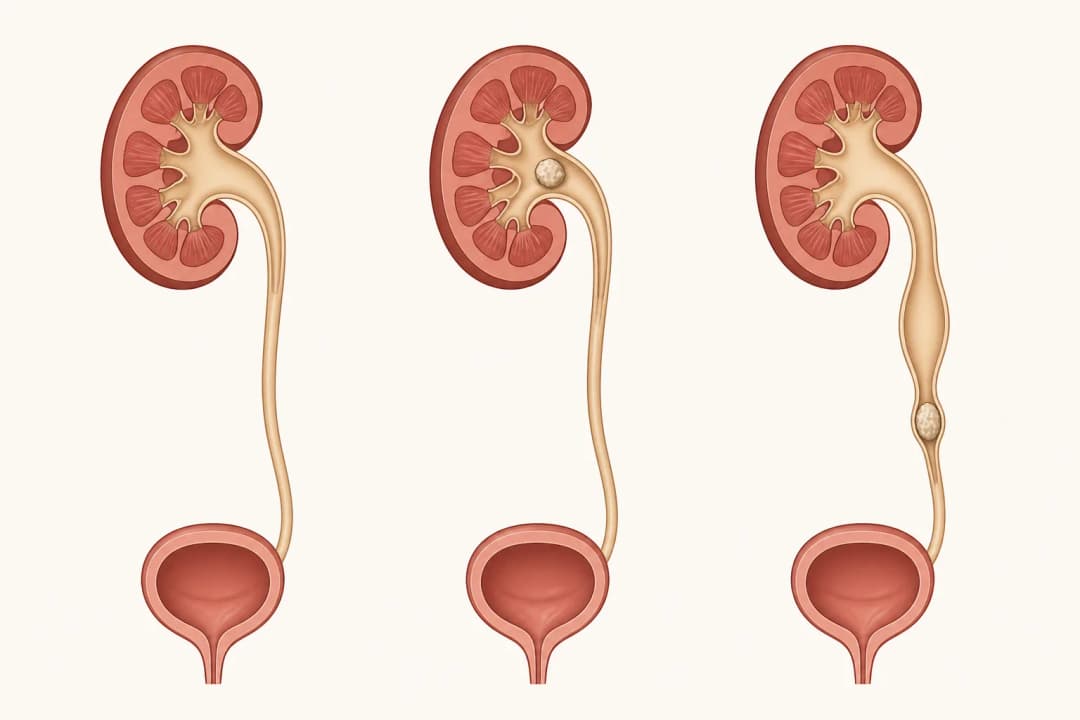
Kidney stones can cause sharp flank or abdominal pain, blood in urine, nausea, or difficulty passing urine. A GP can assess the pattern, check for signs of infection or obstruction, and arrange imaging such as an abdominal ultrasound when appropriate.
A urologist specialises in the urinary tract and kidneys. They can advise whether a stone is likely to pass with observation, whether pain and nausea need treatment, and whether a procedure is needed. The choice depends on the stone, its location, symptoms, and your overall health.
Arranging assessment
Start with a GP consultation unless symptoms are severe or urgent. Bring details of when pain began, where it travels, urinary changes, vomiting, previous stones, and medicines. Follow advice about fluids; drinking may be unsuitable or difficult if you are vomiting or have another condition affecting fluid balance.
A referral to urology may follow examination and imaging, or happen urgently when a blockage, infection, uncontrolled pain, or inability to pass urine is suspected. Do not use leftover pain medicine or antibiotics without advice.
When to seek urgent care
Get urgent help for severe or worsening pain, fever or chills with flank pain, repeated vomiting, faintness, or difficulty passing urine. Blood in urine should be medically assessed, particularly when it occurs with pain, fever, or reduced urine output. These combinations can signal a complication requiring quick treatment.
Questions for your doctor
Ask where the stone may be, whether imaging is needed, what pain relief is suitable, and what symptoms indicate obstruction or infection. Ask when to see a urologist, how follow-up will confirm passage, and what changes may reduce the chance of another stone.
Find care
General Clinics & Polyclinics in Abu Dhabi
That answer is general. If you want it applied to your own case, these are licensed general clinics & polyclinics listed in Abu Dhabi.
27 Ar Ruwwad St - Shakhbout City - MSH4 - Abu Dhabi - United Arab Emirates
Accepts: Daman, Thiqa, Cigna, MetLife +20 more
Al Ruwais, Al Dhafrah
Accepts: Daman, Thiqa, AXA, Cigna +16 more
Al Bahyah - Al Bahyah Old - Abu Dhabi - United Arab Emirates
Accepts: Daman, Thiqa, Cigna, Allianz Care +18 more
Abu Dhabi
Accepts: Daman, Thiqa, AXA, Cigna +27 more
Ordered by verification status and how complete each clinic's public record is, then alphabetically. This is a directory listing, not a ranking — Zavis does not rate or recommend providers.
A factual listing drawn from the DHA, DOH and MOHAP licence registers. It is not a referral, an endorsement, or advice that any of these providers is right for you.
Questions people ask
Can a GP diagnose kidney stones?
A GP can assess the symptoms and arrange initial tests, but imaging and specialist review may be needed to confirm the diagnosis and plan treatment.
When is a urologist needed?
Urology input may be needed for obstruction, infection, severe symptoms, a stone that does not pass, or a procedure decision.
Related
Related reading
Keep reading
Medical disclaimer. This page is general health information, not medical advice, and it cannot diagnose you. Always consult a licensed healthcare provider about your own symptoms and treatment. In an emergency in the UAE, call 998 for an ambulance.