
Which specialist treats chronic kidney disease?
Short answer
A nephrologist treats chronic kidney disease, while a GP often coordinates early assessment and ongoing care.
This answers one question. It is not a diagnosis and does not replace an assessment by a licensed doctor.
At a glance
- Main specialist
- Nephrologist
- First point of contact
- GP
- Tests often reviewed
- Blood pressure, blood and urine checks
What the roles mean
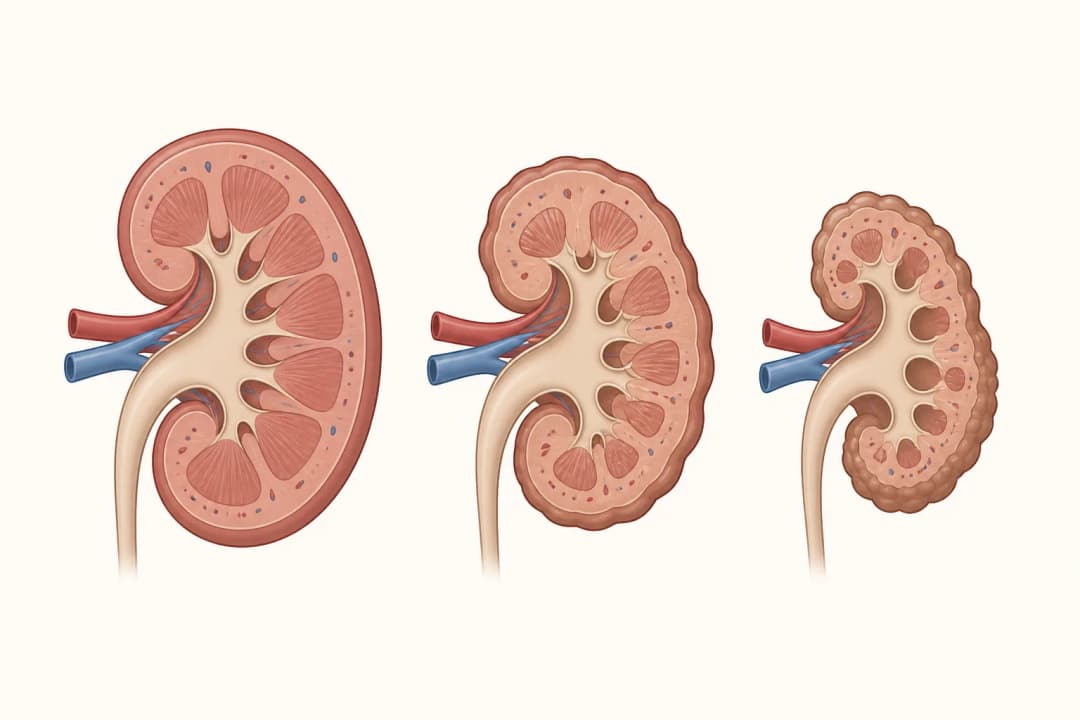
A nephrologist is a doctor who focuses on kidney function, urine changes, blood pressure and complications linked with reduced kidney function. Your GP can arrange initial blood and urine checks, review medicines and monitor related conditions such as hypertension or type 2 diabetes. Referral to a nephrologist depends on the pattern and persistence of your results, symptoms, and the level of kidney support needed. A kidney specialist may discuss ways to protect remaining function and plan care if kidney function changes further.
How to arrange care
Start with a GP consultation if kidney disease has been mentioned, or if you have swelling, unusual tiredness, muscle cramps, excessive thirst or changes in urination. Bring your medicine list and any previous blood pressure, blood or urine results. Do not stop prescribed medicines or make major diet changes without clinical advice. Your GP can explain whether you need a nephrology referral and which tests should be repeated.
When to seek prompt help
Seek urgent medical help for severe breathlessness, chest pain, confusion, fainting, very little urine, or rapidly worsening swelling. These symptoms can have several causes and need prompt assessment rather than waiting for a routine kidney appointment. Contact your clinician soon if vomiting, marked weakness or persistent changes in urination develop.
Questions for your doctor
Ask which results suggest chronic kidney disease, whether a nephrologist should review you, how often kidney function and urine should be checked, and which medicines or over-the-counter products need caution. You can also ask how hypertension, diabetes or swelling may affect your care.
Find care
General Clinics & Polyclinics in Abu Dhabi
That answer is general. If you want it applied to your own case, these are licensed general clinics & polyclinics listed in Abu Dhabi.
27 Ar Ruwwad St - Shakhbout City - MSH4 - Abu Dhabi - United Arab Emirates
Accepts: Daman, Thiqa, Cigna, MetLife +20 more
Al Ruwais, Al Dhafrah
Accepts: Daman, Thiqa, AXA, Cigna +16 more
Al Bahyah - Al Bahyah Old - Abu Dhabi - United Arab Emirates
Accepts: Daman, Thiqa, Cigna, Allianz Care +18 more
Abu Dhabi
Accepts: Daman, Thiqa, AXA, Cigna +27 more
Ordered by verification status and how complete each clinic's public record is, then alphabetically. This is a directory listing, not a ranking — Zavis does not rate or recommend providers.
A factual listing drawn from the DHA, DOH and MOHAP licence registers. It is not a referral, an endorsement, or advice that any of these providers is right for you.
Questions people ask
Can a GP treat chronic kidney disease?
Yes. A GP can assess risk, monitor results, manage related conditions and arrange nephrology referral when specialist input is needed.
What does a nephrologist do?
A nephrologist assesses kidney function, investigates causes, advises on kidney protection and helps plan treatment for more advanced disease.
Related
Related reading
Keep reading
Medical disclaimer. This page is general health information, not medical advice, and it cannot diagnose you. Always consult a licensed healthcare provider about your own symptoms and treatment. In an emergency in the UAE, call 998 for an ambulance.