
When to Worry About Cracked Skin With Atopic Dermatitis
Short answer
Cracked Skin is a common presentation of Atopic Dermatitis, but worsening pain, drainage, warmth, or fever calls for medical advice.
This answers one question. It is not a diagnosis and does not replace an assessment by a licensed doctor.
At a glance
- Why cracks form
- Inflammation, dryness, and scratching can weaken the skin barrier.
- Warning changes
- Drainage, spreading redness, warmth, swelling, or fever needs review.
What cracked skin can mean
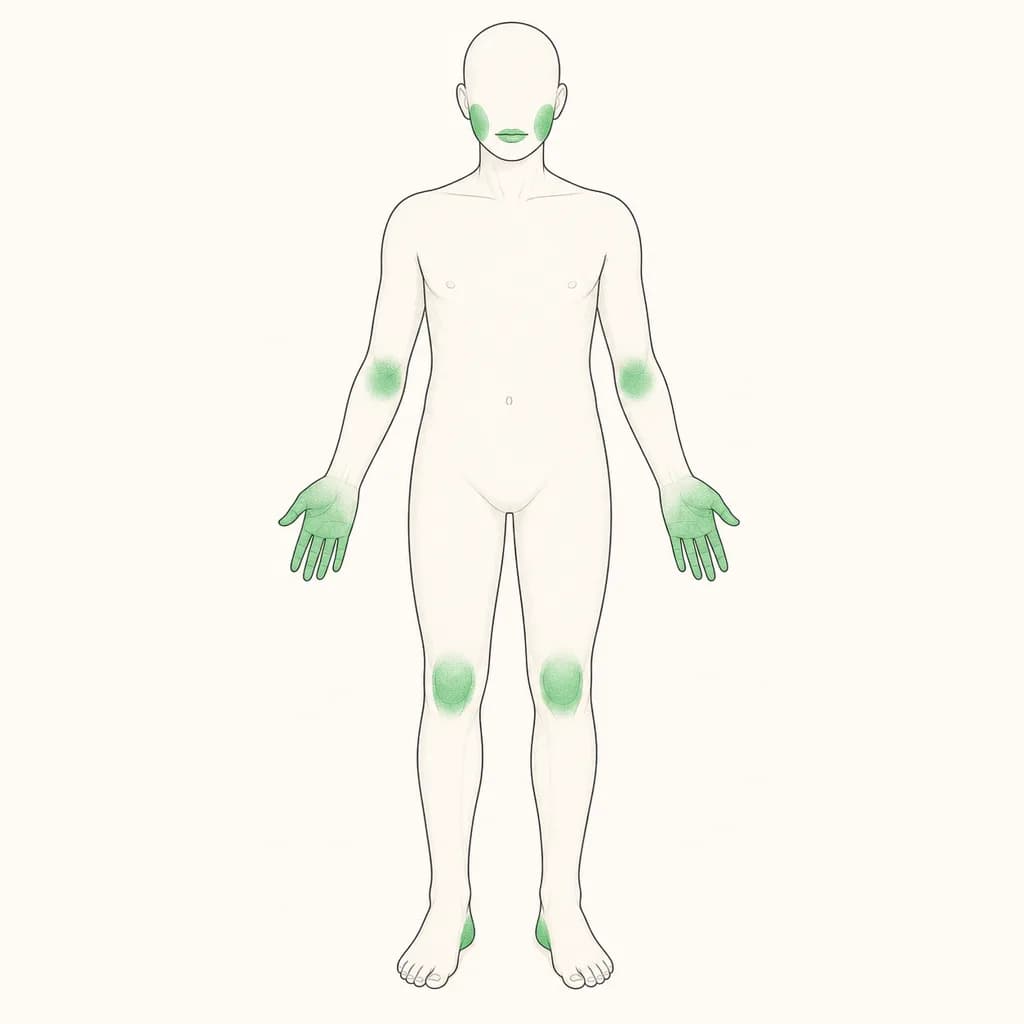
Atopic dermatitis weakens the skin barrier and can leave dry, inflamed areas that split, especially on the hands, face, folds, and other frequently rubbed sites. Itching can lead to scratching, which widens fissures and makes them sting when water or products touch them.
A crack is more concerning when the surrounding skin becomes increasingly red, hot, swollen, or tender, or when yellow crust, pus, or a bad smell appears. Repeated fissures can also interfere with sleep, work, walking, or bending a joint and may mean the treatment plan needs adjustment.
How to protect the cracks
Wash gently with lukewarm water and a fragrance-free cleanser, then pat dry. Apply a thick, bland moisturiser soon after washing and reapply whenever the skin feels dry. Cover painful fissures with a clean dressing that does not stick to the wound. Keep nails short, use gloves for wet or chemical tasks, and avoid picking flakes or scabs.
When to seek care
Contact a clinician if cracks are deep, bleeding repeatedly, failing to heal, or limiting movement despite careful moisturising. Seek prompt care for spreading redness, increasing warmth, swelling, pus, honey-coloured crusts, fever, or rapidly worsening pain. Urgent assessment is needed if swelling affects the lips or breathing, or if a widespread blistering rash develops.
Questions for your doctor
Ask whether the fissures show infection, which moisturiser and dressing are suitable, how to manage itching, and whether your current anti-inflammatory treatment needs changing. Tell the clinician about soaps, gloves, work exposures, and products that sting.
Find care
General Clinics & Polyclinics in Abu Dhabi
That answer is general. If you want it applied to your own case, these are licensed general clinics & polyclinics listed in Abu Dhabi.
27 Ar Ruwwad St - Shakhbout City - MSH4 - Abu Dhabi - United Arab Emirates
Accepts: Daman, Thiqa, Cigna, MetLife +20 more
Al Ruwais, Al Dhafrah
Accepts: Daman, Thiqa, AXA, Cigna +16 more
Al Bahyah - Al Bahyah Old - Abu Dhabi - United Arab Emirates
Accepts: Daman, Thiqa, Cigna, Allianz Care +18 more
Abu Dhabi
Accepts: Daman, Thiqa, AXA, Cigna +27 more
Ordered by verification status and how complete each clinic's public record is, then alphabetically. This is a directory listing, not a ranking — Zavis does not rate or recommend providers.
A factual listing drawn from the DHA, DOH and MOHAP licence registers. It is not a referral, an endorsement, or advice that any of these providers is right for you.
Questions people ask
How can I reduce cracking during a flare?
Use frequent thick moisturiser, gentle washing, protective gloves for wet tasks, and a clean dressing over painful fissures.
Can cracked eczema become infected?
Yes. Increasing warmth, swelling, pain, pus, crusting, or fever can indicate infection and should be assessed.
Related
Related reading
Keep reading
Medical disclaimer. This page is general health information, not medical advice, and it cannot diagnose you. Always consult a licensed healthcare provider about your own symptoms and treatment. In an emergency in the UAE, call 998 for an ambulance.