
When Is Strength Training Rehabilitation Recommended for Osteopenia?
Short answer
Strength training rehabilitation is recommended for osteopenia when a clinician has assessed fracture risk and can prescribe safe, progressive loading with attention to posture and balance.
This answers one question. It is not a diagnosis and does not replace an assessment by a licensed doctor.
At a glance
- Key checks
- Fracture risk, posture, balance, and medical history
- Training style
- Controlled, progressive resistance
- Safety point
- Avoid jerky bending and twisting
Understanding the role of strength work
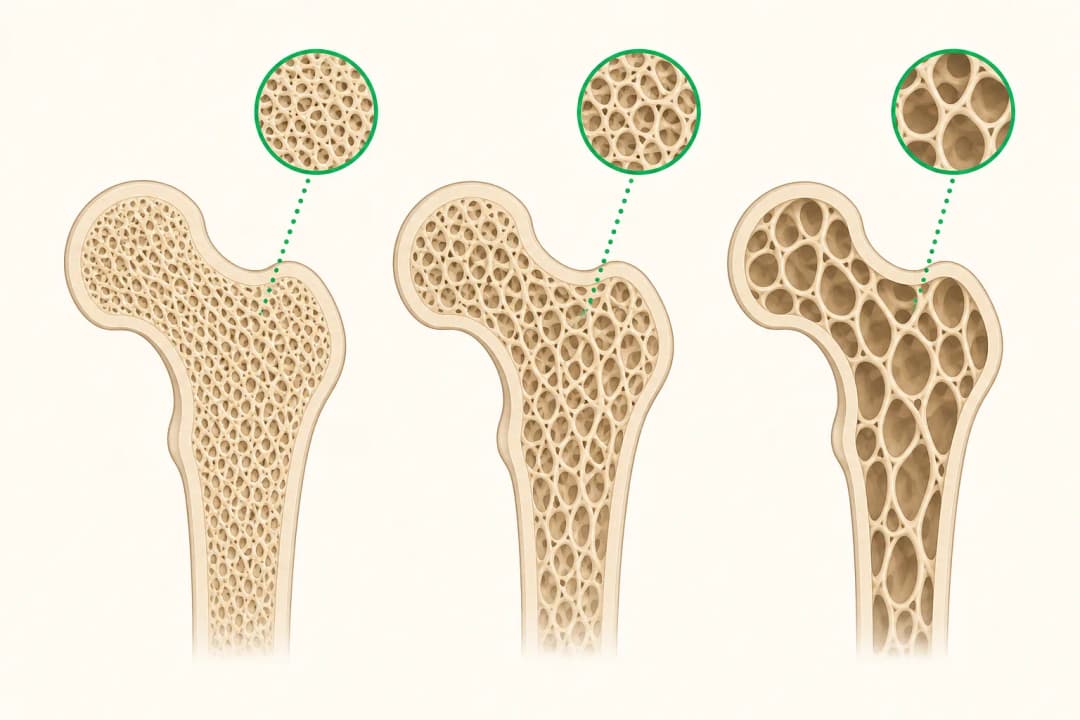
Osteopenia describes lower bone density than expected for healthy bone, but it does not automatically mean that exercise is unsafe. Strength work can challenge muscles and the skeleton while also supporting balance and the ability to manage everyday tasks. The programme must reflect fracture history, spinal health, other medical conditions, medication, fitness, and confidence with movement. Technique matters: controlled lifting and a neutral spine are generally more suitable than forceful bending or twisting.
How rehabilitation is planned
Start with an assessment by a physiotherapist or another qualified clinician. Exercises may include sit-to-stand practice, resistance bands, supported squats, rowing movements, and balance work, selected for the person rather than the scan result alone. Increase the challenge gradually and avoid holding your breath or using jerky movements. If there has been a recent fracture, pain in the spine, or another bone concern, get specific clearance before loading. The [Strength Training Rehabilitation](/treatments/physiotherapy-and-rehabilitation/strength-training-rehabilitation/) page describes this approach.
When to seek care
Arrange medical review for new bone pain, unexplained back pain, a change in posture, loss of height, or a fall. Seek urgent care after an injury causing severe pain, deformity, inability to bear weight, or sudden loss of function. A clinician can decide whether imaging, bone-health assessment, or an altered exercise plan is needed.
Questions for your doctor
Ask which movements are appropriate for your fracture risk, whether any spinal positions should be avoided, and how to progress resistance. Ask how balance training, nutrition, medication, and fall prevention fit alongside the exercise plan.
Find care
General Clinics & Polyclinics in Abu Dhabi
That answer is general. If you want it applied to your own case, these are licensed general clinics & polyclinics listed in Abu Dhabi.
27 Ar Ruwwad St - Shakhbout City - MSH4 - Abu Dhabi - United Arab Emirates
Accepts: Daman, Thiqa, Cigna, MetLife +20 more
Al Ruwais, Al Dhafrah
Accepts: Daman, Thiqa, AXA, Cigna +16 more
Al Bahyah - Al Bahyah Old - Abu Dhabi - United Arab Emirates
Accepts: Daman, Thiqa, Cigna, Allianz Care +18 more
Abu Dhabi
Accepts: Daman, Thiqa, AXA, Cigna +27 more
Ordered by verification status and how complete each clinic's public record is, then alphabetically. This is a directory listing, not a ranking — Zavis does not rate or recommend providers.
A factual listing drawn from the DHA, DOH and MOHAP licence registers. It is not a referral, an endorsement, or advice that any of these providers is right for you.
Questions people ask
Is osteopenia a reason to avoid strength training?
Not necessarily. A tailored programme can be appropriate, but the loading and technique should reflect fracture risk and any previous bone injury.
Can balance exercises be part of rehabilitation?
Yes. Balance work may help build confidence and reduce situations that make falls more likely, alongside strengthening.
Keep reading
Medical disclaimer. This page is general health information, not medical advice, and it cannot diagnose you. Always consult a licensed healthcare provider about your own symptoms and treatment. In an emergency in the UAE, call 998 for an ambulance.