
When Is PRP Injection Recommended for Patellar Tendinitis?
Short answer
PRP injection may be discussed for patellar tendinitis when a confirmed tendon problem remains painful or limiting after a structured rehabilitation plan.
This answers one question. It is not a diagnosis and does not replace an assessment by a licensed doctor.
At a glance
- Typical focus
- Load modification followed by progressive tendon strengthening
- PRP role
- A possible adjunct after assessment, not a substitute for rehabilitation
The tendon problem and the injection
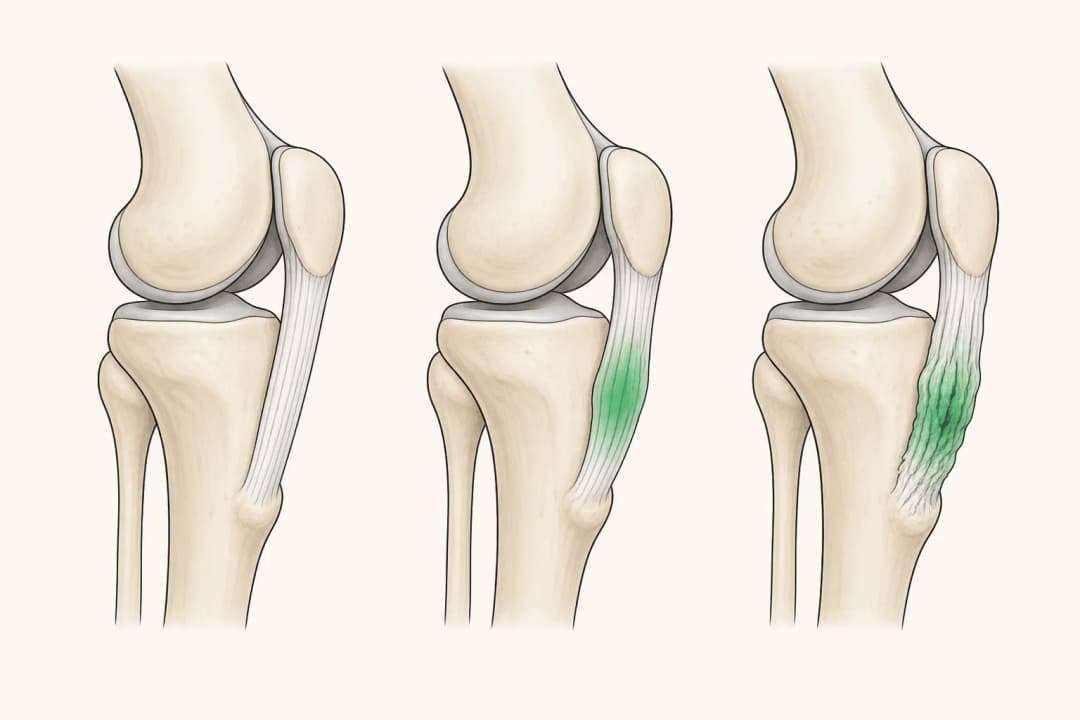
Patellar tendinitis, also called patellar tendinopathy, affects the tendon connecting the kneecap to the shin. Pain often appears below the kneecap during jumping, running, squatting or stairs. Examination helps distinguish tendon pain from a kneecap problem, meniscus issue or injury to another structure. PRP is made from your blood and placed near the affected tendon. It may be considered to support a healing response, but it does not remove the need for load management and progressive strengthening.
Steps before deciding
Have the diagnosis checked and describe which movements provoke pain, how long symptoms have lasted and what training changes you have tried. Early care commonly focuses on reducing aggravating loads without complete inactivity, then building quadriceps and hip strength through a graded programme. If PRP is proposed, ask about imaging, injection placement, the temporary activity plan and when tendon loading can progress. Learn more in [Patellar Tendinitis](/conditions/patellar-tendinitis/) and [PRP Injection](/treatments/non-surgical-orthopedics/prp-injection/).
Warning signs around the kneecap
Arrange prompt assessment after a sudden force if you felt a pop, cannot actively straighten the knee, or have marked swelling or difficulty walking. A hot, red knee with fever also needs urgent medical review. These symptoms can signal a significant tear, fracture or joint problem and should be assessed before an injection is considered.
Questions for your doctor
Is the pain definitely coming from the patellar tendon? What level of tendon loading is safe now? How long should rehabilitation be tried before we review the plan? What would PRP add to my current programme? How will we measure progress without returning to sport too quickly?
Find care
General Clinics & Polyclinics in Abu Dhabi
That answer is general. If you want it applied to your own case, these are licensed general clinics & polyclinics listed in Abu Dhabi.
27 Ar Ruwwad St - Shakhbout City - MSH4 - Abu Dhabi - United Arab Emirates
Accepts: Daman, Thiqa, Cigna, MetLife +20 more
Al Ruwais, Al Dhafrah
Accepts: Daman, Thiqa, AXA, Cigna +16 more
Al Bahyah - Al Bahyah Old - Abu Dhabi - United Arab Emirates
Accepts: Daman, Thiqa, Cigna, Allianz Care +18 more
Abu Dhabi
Accepts: Daman, Thiqa, AXA, Cigna +27 more
Ordered by verification status and how complete each clinic's public record is, then alphabetically. This is a directory listing, not a ranking — Zavis does not rate or recommend providers.
A factual listing drawn from the DHA, DOH and MOHAP licence registers. It is not a referral, an endorsement, or advice that any of these providers is right for you.
Questions people ask
Can PRP replace physiotherapy for patellar tendinitis?
No. A gradual strengthening programme remains central to restoring tendon capacity and activity tolerance.
Is pain below the kneecap enough to choose PRP?
No. Similar pain can come from several knee conditions, so examination is needed first.
Related
Related reading
Keep reading
Medical disclaimer. This page is general health information, not medical advice, and it cannot diagnose you. Always consult a licensed healthcare provider about your own symptoms and treatment. In an emergency in the UAE, call 998 for an ambulance.