
When is physiotherapy recommended for gluteal tendinopathy?
Short answer
Physiotherapy is recommended when gluteal tendinopathy causes ongoing outer-hip pain, weakness, or difficulty with walking, stairs, sleep, or exercise.
This answers one question. It is not a diagnosis and does not replace an assessment by a licensed doctor.
At a glance
- Common focus
- Progressive hip and trunk strengthening
- Activity advice
- Adjust tendon-loading positions and tasks
- Assessment trigger
- Persistent pain, weakness, or loss of function
How physiotherapy can help
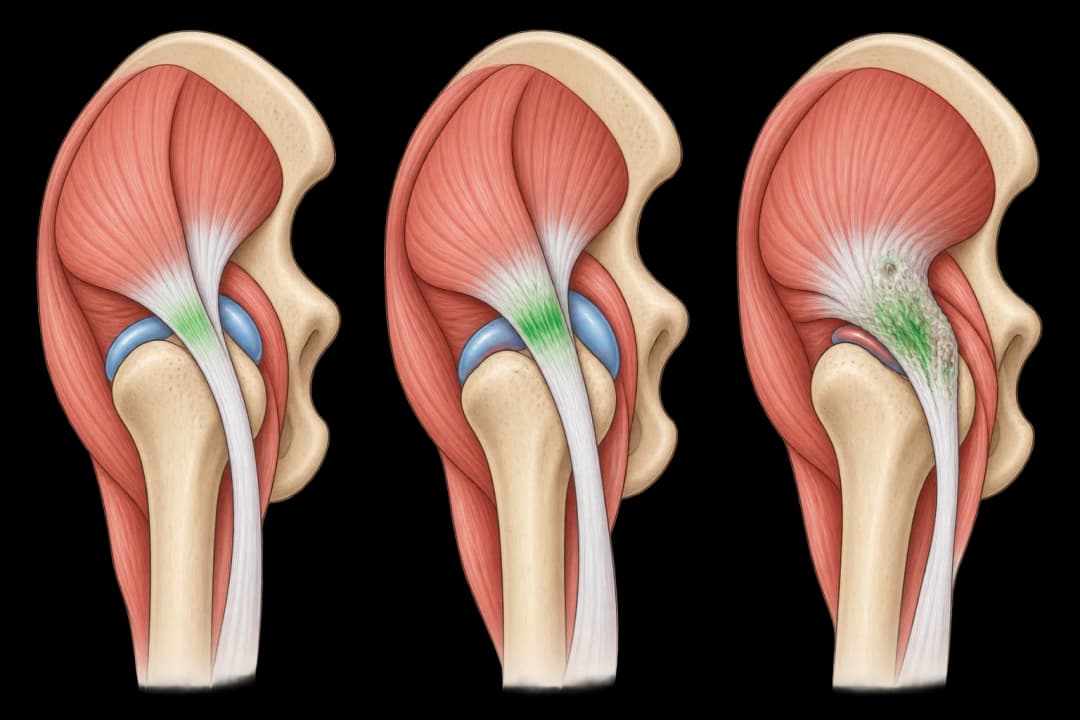
Gluteal tendinopathy affects the tendons that connect the buttock muscles to the outside of the hip. A physiotherapist can assess hip strength, leg control, walking habits, and activities that load the tendon. Treatment commonly uses gradually progressed strengthening for the hip and trunk, with advice on changing aggravating movements while capacity builds.
An appointment may be useful even when symptoms are mild if they keep returning, interfere with side-lying sleep, or make you avoid normal activities. The plan should match your current irritability; a painful flare does not mean the tendon needs complete rest.
What to expect from a plan
Start by noting which positions and tasks increase pain, such as crossing the legs, standing with the hip dropped, hills, or repeated stairs. Your physiotherapist may modify these loads, then prescribe exercises such as controlled hip abduction, bridging, or single-leg work as tolerated. Progress is based on how the hip responds during activity and afterward, rather than on a fixed timetable.
Wear supportive footwear for activities that feel unstable and avoid suddenly adding long walks, steep climbs, or intense side-to-side exercise. A clinician can help distinguish a manageable exercise response from a sign that the load should be reduced.
When to seek medical assessment
Arrange an assessment if outer-hip pain persists, worsens, or limits sleep and daily movement despite sensible activity changes. Seek prompt medical care after a significant fall, if you cannot bear weight, or if the hip becomes hot, markedly swollen, or associated with fever. New numbness, leg weakness, or pain extending below the knee also deserves clinical review because another problem may be involved.
Questions to ask
Ask whether the pain pattern fits gluteal tendinopathy, which activities should be changed first, how to judge exercise tolerance, and when strengthening can progress. You can also ask whether another hip or lower-back assessment is needed.
Find care
General Clinics & Polyclinics in Abu Dhabi
That answer is general. If you want it applied to your own case, these are licensed general clinics & polyclinics listed in Abu Dhabi.
27 Ar Ruwwad St - Shakhbout City - MSH4 - Abu Dhabi - United Arab Emirates
Accepts: Daman, Thiqa, Cigna, MetLife +20 more
Al Ruwais, Al Dhafrah
Accepts: Daman, Thiqa, AXA, Cigna +16 more
Al Bahyah - Al Bahyah Old - Abu Dhabi - United Arab Emirates
Accepts: Daman, Thiqa, Cigna, Allianz Care +18 more
Abu Dhabi
Accepts: Daman, Thiqa, AXA, Cigna +27 more
Ordered by verification status and how complete each clinic's public record is, then alphabetically. This is a directory listing, not a ranking — Zavis does not rate or recommend providers.
A factual listing drawn from the DHA, DOH and MOHAP licence registers. It is not a referral, an endorsement, or advice that any of these providers is right for you.
Questions people ask
Can physiotherapy help if the pain is affecting sleep?
Yes. A physiotherapist can review side-lying positions, daytime loading, and strengthening choices to reduce irritation while maintaining useful movement.
Should I stop all exercise?
Usually, the goal is to modify aggravating load and keep suitable activity, then build strength gradually with guidance.
Related
Related reading
Keep reading
Medical disclaimer. This page is general health information, not medical advice, and it cannot diagnose you. Always consult a licensed healthcare provider about your own symptoms and treatment. In an emergency in the UAE, call 998 for an ambulance.