
When is oral corticosteroid treatment recommended for alopecia areata?
Short answer
Oral corticosteroid treatment may be considered for rapidly spreading or extensive alopecia areata when a dermatologist judges that short-term immune suppression is appropriate.
This answers one question. It is not a diagnosis and does not replace an assessment by a licensed doctor.
At a glance
- Possible role
- Short-term immune suppression for active extensive loss
- Key safeguard
- Use only with a dermatologist's plan and monitoring
Why a dermatologist may discuss it
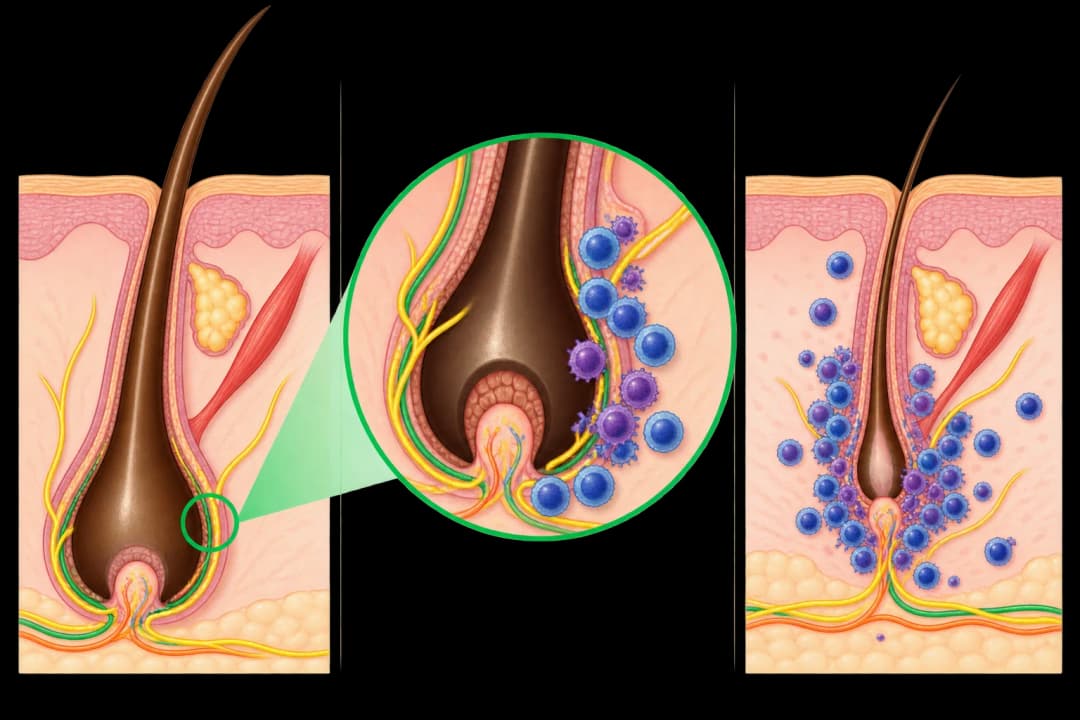
Alopecia areata is an immune-mediated condition that can cause sharply defined patches of hair loss. Oral corticosteroids can suppress immune activity throughout the body, so they may be discussed when hair loss is progressing quickly or involves a larger area and the potential benefit justifies the risks.
They are not suitable for everyone and may not provide lasting control after the course ends. A dermatologist will consider the pattern of loss, scalp examination, other illnesses, infection risk, blood pressure, blood sugar, bone health, mood history, and current medicines.
Preparing for a treatment decision
Bring a list of medicines and supplements, describe when the hair loss began, and share photographs that show its progression. Never start, stop, or taper oral corticosteroids without the prescriber's instructions; sudden changes after a longer course can be unsafe.
Ask how the medicine will be monitored and what alternatives may suit your pattern of hair loss. Report new infection symptoms, marked mood changes, severe stomach pain, vision changes, or unusual thirst promptly while taking it.
When to seek medical review
Arrange prompt dermatology review if hair loss is rapidly expanding, affects the eyebrows or eyelashes, involves nail changes, or comes with scalp pain, scale, redness, or scarring. Seek urgent care for severe infection symptoms, breathing difficulty, confusion, or major changes in mood while using a corticosteroid.
Questions for your doctor
Ask why oral treatment fits your pattern, how long the planned course lasts, which monitoring is needed, what side effects require a call, and which non-oral options could be considered.
Find care
General Clinics & Polyclinics in Abu Dhabi
That answer is general. If you want it applied to your own case, these are licensed general clinics & polyclinics listed in Abu Dhabi.
27 Ar Ruwwad St - Shakhbout City - MSH4 - Abu Dhabi - United Arab Emirates
Accepts: Daman, Thiqa, Cigna, MetLife +20 more
Al Ruwais, Al Dhafrah
Accepts: Daman, Thiqa, AXA, Cigna +16 more
Al Bahyah - Al Bahyah Old - Abu Dhabi - United Arab Emirates
Accepts: Daman, Thiqa, Cigna, Allianz Care +18 more
Abu Dhabi
Accepts: Daman, Thiqa, AXA, Cigna +27 more
Ordered by verification status and how complete each clinic's public record is, then alphabetically. This is a directory listing, not a ranking — Zavis does not rate or recommend providers.
A factual listing drawn from the DHA, DOH and MOHAP licence registers. It is not a referral, an endorsement, or advice that any of these providers is right for you.
Questions people ask
Will oral corticosteroids restore hair permanently?
They may help control active inflammation for some people, but hair growth and relapse vary and the effect may not continue after treatment.
Can I stop the tablets when shedding slows?
No. Follow the prescribed schedule and tapering instructions, because stopping abruptly can be unsafe after certain courses.
Related
Related reading
Keep reading
Medical disclaimer. This page is general health information, not medical advice, and it cannot diagnose you. Always consult a licensed healthcare provider about your own symptoms and treatment. In an emergency in the UAE, call 998 for an ambulance.