
When is JAK inhibitor treatment recommended for alopecia areata?
Short answer
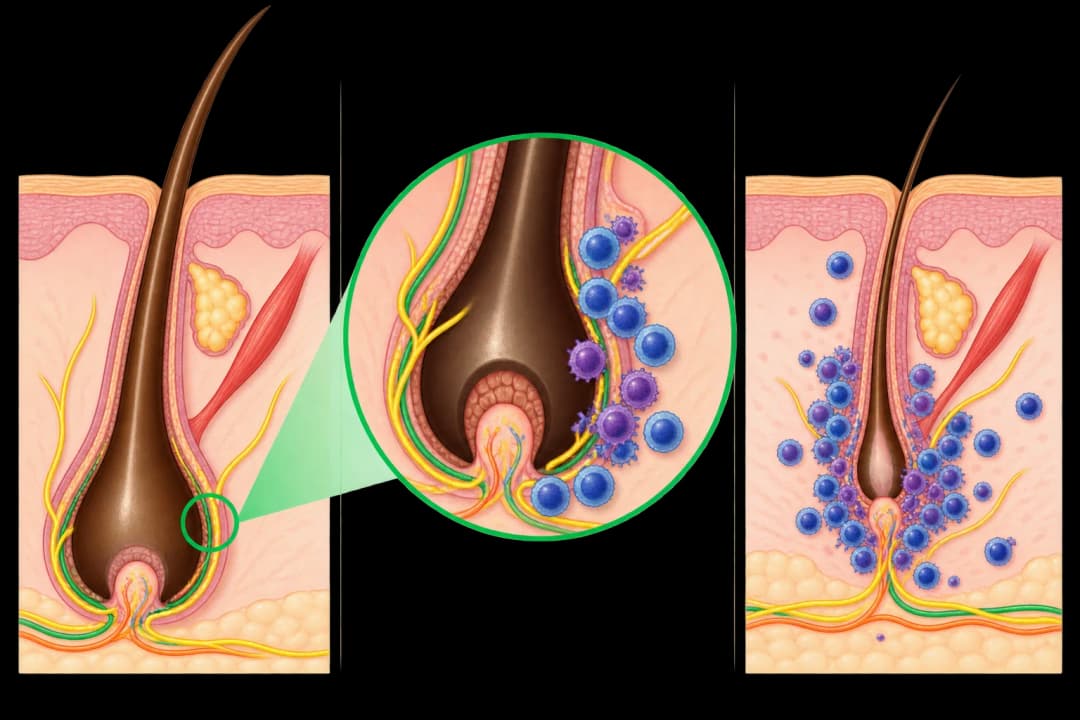
JAK inhibitor treatment may be recommended for significant alopecia areata when a dermatologist confirms the diagnosis and judges the benefits and safety risks suitable.
This answers one question. It is not a diagnosis and does not replace an assessment by a licensed doctor.
At a glance
- Treatment target
- Immune signalling involved in alopecia areata
- Before treatment
- Diagnosis, medical history, medicines, and safety checks
- Urgent concern
- Serious infection or clot-related symptoms
What the assessment looks at
Alopecia areata is an immune-related condition that can cause smooth patches of hair loss and sometimes involve the scalp more widely, eyebrows, eyelashes, or body hair. A dermatologist checks the pattern, speed of hair loss, nail changes, other autoimmune symptoms, and whether another condition could explain it. JAK inhibitors modify immune signalling and are not appropriate for everyone. The clinician reviews infections, vaccination history, blood-test results, liver or blood problems, clotting concerns, smoking, and other medicines before choosing a treatment.
What to do before starting
Arrange a dermatology review and bring a list of medicines, illnesses, infections, and vaccinations. Ask whether tests are needed before treatment and how often follow-up will occur. Take the medicine exactly as prescribed, do not share it, and tell the clinician about fever, persistent cough, shingles exposure, unusual bruising, or new medicines. Protect exposed scalp skin from sun and consider gentle hair care while regrowth is being assessed.
When to seek urgent advice
Seek prompt assessment for rapidly spreading hair loss, painful or scarring scalp changes, or loss of eyelashes with eye irritation. While taking a JAK inhibitor, urgently contact the care team for fever or other infection symptoms, chest pain, sudden breathlessness, one-sided leg swelling, severe abdominal pain, or unusual weakness. Do not wait for routine follow-up when these symptoms appear.
Questions for your dermatologist
Ask how certain the diagnosis is, what extent of hair loss makes a JAK inhibitor reasonable, which tests and vaccines are needed, how infection and clotting risks are managed, and how progress or relapse will be assessed.
Find care
General Clinics & Polyclinics in Abu Dhabi
That answer is general. If you want it applied to your own case, these are licensed general clinics & polyclinics listed in Abu Dhabi.
27 Ar Ruwwad St - Shakhbout City - MSH4 - Abu Dhabi - United Arab Emirates
Accepts: Daman, Thiqa, Cigna, MetLife +20 more
Al Ruwais, Al Dhafrah
Accepts: Daman, Thiqa, AXA, Cigna +16 more
Al Bahyah - Al Bahyah Old - Abu Dhabi - United Arab Emirates
Accepts: Daman, Thiqa, Cigna, Allianz Care +18 more
Abu Dhabi
Accepts: Daman, Thiqa, AXA, Cigna +27 more
Ordered by verification status and how complete each clinic's public record is, then alphabetically. This is a directory listing, not a ranking — Zavis does not rate or recommend providers.
A factual listing drawn from the DHA, DOH and MOHAP licence registers. It is not a referral, an endorsement, or advice that any of these providers is right for you.
Questions people ask
Is a JAK inhibitor suitable for every person with alopecia areata?
No. Eligibility depends on diagnosis, extent and activity of hair loss, medical history, and safety assessment.
Will hair regrowth happen immediately?
No. Response is assessed over follow-up visits, and the dermatologist will explain what changes to expect and when.
Related
Related reading
Keep reading
Medical disclaimer. This page is general health information, not medical advice, and it cannot diagnose you. Always consult a licensed healthcare provider about your own symptoms and treatment. In an emergency in the UAE, call 998 for an ambulance.