
When is exercise therapy recommended for scapular dyskinesis?
Short answer
Exercise therapy is recommended for scapular dyskinesis when altered shoulder blade movement is contributing to pain, weakness or limited activity and the exercises can be tailored after assessment.
This answers one question. It is not a diagnosis and does not replace an assessment by a licensed doctor.
At a glance
- Common goals
- Better control, strength and reaching tolerance
- Assessment
- Shoulder, neck and upper-back movement may be checked
What this means
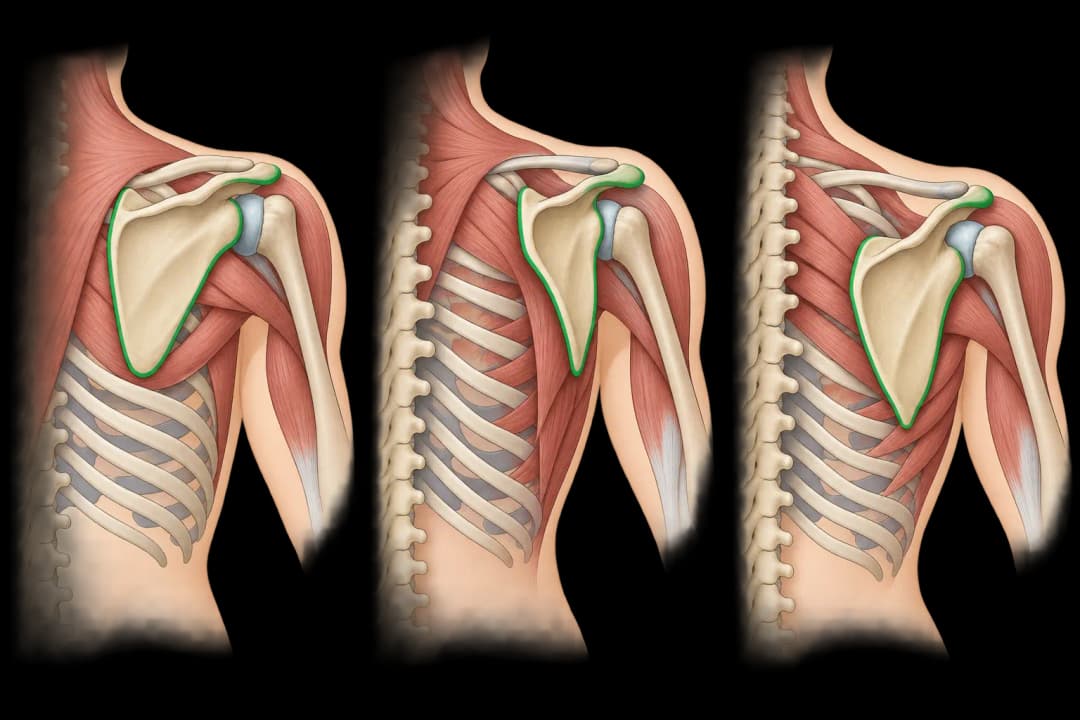
Scapular dyskinesis describes a change in the way the shoulder blade rests or moves. It can be linked with reduced control of the shoulder and upper-back muscles, stiffness, an injury or repeated overhead activity. A physiotherapist watches arm elevation and checks strength, range of motion and neck or shoulder symptoms. Treatment may include controlled shoulder-blade movement, rotator-cuff strengthening, upper-back mobility and gradual return to lifting.
What to do next
Book an assessment if clicking, visible winging, pain or weakness is limiting dressing, reaching, work or sport. Keep movements within the prescribed range and avoid repeatedly testing painful overhead positions. Your clinician may adjust posture, workload and technique, then progress from low-load control drills to functional movements. Report numbness, neck pain or a history of trauma because these details can change the plan.
When to seek care promptly
Seek urgent assessment after a significant injury with deformity, inability to lift the arm, sudden marked weakness, new loss of sensation or a cold, pale hand. Get prompt advice for rapidly worsening pain, fever with a hot swollen shoulder or breathing symptoms alongside new shoulder-blade changes.
Questions for your doctor
Ask what is affecting the movement, which muscles need retraining, when overhead activity can increase, and how you should respond if an exercise causes symptoms.
Find care
General Clinics & Polyclinics in Abu Dhabi
That answer is general. If you want it applied to your own case, these are licensed general clinics & polyclinics listed in Abu Dhabi.
27 Ar Ruwwad St - Shakhbout City - MSH4 - Abu Dhabi - United Arab Emirates
Accepts: Daman, Thiqa, Cigna, MetLife +20 more
Al Ruwais, Al Dhafrah
Accepts: Daman, Thiqa, AXA, Cigna +16 more
Al Bahyah - Al Bahyah Old - Abu Dhabi - United Arab Emirates
Accepts: Daman, Thiqa, Cigna, Allianz Care +18 more
Abu Dhabi
Accepts: Daman, Thiqa, AXA, Cigna +27 more
Ordered by verification status and how complete each clinic's public record is, then alphabetically. This is a directory listing, not a ranking — Zavis does not rate or recommend providers.
A factual listing drawn from the DHA, DOH and MOHAP licence registers. It is not a referral, an endorsement, or advice that any of these providers is right for you.
Questions people ask
Is clicking alone a reason for exercise therapy?
Clicking is interpreted with pain, weakness and movement findings; an assessment helps decide whether treatment is needed.
Can I continue sport?
Your clinician can modify training and gradually reintroduce overhead or load-bearing activities as control improves.
Keep reading
Medical disclaimer. This page is general health information, not medical advice, and it cannot diagnose you. Always consult a licensed healthcare provider about your own symptoms and treatment. In an emergency in the UAE, call 998 for an ambulance.