
When is curettage and cautery recommended for dermatosis papulosa nigra?
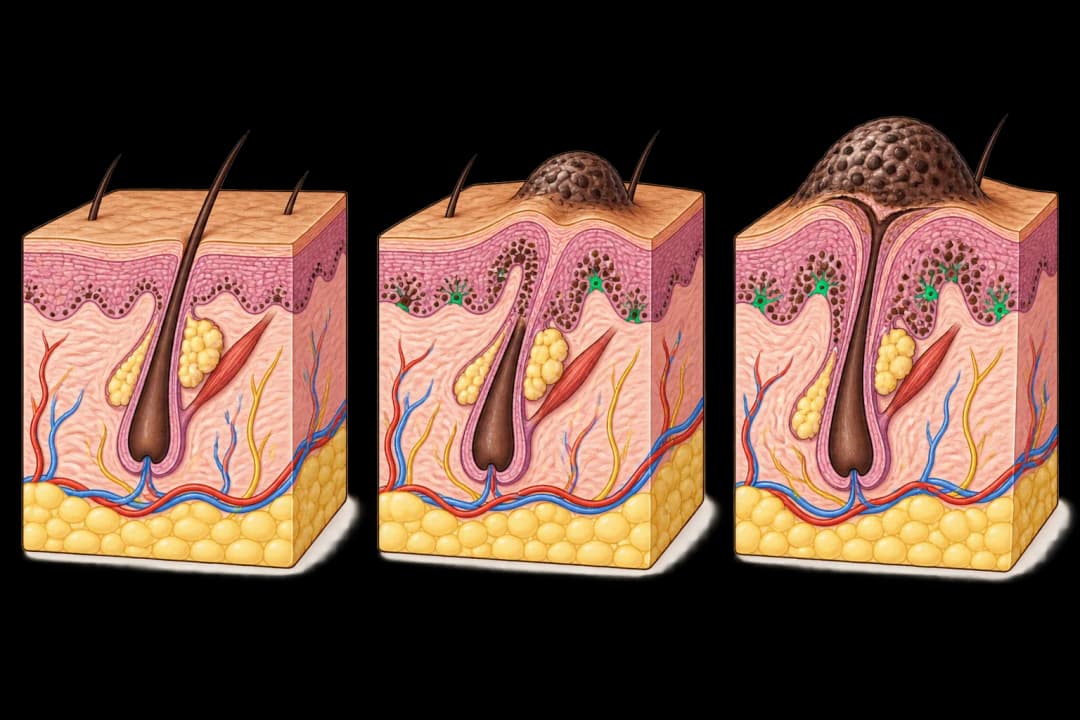
Short answer
Curettage and cautery may be recommended for selected raised dermatosis papulosa nigra lesions when removal is desired and a dermatologist has confirmed the diagnosis.
This answers one question. It is not a diagnosis and does not replace an assessment by a licensed doctor.
At a glance
- Typical reason
- Cosmetic concern or repeated irritation from a raised bump
- Before treatment
- Diagnosis should be confirmed by a clinician
- Key aftercare
- Keep the area protected and do not pick the healing crust
What this means
Dermatosis papulosa nigra causes small, usually harmless dark bumps, often on the face, neck or upper chest. Treatment is commonly elective and focuses on a bump that catches on clothing or jewellery, becomes irritated, or is cosmetically bothersome. Curettage removes the raised tissue, while cautery uses controlled heat to help control bleeding and treat the base. The clinician chooses the method according to the lesion's size, elevation, location and your skin's tendency to change colour after inflammation.
What to do next
Arrange a skin assessment before removal, especially if a bump is new, changing, crusted or different from your other lesions. Do not scrape or burn the bumps at home. Ask how many lesions are suitable for treatment in one visit, what local anaesthetic will be used, and how to protect the area while it heals. Follow wound-care instructions carefully and avoid picking a crust, since this can increase irritation and pigment change.
When to seek care
Seek prompt dermatology review for a lesion that changes quickly, bleeds without being rubbed, develops an ulcer, becomes persistently painful, or does not resemble your established bumps. These features need assessment before cosmetic removal because not every dark raised spot is dermatosis papulosa nigra. Contact the treating clinic if redness spreads, swelling worsens, drainage develops or discomfort increases after the procedure.
Questions for your doctor
Ask whether the diagnosis is clear, whether another removal method would better suit the lesion's position, and how your skin tone may respond during healing. Discuss expected crusting, aftercare, possible colour change and the chance that a treated bump may need reassessment.
Find care
General Clinics & Polyclinics in Abu Dhabi
That answer is general. If you want it applied to your own case, these are licensed general clinics & polyclinics listed in Abu Dhabi.
27 Ar Ruwwad St - Shakhbout City - MSH4 - Abu Dhabi - United Arab Emirates
Accepts: Daman, Thiqa, Cigna, MetLife +20 more
Al Ruwais, Al Dhafrah
Accepts: Daman, Thiqa, AXA, Cigna +16 more
Al Bahyah - Al Bahyah Old - Abu Dhabi - United Arab Emirates
Accepts: Daman, Thiqa, Cigna, Allianz Care +18 more
Abu Dhabi
Accepts: Daman, Thiqa, AXA, Cigna +27 more
Ordered by verification status and how complete each clinic's public record is, then alphabetically. This is a directory listing, not a ranking — Zavis does not rate or recommend providers.
A factual listing drawn from the DHA, DOH and MOHAP licence registers. It is not a referral, an endorsement, or advice that any of these providers is right for you.
Questions people ask
Is curettage and cautery required for dermatosis papulosa nigra?
No. Many lesions do not need treatment. Removal is usually considered when bumps are bothersome, irritated or unwanted cosmetically.
Can treatment change the colour of the skin?
Yes. Temporary or longer-lasting lightening or darkening can occur after skin procedures, so discuss pigment risk before treatment.
Related
Related reading
Keep reading
Medical disclaimer. This page is general health information, not medical advice, and it cannot diagnose you. Always consult a licensed healthcare provider about your own symptoms and treatment. In an emergency in the UAE, call 998 for an ambulance.