
When is antibiotic treatment recommended for sinusitis?
Short answer
Antibiotics are recommended for sinusitis when a clinician suspects a bacterial infection based on the pattern and severity of symptoms.
This answers one question. It is not a diagnosis and does not replace an assessment by a licensed doctor.
At a glance
- Common pattern
- Blocked nose, facial pressure and reduced smell
- Antibiotic decision
- Based on symptom pattern, severity and course
- Helpful support
- Fluids, rest and suitable nasal or pain relief
What this means
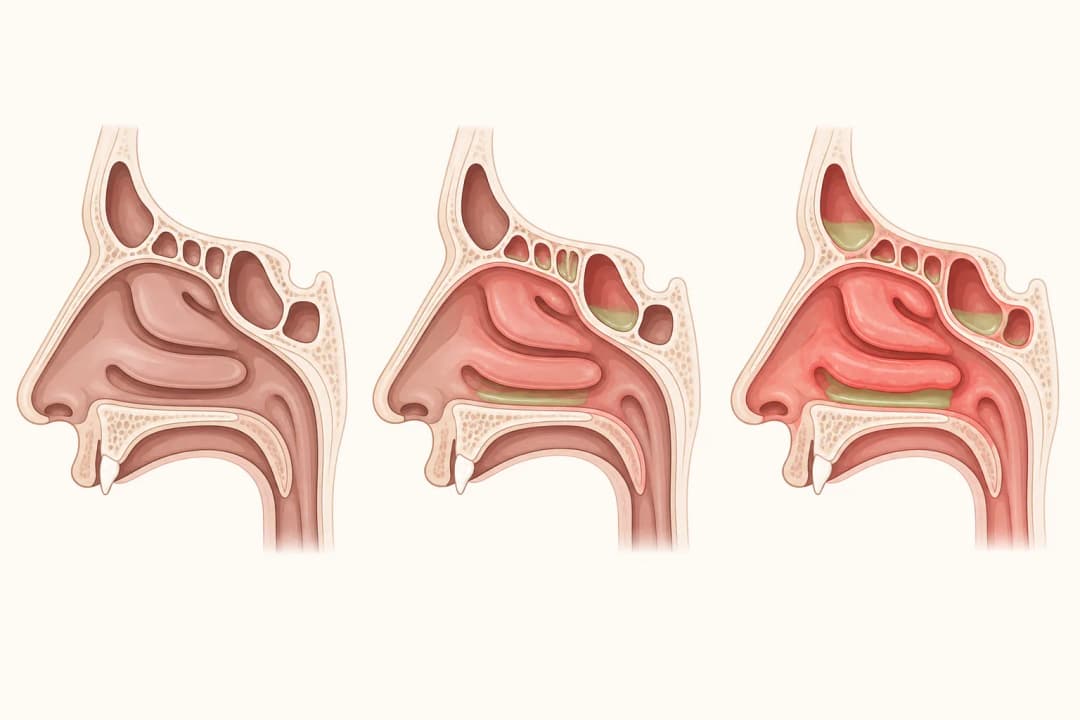
Sinusitis commonly presents with blocked or runny nose, facial pressure, reduced smell and thick nasal discharge. Many episodes are linked to viruses and improve with supportive care, so antibiotics are not automatically useful. A clinician considers how long symptoms have lasted, whether they are severe, and whether they improved before becoming worse again. Examination of the nose, throat and face helps distinguish sinusitis from other causes of facial pain. The decision also takes account of pregnancy, allergies, other medicines and existing health conditions.
What to do
Arrange a review if symptoms are severe, persistent or worsening after an initial improvement. Rest, drink fluids and use saline nasal rinsing or prescribed symptom relief if suitable for you. If antibiotics are prescribed, take them exactly as directed and report troublesome side effects rather than changing the dose yourself. Avoid using decongestant sprays for longer than the product instructions, and do not use leftover antibiotics. A pharmacist or clinician can help choose safe pain relief when you have another medical condition.
When to seek care quickly
Seek urgent help for swelling or redness around an eye, vision changes, severe headache unlike your usual symptoms, neck stiffness, confusion, weakness, or difficulty breathing. Same-day assessment is sensible when facial pain is intense, one side is rapidly worsening, or you are becoming generally very unwell. These warning signs can indicate spread beyond the sinuses and should not be managed by waiting for antibiotics to work.
Questions for your doctor
Ask whether your symptoms fit bacterial sinusitis, which self-care measures are safe, whether an antibiotic is needed, how long to use it, and which changes should trigger urgent review.
Find care
General Clinics & Polyclinics in Abu Dhabi
That answer is general. If you want it applied to your own case, these are licensed general clinics & polyclinics listed in Abu Dhabi.
27 Ar Ruwwad St - Shakhbout City - MSH4 - Abu Dhabi - United Arab Emirates
Accepts: Daman, Thiqa, Cigna, MetLife +20 more
Al Ruwais, Al Dhafrah
Accepts: Daman, Thiqa, AXA, Cigna +16 more
Al Bahyah - Al Bahyah Old - Abu Dhabi - United Arab Emirates
Accepts: Daman, Thiqa, Cigna, Allianz Care +18 more
Abu Dhabi
Accepts: Daman, Thiqa, AXA, Cigna +27 more
Ordered by verification status and how complete each clinic's public record is, then alphabetically. This is a directory listing, not a ranking — Zavis does not rate or recommend providers.
A factual listing drawn from the DHA, DOH and MOHAP licence registers. It is not a referral, an endorsement, or advice that any of these providers is right for you.
Questions people ask
Does thick nasal mucus mean I need antibiotics?
Not by itself. A clinician considers the full pattern, severity and course of symptoms before recommending antibiotics.
What if sinusitis symptoms worsen after improving?
Arrange a clinical review because a new or worsening phase can change the treatment decision and may need examination.
Related
Related reading
Keep reading
Medical disclaimer. This page is general health information, not medical advice, and it cannot diagnose you. Always consult a licensed healthcare provider about your own symptoms and treatment. In an emergency in the UAE, call 998 for an ambulance.