
What to know about text neck in office workers
Short answer
Text neck in office workers describes neck strain from sustained screen posture, managed through movement breaks, setup changes, and exercise.
This answers one question. It is not a diagnosis and does not replace an assessment by a licensed doctor.
At a glance
- Typical trigger
- Long periods of phone, tablet, or computer viewing
- Core strategy
- Vary position often and build neck and upper-back endurance
What the term describes
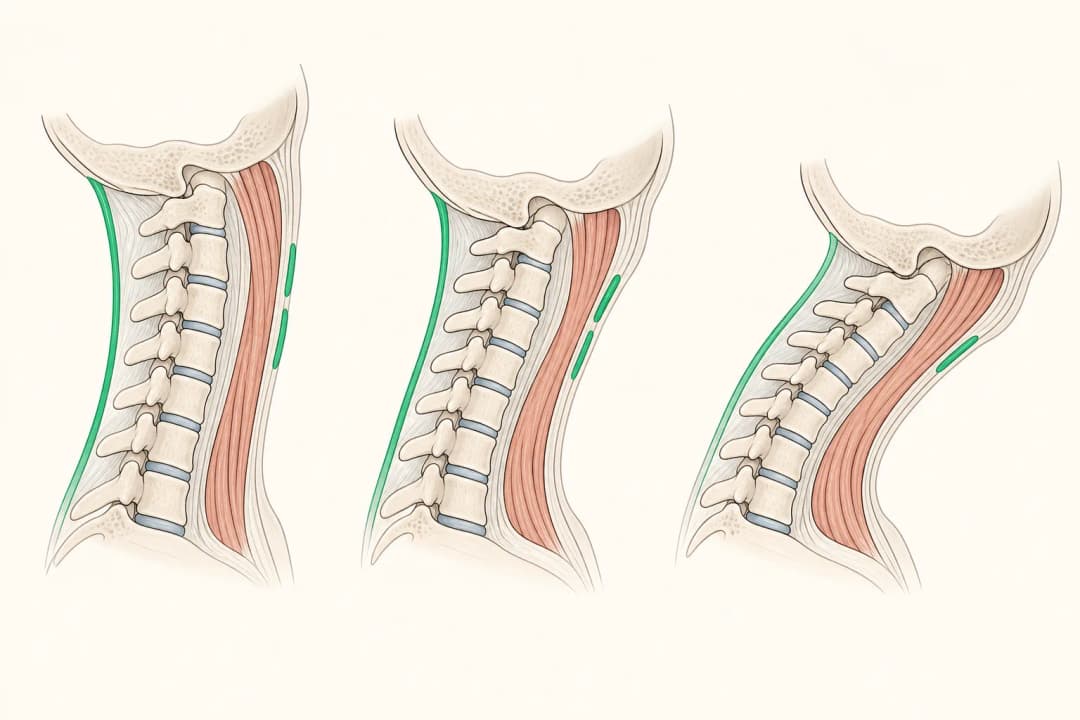
Text neck is a convenient description for neck and upper-back symptoms that develop around prolonged phone, tablet, or computer use. Looking down for a long time can keep the neck, shoulders, and upper-back muscles working without much variation. Office workers may notice aching, stiffness, headaches, or discomfort between the shoulder blades after screen-heavy periods.
Posture is only one factor. Stress, poor sleep, an unsuitable workstation, limited movement, vision needs, and a sudden increase in computer time can all affect symptoms. The neck does not need to be held in one perfect position; it benefits from regular changes in position and manageable strengthening.
Make screen work easier
Raise the monitor so you can see it without repeatedly dropping your chin, keep the keyboard and mouse close, and support your forearms when possible. Bring the phone toward eye level for short reading tasks, then put it down rather than holding the neck bent for a long period. Set a reminder to change position, walk briefly, roll the shoulders, and gently move the neck within comfort.
A physiotherapist can tailor exercises for deep neck and upper-back strength, shoulder control, and endurance. Build these gradually and judge progress by how you feel during the workday and later that evening. Frequent short changes are usually easier to maintain than waiting for one long break.
When symptoms need review
Arrange a medical or physiotherapy assessment if symptoms persist, repeatedly interrupt work, or spread into the arm. Seek urgent care for new severe headache with neurological changes, loss of balance, fainting, chest pain, sudden weakness, or loss of bladder or bowel control. After a significant injury, severe neck pain or inability to move the neck should be assessed promptly.
Questions to ask
Could my symptoms be coming from the neck, shoulder, eyesight, or another source? Which workstation changes matter most for me? Which movements should I avoid temporarily? What exercises will improve endurance? How should I respond if pain travels into the arm, or if headaches become more frequent?
Find care
General Clinics & Polyclinics in Abu Dhabi
That answer is general. If you want it applied to your own case, these are licensed general clinics & polyclinics listed in Abu Dhabi.
27 Ar Ruwwad St - Shakhbout City - MSH4 - Abu Dhabi - United Arab Emirates
Accepts: Daman, Thiqa, Cigna, MetLife +20 more
Al Ruwais, Al Dhafrah
Accepts: Daman, Thiqa, AXA, Cigna +16 more
Al Bahyah - Al Bahyah Old - Abu Dhabi - United Arab Emirates
Accepts: Daman, Thiqa, Cigna, Allianz Care +18 more
Abu Dhabi
Accepts: Daman, Thiqa, AXA, Cigna +27 more
Ordered by verification status and how complete each clinic's public record is, then alphabetically. This is a directory listing, not a ranking — Zavis does not rate or recommend providers.
A factual listing drawn from the DHA, DOH and MOHAP licence registers. It is not a referral, an endorsement, or advice that any of these providers is right for you.
Questions people ask
Does text neck mean my posture is permanently damaged?
No. Symptoms often relate to sustained loading and limited movement; changing tasks and building tolerance can help, although persistent symptoms deserve assessment.
What is the best desk posture?
Use a comfortable, changeable setup with the screen easy to view, arms supported where possible, and regular movement instead of holding one rigid position.
Related
Related reading
Keep reading
Medical disclaimer. This page is general health information, not medical advice, and it cannot diagnose you. Always consult a licensed healthcare provider about your own symptoms and treatment. In an emergency in the UAE, call 998 for an ambulance.