
What to know about rhabdomyolysis in CrossFit athletes
Short answer
Rhabdomyolysis is serious muscle breakdown that can follow unusually intense or unfamiliar exercise, and dark urine, severe muscle pain, weakness, or swelling after training needs prompt medical assessment.
This answers one question. It is not a diagnosis and does not replace an assessment by a licensed doctor.
At a glance
- Warning sign
- Dark urine after unusually intense exercise
- Immediate step
- Stop strenuous training and seek prompt medical assessment
What it means
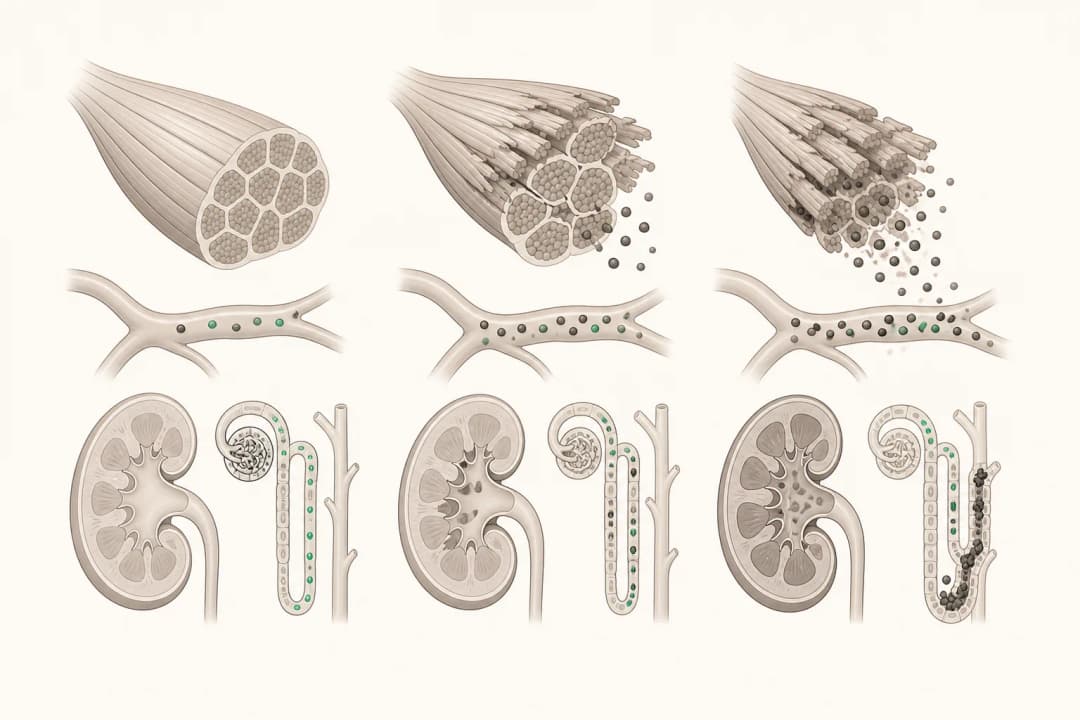
During rhabdomyolysis, injured muscle cells release substances into the bloodstream that can affect the kidneys and body chemistry. CrossFit sessions can combine heavy resistance, high repetitions, short recovery, heat, and movements that are new to the athlete. Ordinary post-workout soreness tends to be manageable and gradually settles; rhabdomyolysis may bring disproportionate pain, marked weakness, swelling, reduced urine, or urine that looks tea-coloured or dark. Symptoms can develop after the session rather than immediately.
What to do after a hard session
Stop intense exercise if these warning signs appear and seek medical advice promptly. Do not attempt to flush the problem with extreme amounts of fluid or return to training to test yourself. Tell the clinician about the workout, heat exposure, supplements or medicines, fluid intake, and when symptoms began. Until assessed, rest from strenuous exercise and follow personalised advice. Future training should build volume, intensity, and unfamiliar movements progressively, with recovery and heat management included.
When to seek urgent care
Get urgent medical assessment for dark or reduced urine, severe muscle pain or swelling, unusual weakness, confusion, fainting, vomiting, or difficulty keeping fluids down after exercise. Emergency help is appropriate if you feel severely unwell, collapse, or develop breathing or chest symptoms. Blood and urine tests may be used to assess muscle injury and kidney function; symptoms alone cannot confirm the diagnosis.
Questions for your doctor
Ask which tests are needed, when it is safe to resume activity, whether any medicine or supplement could increase risk, and how to modify training in heat. Ask for clear return-to-exercise signs and instructions about hydration that fit your health and treatment.
Find care
General Clinics & Polyclinics in Abu Dhabi
That answer is general. If you want it applied to your own case, these are licensed general clinics & polyclinics listed in Abu Dhabi.
27 Ar Ruwwad St - Shakhbout City - MSH4 - Abu Dhabi - United Arab Emirates
Accepts: Daman, Thiqa, Cigna, MetLife +20 more
Al Ruwais, Al Dhafrah
Accepts: Daman, Thiqa, AXA, Cigna +16 more
Al Bahyah - Al Bahyah Old - Abu Dhabi - United Arab Emirates
Accepts: Daman, Thiqa, Cigna, Allianz Care +18 more
Abu Dhabi
Accepts: Daman, Thiqa, AXA, Cigna +27 more
Ordered by verification status and how complete each clinic's public record is, then alphabetically. This is a directory listing, not a ranking — Zavis does not rate or recommend providers.
A factual listing drawn from the DHA, DOH and MOHAP licence registers. It is not a referral, an endorsement, or advice that any of these providers is right for you.
Questions people ask
How is rhabdomyolysis different from normal soreness?
The pain, weakness, swelling, or urine change may be far more pronounced than expected and can impair normal movement or urination.
Can I train through severe muscle pain?
No. Severe or unusual symptoms after training warrant stopping exercise and obtaining medical advice, because continued exertion can worsen muscle injury.
Medical disclaimer. This page is general health information, not medical advice, and it cannot diagnose you. Always consult a licensed healthcare provider about your own symptoms and treatment. In an emergency in the UAE, call 998 for an ambulance.