
What to know about Osgood-Schlatter disease in adolescents
Short answer
Adolescents with Osgood-Schlatter disease usually need activity adjustments, symptom-guided exercise, and review if pain, swelling or walking difficulty persists.
This answers one question. It is not a diagnosis and does not replace an assessment by a licensed doctor.
At a glance
- Typical location
- Tenderness at the bony bump below the kneecap
- Common aggravators
- Running, jumping, squatting and repeated sport loading
- Return to sport
- Progress through walking, strength and drills without rising pain
What Osgood-Schlatter disease means
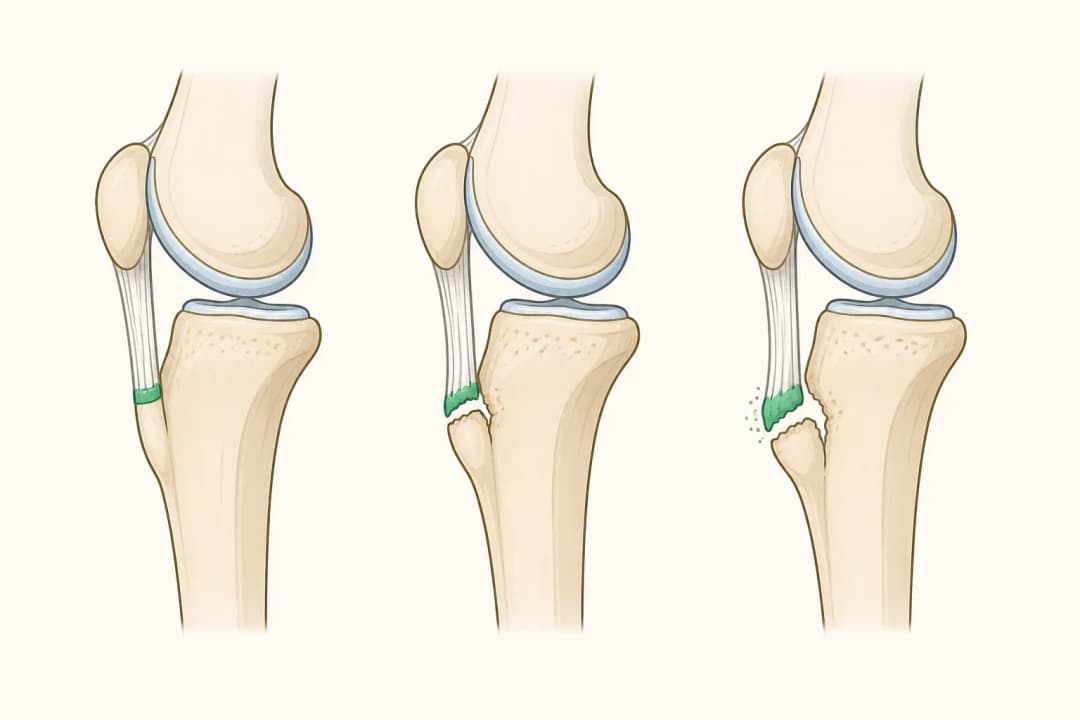
Osgood-Schlatter disease is irritation where the patellar tendon attaches to the tibial tubercle, the bony area just below the kneecap. It commonly appears during growth when running, jumping, squatting and sport repeatedly load the tendon. The usual pattern is pain or tenderness over that bump, sometimes with local swelling, made worse by activity and eased by rest. One or both knees can be involved. The condition is not the same as a sudden ligament injury, although a new injury can occur at the same time.
A clinician can assess the knee and the child’s movement, strength and activity pattern. Imaging is not always needed when the symptoms and examination fit this pattern.
Supporting activity and recovery
Reduce or pause the activity that clearly provokes pain, especially repeated jumping, sprinting or deep kneeling, while keeping comfortable low-impact movement. Ice wrapped in a cloth after activity may ease soreness. Gentle stretching of the thigh and strengthening of the hip and leg can be introduced with physiotherapy guidance. Support the adolescent in telling a coach when pain rises rather than hiding symptoms to remain in play. Return to sport gradually when walking, stairs, basic strength and sport-specific drills are comfortable.
When the knee needs review
Arrange assessment if pain persists despite sensible activity changes, interferes with sleep or school, or causes a limp. Prompt review is needed for major swelling, redness or warmth, fever, inability to bear weight, locking, giving way, or pain after a significant twist or impact. Sudden severe pain with a change in the bony area also warrants prompt attention. A clinician can distinguish this condition from other causes of knee pain.
Questions for the clinician or physiotherapist
Ask which activities are acceptable now, what pain level should stop training, and which exercises fit the adolescent’s growth and sport. Ask when to use support, how to plan a return to competition, and what symptoms mean the diagnosis should be reconsidered.
Find care
General Clinics & Polyclinics in Abu Dhabi
That answer is general. If you want it applied to your own case, these are licensed general clinics & polyclinics listed in Abu Dhabi.
27 Ar Ruwwad St - Shakhbout City - MSH4 - Abu Dhabi - United Arab Emirates
Accepts: Daman, Thiqa, Cigna, MetLife +20 more
Al Ruwais, Al Dhafrah
Accepts: Daman, Thiqa, AXA, Cigna +16 more
Al Bahyah - Al Bahyah Old - Abu Dhabi - United Arab Emirates
Accepts: Daman, Thiqa, Cigna, Allianz Care +18 more
Abu Dhabi
Accepts: Daman, Thiqa, AXA, Cigna +27 more
Ordered by verification status and how complete each clinic's public record is, then alphabetically. This is a directory listing, not a ranking — Zavis does not rate or recommend providers.
A factual listing drawn from the DHA, DOH and MOHAP licence registers. It is not a referral, an endorsement, or advice that any of these providers is right for you.
Questions people ask
Does Osgood-Schlatter disease mean the teenager must stop all sport?
Usually the painful activities are reduced or modified rather than all movement being stopped; the plan should follow symptoms and clinical advice.
Will the bump below the knee disappear?
Pain often settles as growth and loading change, but the bony prominence may remain. Persistent symptoms deserve review.
Related
Related reading
Keep reading
Medical disclaimer. This page is general health information, not medical advice, and it cannot diagnose you. Always consult a licensed healthcare provider about your own symptoms and treatment. In an emergency in the UAE, call 998 for an ambulance.