
What to know about female pattern hair loss in women
Short answer
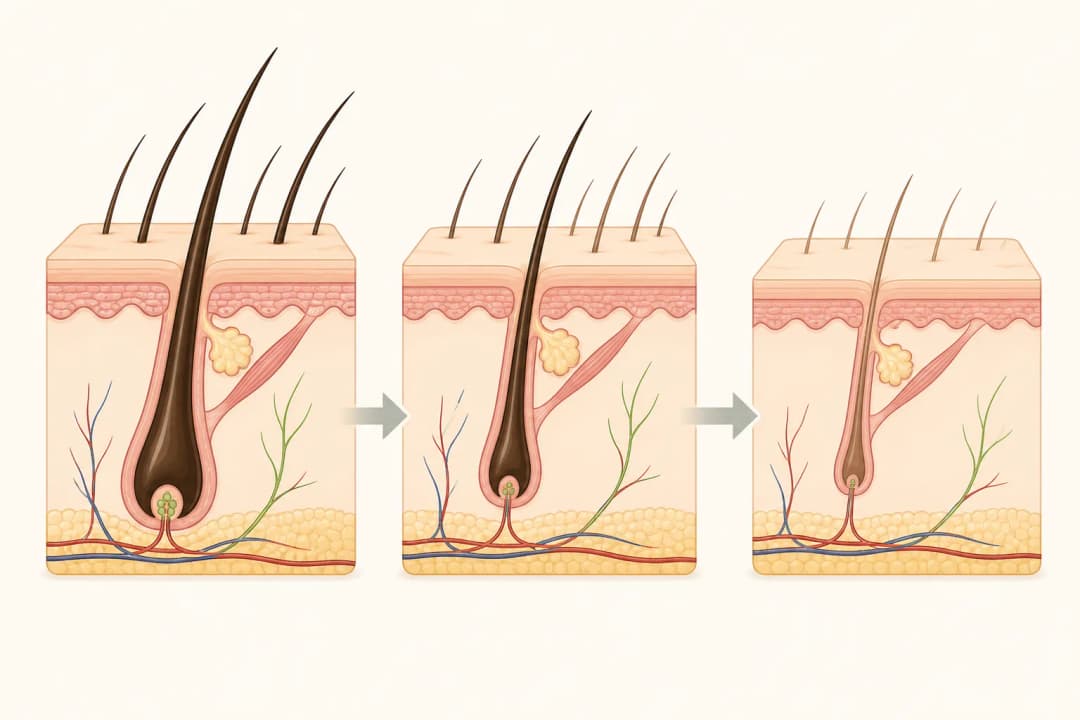
Female pattern hair loss in women is a gradual reduction in hair density, often most noticeable at the parting or crown, and a clinician can check for treatable contributors before discussing options.
This answers one question. It is not a diagnosis and does not replace an assessment by a licensed doctor.
At a glance
- Typical pattern
- Reduced density around the parting or crown
- Assessment
- Scalp examination plus a review of health, medicines, and possible contributors
How the pattern develops
Hair may look less full over the top of the scalp while the front hairline is relatively preserved. Individual hairs can become finer, so the scalp shows more through the part. Change is often gradual, but shedding can become more noticeable after illness, major stress, childbirth, nutritional problems, or hormonal change. Hair loss with smooth patches, scalp inflammation, marked scale, or sudden heavy shedding may point to another condition and deserves an assessment.
Practical next steps
Arrange a dermatology or primary-care assessment if thinning is persistent or worrying. The clinician may examine the scalp, review medicines and health changes, and decide whether blood tests are appropriate. Use gentle hair care, avoid repeated tight styles and harsh chemical processing, and keep a simple record of when shedding or thinning changed. Treatments can include topical or oral medicines in selected patients; the choice depends on pregnancy plans, health history, and the pattern of loss.
When to seek medical care
Seek prompt advice for sudden hair loss, rapidly enlarging bare areas, scalp pain, pus, significant redness, or scaling. Also arrange review when hair loss comes with fatigue, menstrual changes, unwanted facial hair, weight change, or other new symptoms, because these details can guide the assessment.
Questions for your doctor
Does the pattern fit female pattern hair loss or another cause? Should I have any tests? Which treatment fits my pregnancy plans and medical history, and what monitoring would it need?
Find care
General Clinics & Polyclinics in Abu Dhabi
That answer is general. If you want it applied to your own case, these are licensed general clinics & polyclinics listed in Abu Dhabi.
27 Ar Ruwwad St - Shakhbout City - MSH4 - Abu Dhabi - United Arab Emirates
Accepts: Daman, Thiqa, Cigna, MetLife +20 more
Al Ruwais, Al Dhafrah
Accepts: Daman, Thiqa, AXA, Cigna +16 more
Al Bahyah - Al Bahyah Old - Abu Dhabi - United Arab Emirates
Accepts: Daman, Thiqa, Cigna, Allianz Care +18 more
Abu Dhabi
Accepts: Daman, Thiqa, AXA, Cigna +27 more
Ordered by verification status and how complete each clinic's public record is, then alphabetically. This is a directory listing, not a ranking — Zavis does not rate or recommend providers.
A factual listing drawn from the DHA, DOH and MOHAP licence registers. It is not a referral, an endorsement, or advice that any of these providers is right for you.
Questions people ask
Is female pattern hair loss always inherited?
Inherited sensitivity can contribute, but clinicians also consider hormonal, nutritional, medical, and medication-related factors.
Can hair become thicker again?
Some treatments can reduce further thinning or improve density for suitable patients, but results vary and require professional guidance.
Related
Related reading
Keep reading
Medical disclaimer. This page is general health information, not medical advice, and it cannot diagnose you. Always consult a licensed healthcare provider about your own symptoms and treatment. In an emergency in the UAE, call 998 for an ambulance.