
What to expect from tumour removal surgery for throat cancer
Short answer
Tumour removal surgery for throat cancer removes the tumour and a margin of nearby tissue, with recovery focused on breathing, swallowing, speech, and wound healing.
This answers one question. It is not a diagnosis and does not replace an assessment by a licensed doctor.
At a glance
- Recovery priorities
- Breathing, swallowing, speech, and wound care
- Support
- Speech, swallowing, and nutrition specialists may help
- Results
- Pathology guides the next discussion
What the procedure means
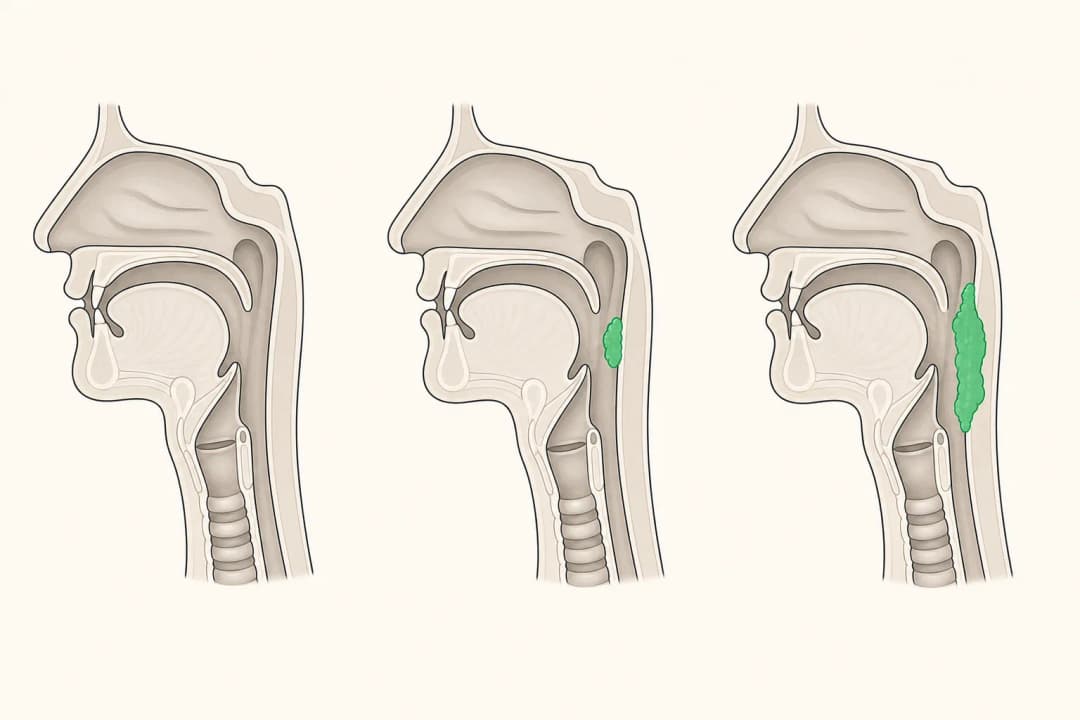
The operation depends on where the tumour sits in the throat and how far it extends. The surgeon may remove tissue through the mouth or through an incision in the neck. Nearby lymph nodes may also be examined or removed. A breathing tube, temporary airway support, or feeding tube may be used during recovery, depending on the operation and your needs.
A speech and swallowing specialist can assess how safely you drink and eat. Temporary hoarseness, throat discomfort, altered taste, or difficulty swallowing can occur; the team will adjust food textures and exercises as healing progresses.
Preparing for recovery
Before surgery, discuss smoking, alcohol, dental problems, medicines, and your usual eating pattern. Ask what to bring and whether you will need help at home. Afterward, follow instructions for mouth care, neck wounds, drains, and any tube feeding. Do not change food texture or remove a tube without advice from the clinical team.
Keep follow-up visits for wound review and the pathology discussion. Rehabilitation may include swallowing exercises, voice work, nutrition support, and gradual return to activity.
When to seek care
Get urgent help for difficulty breathing, rapidly increasing neck swelling, heavy bleeding, inability to swallow saliva, choking, or sudden confusion. Contact the team about fever, worsening wound redness, pus, uncontrolled pain, repeated coughing during drinks, or a tube that becomes displaced.
Questions for your doctor
Ask which throat structures and lymph nodes may be treated, whether a tube or airway support is expected, how swallowing will be tested, how speech may change, and when pathology results and rehabilitation begin.
Questions people ask
Will I be able to eat normally straight away?
Eating may be delayed or modified while swallowing is assessed and the throat heals.
Can surgery change my voice?
Voice changes depend on the tumour site and tissues treated; rehabilitation may support communication.
Related
Related reading
Keep reading
Cancer care in the UAE
Hospitals & Medical Centers in Abu Dhabi
Most UAE cancer care is delivered inside hospital services rather than by standalone oncology clinics, so these are licensed hospitals & medical centers listed in Abu Dhabi. Confirm the specific cancer service exists before you travel, and know that asking for a second opinion is routine.
Ahalia Hospital Musaffah Building - Musaffah - Musaffah Industrial - Abu Dhabi - United Arab Emirates
Accepts: Daman, Thiqa, AXA, Cigna +26 more
Al Ruwais Industrial City - Abu Dhabi - United Arab Emirates
Accepts: Daman, Thiqa, AXA, Cigna +30 more
Abu Dhabi, Abu Dhabi
Accepts: Daman, Thiqa, AXA, Cigna +30 more
Second opinions are routine in cancer care and asking for one does not affect your treatment. How to arrange a second opinion in the UAE.
Ordered by verification status and how complete each clinic's public record is, then alphabetically. This is a directory listing, not a ranking — Zavis does not rate or recommend providers.
A factual listing drawn from the DHA, DOH and MOHAP licence registers. It is not a referral, an endorsement, or advice that any of these providers is right for you.
Medical disclaimer. This page is general health information, not medical advice, and it cannot diagnose you. Always consult a licensed healthcare provider about your own symptoms and treatment. In an emergency in the UAE, call 998 for an ambulance.