
What to expect from topical corticosteroids for alopecia areata
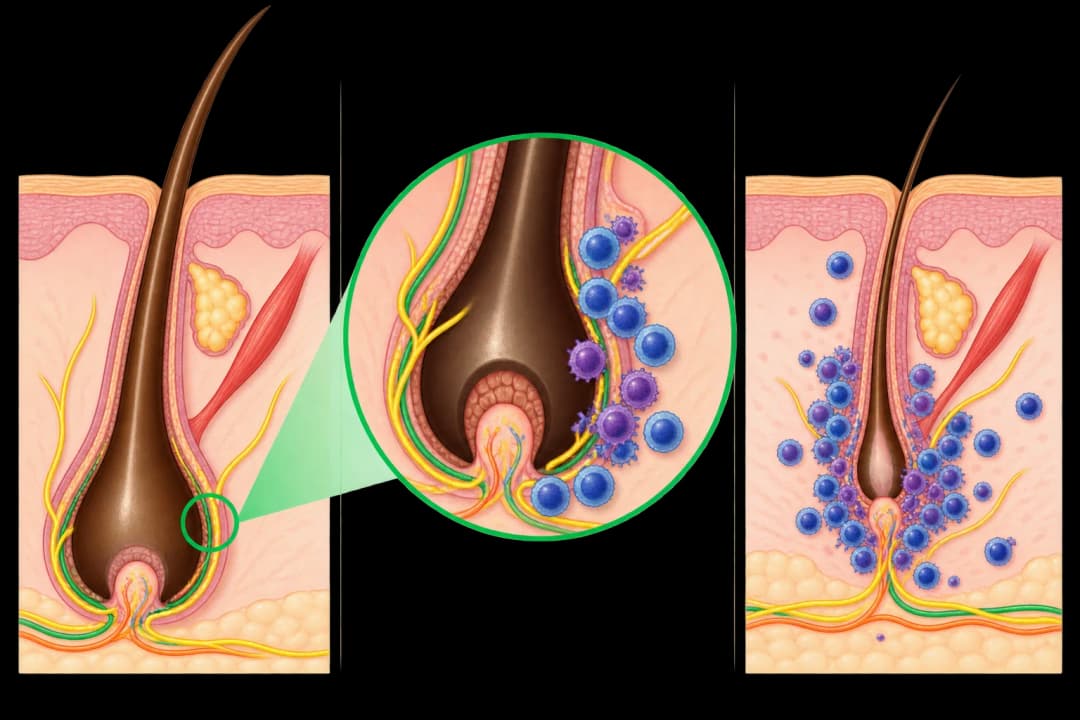
Short answer
Topical corticosteroids may reduce inflammation in alopecia areata, but hair regrowth is variable and requires follow-up.
This answers one question. It is not a diagnosis and does not replace an assessment by a licensed doctor.
At a glance
- Main aim
- Calm inflammation around affected follicles
- What to monitor
- Regrowth, new patches, and treated-skin changes
What this treatment means
A corticosteroid applied to the scalp or another hair-bearing area is intended to quiet the immune activity associated with alopecia areata. It does not remove the underlying tendency for new patches to appear. The medicine may be prescribed as a cream, lotion, solution, foam, or ointment, depending on the location and the amount of hair present.
Early changes can include less redness, tenderness, or itch before visible hair returns. Fine, pale hairs may appear first and gradually become thicker. Some patches improve without treatment, while others need a different approach, especially when hair loss is extensive or involves eyelashes and eyebrows.
Using it safely
Apply a thin layer only to the affected skin and follow the schedule provided by your clinician. Wash your hands after application unless your hands are being treated, and avoid getting the medicine in the eyes. Do not cover the area tightly unless instructed, because covering can increase absorption.
Keep track of patch borders, new areas of loss, scalp discomfort, and any skin changes. Long or frequent use can thin skin, make small blood vessels more visible, or cause irritation. Keep follow-up appointments so the strength and duration can be adjusted; do not extend the course because regrowth has been slow.
When to seek care
Contact your clinician if the treated skin becomes painful, increasingly red, swollen, oozing, or develops a persistent rash. Arrange a review if hair loss spreads quickly, involves the eyebrows or eyelashes, or new patches appear despite using the medicine as directed. Eye pain or blurred vision after accidental exposure needs prompt medical advice.
Questions for your doctor
Ask which formulation and strength suit the scalp, how long to use it, and what signs would mean the plan should change. You can also ask whether injections, contact treatments, or another option should be considered if patches continue to expand.
Find care
General Clinics & Polyclinics in Abu Dhabi
That answer is general. If you want it applied to your own case, these are licensed general clinics & polyclinics listed in Abu Dhabi.
27 Ar Ruwwad St - Shakhbout City - MSH4 - Abu Dhabi - United Arab Emirates
Accepts: Daman, Thiqa, Cigna, MetLife +20 more
Al Ruwais, Al Dhafrah
Accepts: Daman, Thiqa, AXA, Cigna +16 more
Al Bahyah - Al Bahyah Old - Abu Dhabi - United Arab Emirates
Accepts: Daman, Thiqa, Cigna, Allianz Care +18 more
Abu Dhabi
Accepts: Daman, Thiqa, AXA, Cigna +27 more
Ordered by verification status and how complete each clinic's public record is, then alphabetically. This is a directory listing, not a ranking — Zavis does not rate or recommend providers.
A factual listing drawn from the DHA, DOH and MOHAP licence registers. It is not a referral, an endorsement, or advice that any of these providers is right for you.
Questions people ask
Will topical corticosteroids regrow hair?
They may support regrowth in some alopecia areata patches, but response varies and new loss can still occur.
Can you stop when hair starts returning?
Use the medicine for the prescribed course and ask your clinician before changing or stopping it.
Related
Related reading
Keep reading
Medical disclaimer. This page is general health information, not medical advice, and it cannot diagnose you. Always consult a licensed healthcare provider about your own symptoms and treatment. In an emergency in the UAE, call 998 for an ambulance.