
What to expect from a return-to-sport programme for MCL injury
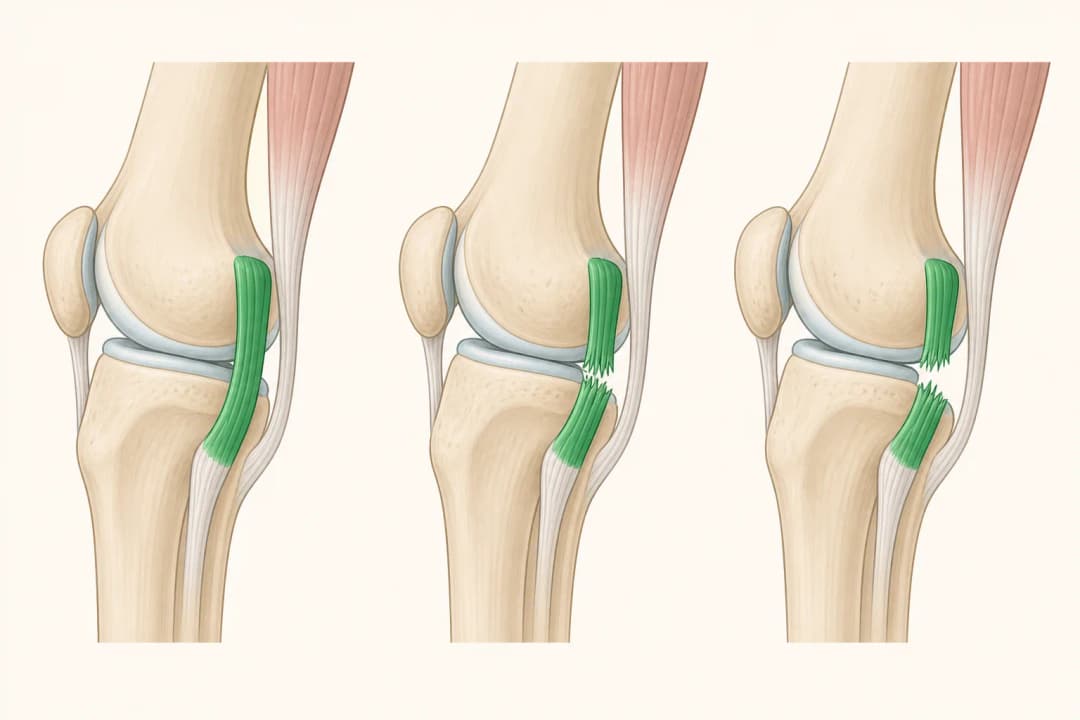
Short answer
Expect progressive knee-control exercises, running and direction-change tests before returning to sport after an MCL injury.
This answers one question. It is not a diagnosis and does not replace an assessment by a licensed doctor.
At a glance
- Main focus
- Knee stability, alignment and leg strength
- Later tests
- Running, hopping and direction changes
- Training return
- Practice first, then higher-demand sport activity
How MCL rehabilitation progresses
Assessment may cover swelling, knee motion, tenderness, stability and your ability to walk. Early rehabilitation often focuses on restoring movement and activating the quadriceps, followed by squats, step-ups, bridges and single-leg balance. A brace may be used for some injuries, but its timing and settings should follow the treating clinician's advice.
When basic control improves, you may progress to jogging, acceleration, stopping, lateral movement and changes of direction. Hopping and sport drills can test whether the knee remains aligned and confident under load. Contact or twisting activities are added only when the knee is ready for those demands and any associated injury has been considered.
Your role in the programme
Use the prescribed exercises consistently and monitor swelling or stiffness later that day and the next morning. Do not use a pain-free day as permission for an immediate match. Increase one training demand at a time, keep your knee aligned over the foot during exercises and tell your clinician about giving-way, locking or renewed swelling. A gradual return to practice helps expose gaps in control safely.
When to seek care
Seek review if swelling increases, the knee gives way, motion becomes restricted or pain does not settle as activity is reduced. Prompt assessment is needed after a new twisting injury, inability to bear weight, marked deformity, severe swelling or numbness. A cold, pale or unusually painful foot is an emergency.
Questions for your clinician
Ask whether your MCL injury needs a brace, which movements are currently restricted, when running can start, how stability will be assessed and how contact practice should be reintroduced. Clarify what swelling or pain after training should prompt a step back.
Find care
General Clinics & Polyclinics in Abu Dhabi
That answer is general. If you want it applied to your own case, these are licensed general clinics & polyclinics listed in Abu Dhabi.
27 Ar Ruwwad St - Shakhbout City - MSH4 - Abu Dhabi - United Arab Emirates
Accepts: Daman, Thiqa, Cigna, MetLife +20 more
Al Ruwais, Al Dhafrah
Accepts: Daman, Thiqa, AXA, Cigna +16 more
Al Bahyah - Al Bahyah Old - Abu Dhabi - United Arab Emirates
Accepts: Daman, Thiqa, Cigna, Allianz Care +18 more
Abu Dhabi
Accepts: Daman, Thiqa, AXA, Cigna +27 more
Ordered by verification status and how complete each clinic's public record is, then alphabetically. This is a directory listing, not a ranking — Zavis does not rate or recommend providers.
A factual listing drawn from the DHA, DOH and MOHAP licence registers. It is not a referral, an endorsement, or advice that any of these providers is right for you.
Questions people ask
Can a brace replace rehabilitation?
A brace can support selected activities for some injuries, but it does not replace strength, balance and movement retraining.
Why are direction changes tested late?
Cutting and twisting place sideways forces through the knee, so they are introduced after basic strength and control have improved.
Related
Related reading
Keep reading
Medical disclaimer. This page is general health information, not medical advice, and it cannot diagnose you. Always consult a licensed healthcare provider about your own symptoms and treatment. In an emergency in the UAE, call 998 for an ambulance.