
What to expect from radiotherapy for throat cancer
Short answer
Radiotherapy for throat cancer is mapped to the throat and nearby tissues, delivered in planned visits, and monitored closely for swallowing, mouth, skin, and energy changes.
This answers one question. It is not a diagnosis and does not replace an assessment by a licensed doctor.
At a glance
- Planning
- Scans and positioning supports guide treatment to the intended area.
- Mouth and throat
- Dryness, soreness, taste change, and thick saliva may develop.
- Support
- Nutrition and swallowing specialists can help maintain eating and drinking.
How treatment affects the throat area
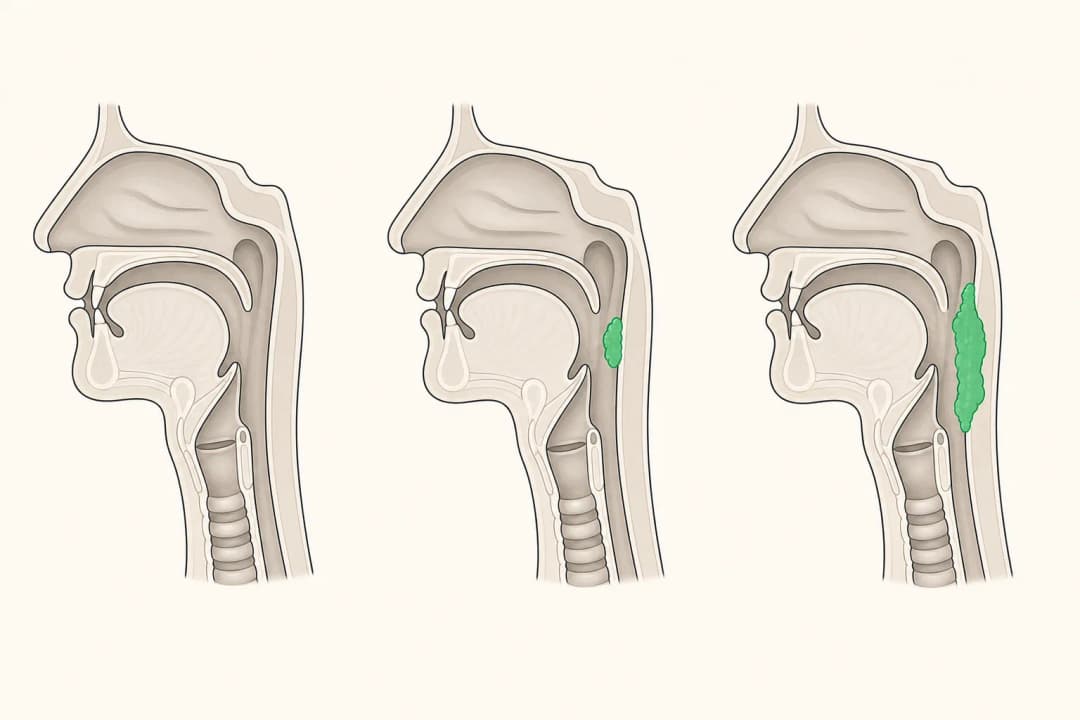
Planning scans show the tumour and nearby structures so the team can shape treatment to the intended area. A fitted mask or positioning support may help keep your head and neck still. The treatment beam is not felt, and each visit follows the same positioning process.
As treatment continues, the throat or mouth may feel sore, dry, or coated, and swallowing can become uncomfortable. Taste may change, saliva may become thick, and skin in the treated field can redden or peel. Tiredness is common. A dietitian, speech and swallowing specialist, dentist, or nurse may join your care team.
Protecting swallowing and mouth comfort
Follow the mouth-care plan and use rinses, pain relief, and saliva support only as advised. Keep drinking as directed and choose soft, moist foods if swallowing is sore; tell the team if eating or drinking becomes difficult. Do not smoke, vape, or use alcohol-based mouth products unless your clinicians specifically approve them.
Attend dental and nutrition appointments, practise swallowing exercises if prescribed, and protect neck skin from sun, friction, and unapproved creams. Take rest breaks while maintaining gentle activity that your team considers safe. Early reporting can prevent dehydration and loss of nutrition.
When to seek urgent advice
Contact your team promptly if pain prevents drinking, swallowing becomes suddenly worse, mouth sores bleed, or you have signs of dehydration such as very little urine, dizziness, or unusual weakness. Seek emergency help for trouble breathing, inability to handle saliva, sudden swelling, or a high temperature with marked illness.
Questions to ask
Ask which parts of the throat and neck are treated, how swallowing will be assessed, and who to call about pain or nutrition. Ask about dental care, mouth rinses, exercises, feeding support if needed, skin products, and how other treatments may be coordinated.
Questions people ask
Can I continue eating during radiotherapy?
Many people are encouraged to keep swallowing when safe, with texture and pain support tailored by the care team.
When should I report swallowing problems?
Report new or worsening difficulty early, especially if fluids or medicines are becoming hard to swallow.
Related
Related reading
Keep reading
Cancer care in the UAE
Hospitals & Medical Centers in Abu Dhabi
Most UAE cancer care is delivered inside hospital services rather than by standalone oncology clinics, so these are licensed hospitals & medical centers listed in Abu Dhabi. Confirm the specific cancer service exists before you travel, and know that asking for a second opinion is routine.
Ahalia Hospital Musaffah Building - Musaffah - Musaffah Industrial - Abu Dhabi - United Arab Emirates
Accepts: Daman, Thiqa, AXA, Cigna +26 more
Al Ruwais Industrial City - Abu Dhabi - United Arab Emirates
Accepts: Daman, Thiqa, AXA, Cigna +30 more
Abu Dhabi, Abu Dhabi
Accepts: Daman, Thiqa, AXA, Cigna +30 more
Second opinions are routine in cancer care and asking for one does not affect your treatment. How to arrange a second opinion in the UAE.
Ordered by verification status and how complete each clinic's public record is, then alphabetically. This is a directory listing, not a ranking — Zavis does not rate or recommend providers.
A factual listing drawn from the DHA, DOH and MOHAP licence registers. It is not a referral, an endorsement, or advice that any of these providers is right for you.
Medical disclaimer. This page is general health information, not medical advice, and it cannot diagnose you. Always consult a licensed healthcare provider about your own symptoms and treatment. In an emergency in the UAE, call 998 for an ambulance.