
What to expect from PRP injection for patellar tendinitis
Short answer
For patellar tendinitis, expect a blood draw, targeted PRP placement near the tendon, temporary soreness, and a gradual tendon-loading programme.
This answers one question. It is not a diagnosis and does not replace an assessment by a licensed doctor.
At a glance
- Target
- The affected patellar tendon
- Early plan
- Relative rest and carefully selected movement
- Later plan
- Progressive strengthening before jumping or sport
How PRP is used here
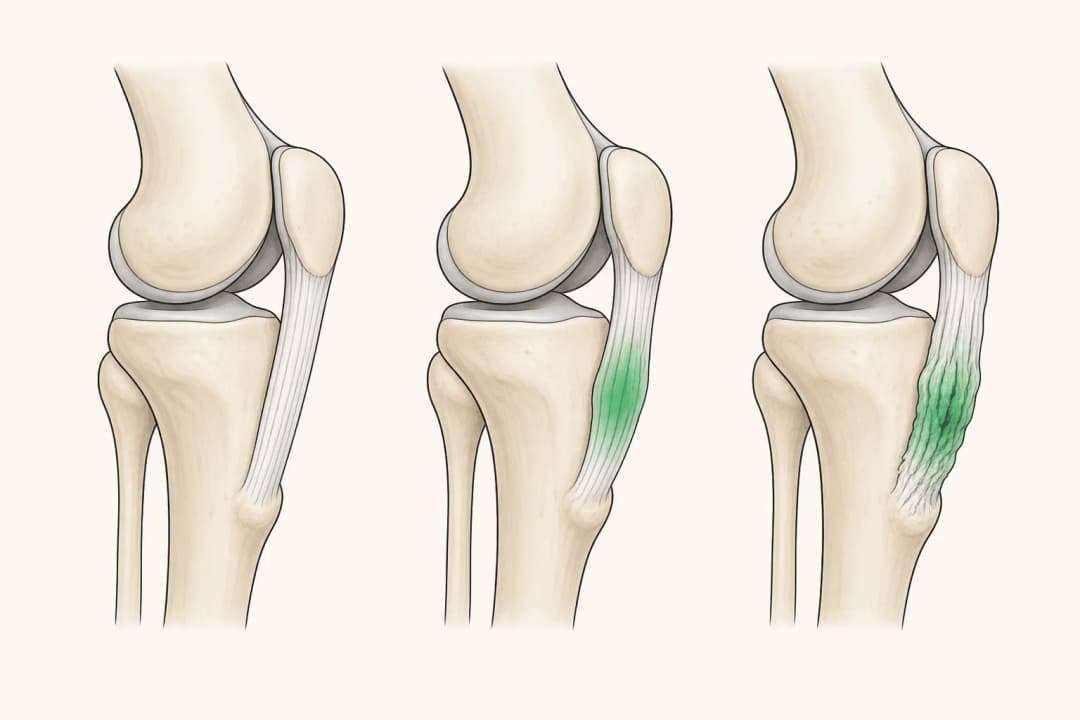
The patellar tendon connects the kneecap to the shinbone and transfers force when you stand, climb, or jump. Patellar tendinitis, also called patellar tendinopathy, can make the lower front of the knee painful during loading. PRP is prepared from your blood and placed at the affected tendon, often with ultrasound guidance.
The injection is a support for a broader recovery plan, not a substitute for changing the load that irritated the tendon. Soreness can temporarily increase after treatment. Tendon improvement is judged through everyday function and tolerance of carefully progressed exercises.
Making recovery manageable
Beforehand, tell your clinician about medicines, bleeding or clotting problems, skin infection, allergies, and previous knee treatment. Ask how to handle pain and whether you need help getting home. Avoid planning sport, repeated stairs, or jumping immediately after the appointment.
Follow the prescribed activity restriction, which may begin with relative rest and gentle range-of-motion work. As irritability settles, physiotherapy can introduce isometric exercises, controlled strengthening, and later energy-storage drills such as hopping when appropriate. Increase one demand at a time and use next-day pain and swelling as feedback. Return to sport should depend on strength, control, and tendon tolerance rather than a calendar date.
Warning signs after treatment
Seek prompt advice if pain, warmth, redness, or swelling around the injection site keeps increasing, or if you develop drainage or fever. Get urgent help for sudden loss of knee extension, a pop followed by marked weakness, inability to bear weight, new numbness, or breathing difficulty.
Questions worth bringing
Ask whether the tendon has a partial tear, which activities should stop, when loading can restart, how exercises will progress, and what signs show that the tendon is tolerating rehabilitation. Discuss other options if pain remains during ordinary walking or the tendon feels weak.
Find care
General Clinics & Polyclinics in Abu Dhabi
That answer is general. If you want it applied to your own case, these are licensed general clinics & polyclinics listed in Abu Dhabi.
27 Ar Ruwwad St - Shakhbout City - MSH4 - Abu Dhabi - United Arab Emirates
Accepts: Daman, Thiqa, Cigna, MetLife +20 more
Al Ruwais, Al Dhafrah
Accepts: Daman, Thiqa, AXA, Cigna +16 more
Al Bahyah - Al Bahyah Old - Abu Dhabi - United Arab Emirates
Accepts: Daman, Thiqa, Cigna, Allianz Care +18 more
Abu Dhabi
Accepts: Daman, Thiqa, AXA, Cigna +27 more
Ordered by verification status and how complete each clinic's public record is, then alphabetically. This is a directory listing, not a ranking — Zavis does not rate or recommend providers.
A factual listing drawn from the DHA, DOH and MOHAP licence registers. It is not a referral, an endorsement, or advice that any of these providers is right for you.
Questions people ask
Will the injection let you play sport immediately?
No. Early soreness and tendon protection are common reasons to pause impact activity until a clinician-guided progression is safe.
Is PRP enough without exercises?
Usually the injection is considered alongside rehabilitation because tendon capacity depends on gradually managed loading.
Related
Related reading
Keep reading
Medical disclaimer. This page is general health information, not medical advice, and it cannot diagnose you. Always consult a licensed healthcare provider about your own symptoms and treatment. In an emergency in the UAE, call 998 for an ambulance.