
What to expect from premarital screening for thalassaemia
Short answer
Premarital screening for thalassaemia commonly uses blood tests to identify carrier status, followed by counselling about inherited conditions and family planning.
This answers one question. It is not a diagnosis and does not replace an assessment by a licensed doctor.
At a glance
- Typical assessment
- Blood count and haemoglobin analysis
- Carrier status
- May occur without noticeable symptoms
- Possible next step
- Confirmatory testing or genetic counselling
Understanding the result
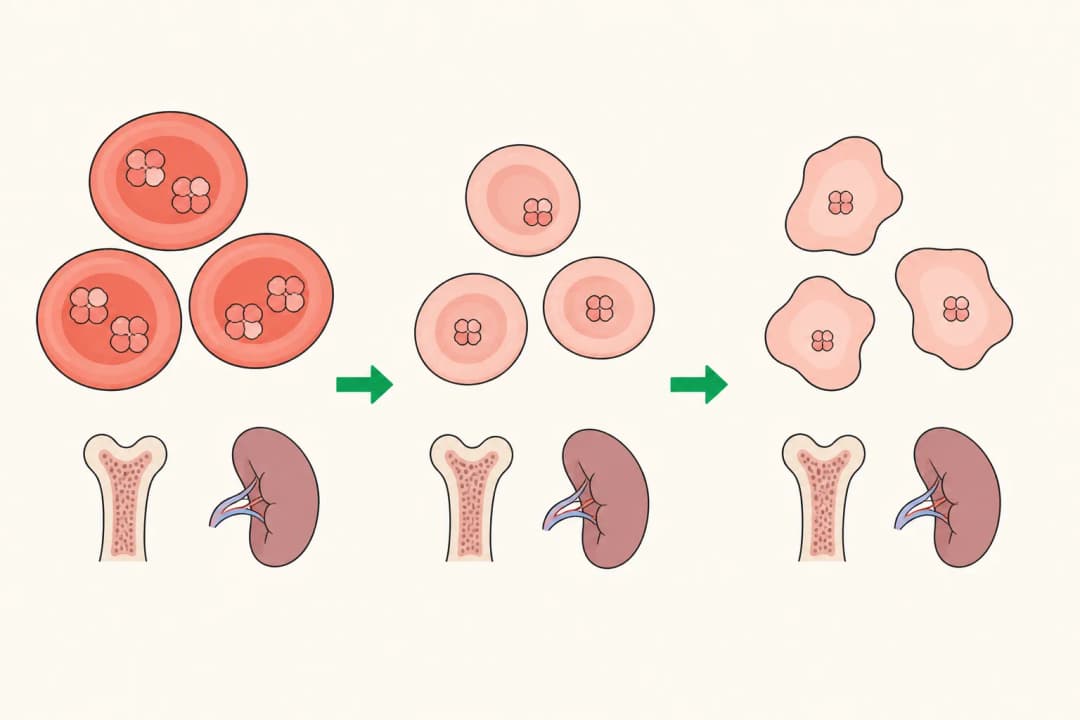
The assessment may include a blood count and haemoglobin analysis. Thalassaemia trait can be present in someone who feels healthy; it is different from thalassaemia disease, which can affect haemoglobin production more substantially. Screening findings may overlap with other causes of small red blood cells, so the clinician may recommend confirmation.
When both partners carry a thalassaemia-related gene change, a future child may inherit a more serious form. Counselling explains the specific pattern involved and avoids treating a carrier result as a diagnosis of illness.
Practical next steps
Bring previous blood counts, tell the service about relatives with thalassaemia, and complete any follow-up test requested. Discuss the findings with both partners and ask for a written summary if the terminology is unfamiliar.
Before pregnancy, ask about genetic counselling and the reproductive options relevant to your results. Do not start iron supplements solely because the blood count is low; iron deficiency and thalassaemia trait require different assessments.
When to seek medical care
Arrange routine follow-up for an abnormal or uncertain result. Seek prompt care for chest pain, severe breathlessness, fainting, or profound weakness. These symptoms need assessment regardless of a screening result and should not be attributed to thalassaemia trait without examination.
Questions for your doctor
Ask whether the result indicates trait, disease, iron deficiency, or another finding; whether your partner needs testing; and whether a specialist or genetic counsellor should review the report. Ask how the result affects pregnancy planning.
Find care
General Clinics & Polyclinics in Abu Dhabi
That answer is general. If you want it applied to your own case, these are licensed general clinics & polyclinics listed in Abu Dhabi.
27 Ar Ruwwad St - Shakhbout City - MSH4 - Abu Dhabi - United Arab Emirates
Accepts: Daman, Thiqa, Cigna, MetLife +20 more
Al Ruwais, Al Dhafrah
Accepts: Daman, Thiqa, AXA, Cigna +16 more
Al Bahyah - Al Bahyah Old - Abu Dhabi - United Arab Emirates
Accepts: Daman, Thiqa, Cigna, Allianz Care +18 more
Abu Dhabi
Accepts: Daman, Thiqa, AXA, Cigna +27 more
Ordered by verification status and how complete each clinic's public record is, then alphabetically. This is a directory listing, not a ranking — Zavis does not rate or recommend providers.
A factual listing drawn from the DHA, DOH and MOHAP licence registers. It is not a referral, an endorsement, or advice that any of these providers is right for you.
Questions people ask
Does thalassaemia trait mean I have thalassaemia disease?
No. Trait usually describes carrier status and must be distinguished from the inherited forms that cause illness.
Why might another test be needed?
Screening patterns can overlap with iron deficiency or other haemoglobin findings, so confirmation may clarify the result.
Related
Related reading
Keep reading
Medical disclaimer. This page is general health information, not medical advice, and it cannot diagnose you. Always consult a licensed healthcare provider about your own symptoms and treatment. In an emergency in the UAE, call 998 for an ambulance.