
What to expect from physiotherapy for patellar tendinitis
Short answer
Expect load management, progressive tendon strengthening, movement coaching, and regular adjustments based on your response.
This answers one question. It is not a diagnosis and does not replace an assessment by a licensed doctor.
At a glance
- Main tool
- Gradual strengthening of the tendon and leg
- Activity
- Adjust load without unnecessary complete rest
- Feedback
- Next steps follow your symptom response
What the therapist will assess
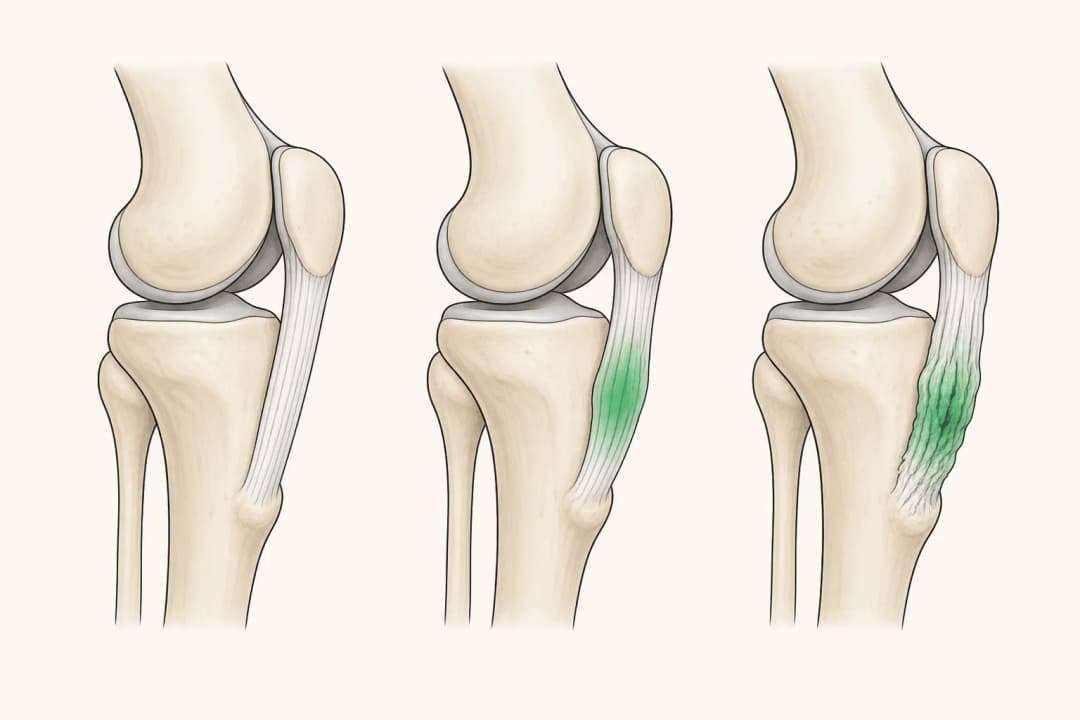
Patellar tendinitis affects the tendon connecting the kneecap to the shin. Pain often changes with jumping, running, squatting, stairs, or prolonged knee loading. Your physiotherapist may examine tenderness, strength, flexibility, landing mechanics, training demands, and how symptoms behave during and after activity.
Treatment is usually built around managing the tendon’s workload rather than complete rest. The therapist may suggest temporary changes to jumping volume, surfaces, footwear, or recovery between sessions while keeping suitable movement in your routine.
What exercises may involve
Exercises can progress from static quadriceps work to slow strengthening and then faster, spring-like or sport-specific tasks when your symptoms and control allow. Follow the prescribed tempo and effort; tendon rehabilitation depends on consistent, gradual loading. Tell your therapist about pain that escalates during exercise, morning stiffness that is worsening, or soreness that does not settle as expected. These clues guide the next adjustment.
When to seek more care
Seek prompt assessment after a sudden snap, immediate loss of strength, a new gap or marked swelling below the kneecap, or inability to straighten the knee. A hot swollen joint with fever needs urgent medical attention. If symptoms continue to worsen despite following the programme, ask for a clinical review rather than increasing training on your own.
Questions to ask
Which activities should I pause or reduce? How should I judge acceptable soreness? When can I restart jumping? Could another knee problem be contributing to my symptoms?
Find care
General Clinics & Polyclinics in Abu Dhabi
That answer is general. If you want it applied to your own case, these are licensed general clinics & polyclinics listed in Abu Dhabi.
27 Ar Ruwwad St - Shakhbout City - MSH4 - Abu Dhabi - United Arab Emirates
Accepts: Daman, Thiqa, Cigna, MetLife +20 more
Al Ruwais, Al Dhafrah
Accepts: Daman, Thiqa, AXA, Cigna +16 more
Al Bahyah - Al Bahyah Old - Abu Dhabi - United Arab Emirates
Accepts: Daman, Thiqa, Cigna, Allianz Care +18 more
Abu Dhabi
Accepts: Daman, Thiqa, AXA, Cigna +27 more
Ordered by verification status and how complete each clinic's public record is, then alphabetically. This is a directory listing, not a ranking — Zavis does not rate or recommend providers.
A factual listing drawn from the DHA, DOH and MOHAP licence registers. It is not a referral, an endorsement, or advice that any of these providers is right for you.
Questions people ask
Should I stop all sport?
Often the load is modified rather than removed completely, but the right limits depend on your symptoms and assessment.
How quickly can I return to jumping?
Jumping is reintroduced after strength, control, and symptom response support that stage of rehabilitation.
Related
Related reading
Keep reading
Medical disclaimer. This page is general health information, not medical advice, and it cannot diagnose you. Always consult a licensed healthcare provider about your own symptoms and treatment. In an emergency in the UAE, call 998 for an ambulance.