
What to expect from exercise therapy for scapular dyskinesis
Short answer
Expect an assessment of shoulder movement followed by graded exercises that improve shoulder blade control, strength, and tolerance for reaching.
This answers one question. It is not a diagnosis and does not replace an assessment by a licensed doctor.
At a glance
- Target
- Coordinated shoulder blade and arm movement
- Progression
- Control first, then resistance and task difficulty
What you may notice
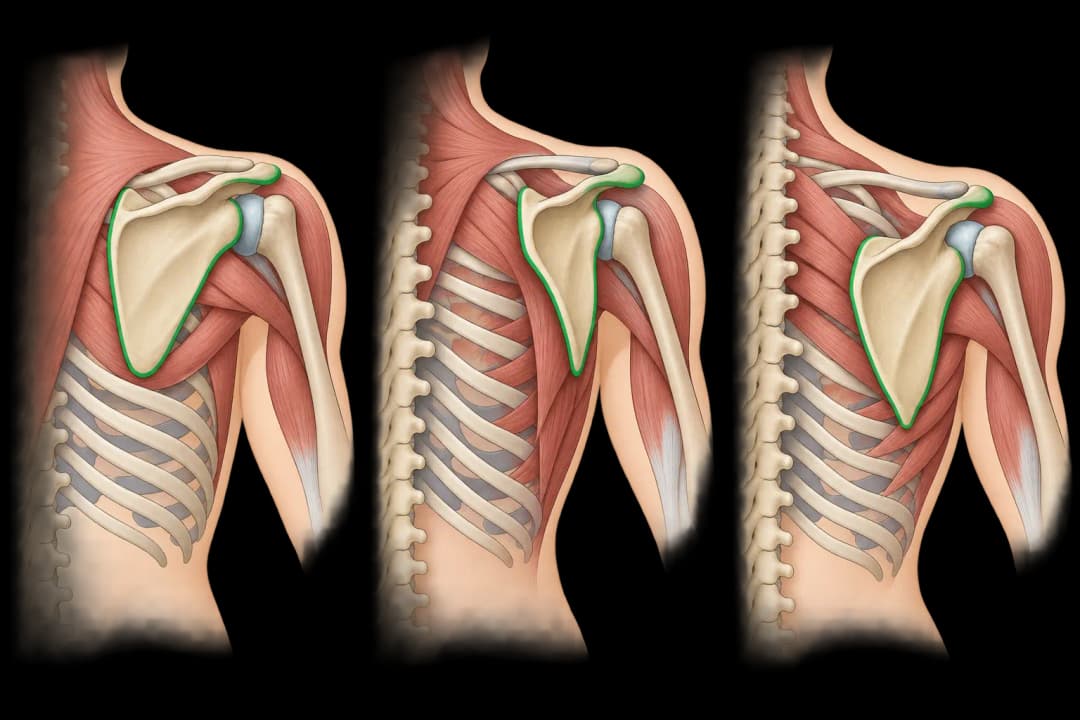
The therapist may watch your shoulder blade while you lift, lower, push, pull, or rotate the arm. They may assess posture, range of motion, neck and upper-back movement, and the strength of muscles around the shoulder. Early work often uses gentle wall slides, controlled arm lifts, serratus activation, rowing patterns, and rotator-cuff exercises. The aim is smoother coordination, not forcing the blade into one rigid position.
Making progress safely
Practise the small movements regularly and keep the shoulder relaxed rather than shrugging. Your home plan may begin with low resistance and short sets, then progress to bands, weights, or more demanding reaching as control improves. Avoid adding exercises from videos without checking them if they reproduce sharp pain. Mention work, sport, sleep position, or repetitive tasks that trigger symptoms so the programme reflects your real demands.
When to get reassessed
Seek urgent care for a new major injury, sudden inability to raise the arm, severe swelling, chest symptoms, or new arm weakness with numbness. Contact your clinician if pain becomes persistent at rest, shoulder movement is progressively restricted, or the blade appearance changes quickly. Ongoing symptoms may call for a review of the neck, nerves, joint, or exercise technique.
Useful questions
Ask which shoulder motions should be limited at first, how to recognise good blade control, and when to return to lifting or sport. See the overview of [Exercise Therapy](/treatments/physiotherapy-and-rehabilitation/exercise-therapy/).
Find care
General Clinics & Polyclinics in Abu Dhabi
That answer is general. If you want it applied to your own case, these are licensed general clinics & polyclinics listed in Abu Dhabi.
27 Ar Ruwwad St - Shakhbout City - MSH4 - Abu Dhabi - United Arab Emirates
Accepts: Daman, Thiqa, Cigna, MetLife +20 more
Al Ruwais, Al Dhafrah
Accepts: Daman, Thiqa, AXA, Cigna +16 more
Al Bahyah - Al Bahyah Old - Abu Dhabi - United Arab Emirates
Accepts: Daman, Thiqa, Cigna, Allianz Care +18 more
Abu Dhabi
Accepts: Daman, Thiqa, AXA, Cigna +27 more
Ordered by verification status and how complete each clinic's public record is, then alphabetically. This is a directory listing, not a ranking — Zavis does not rate or recommend providers.
A factual listing drawn from the DHA, DOH and MOHAP licence registers. It is not a referral, an endorsement, or advice that any of these providers is right for you.
Questions people ask
Should I keep exercising if the shoulder clicks?
A painless click may be acceptable, but painful clicking or catching should be reported so the movement can be assessed.
How often should I practise?
Follow the schedule set for your symptoms and recovery; frequent, technically accurate practice is generally more useful than occasional hard sessions.
Keep reading
Medical disclaimer. This page is general health information, not medical advice, and it cannot diagnose you. Always consult a licensed healthcare provider about your own symptoms and treatment. In an emergency in the UAE, call 998 for an ambulance.