
What to expect from chemotherapy for cancer of unknown primary
Short answer
Chemotherapy for cancer of unknown primary is selected from the cancer’s tissue features and spread, given in cycles, and reviewed closely because the original site has not been identified.
This answers one question. It is not a diagnosis and does not replace an assessment by a licensed doctor.
At a glance
- Treatment choice
- Based on biopsy features, scans, and spread
- Review
- Blood tests, symptoms, examination, and imaging
- Support
- Symptom control and practical help between visits
Why the plan may change
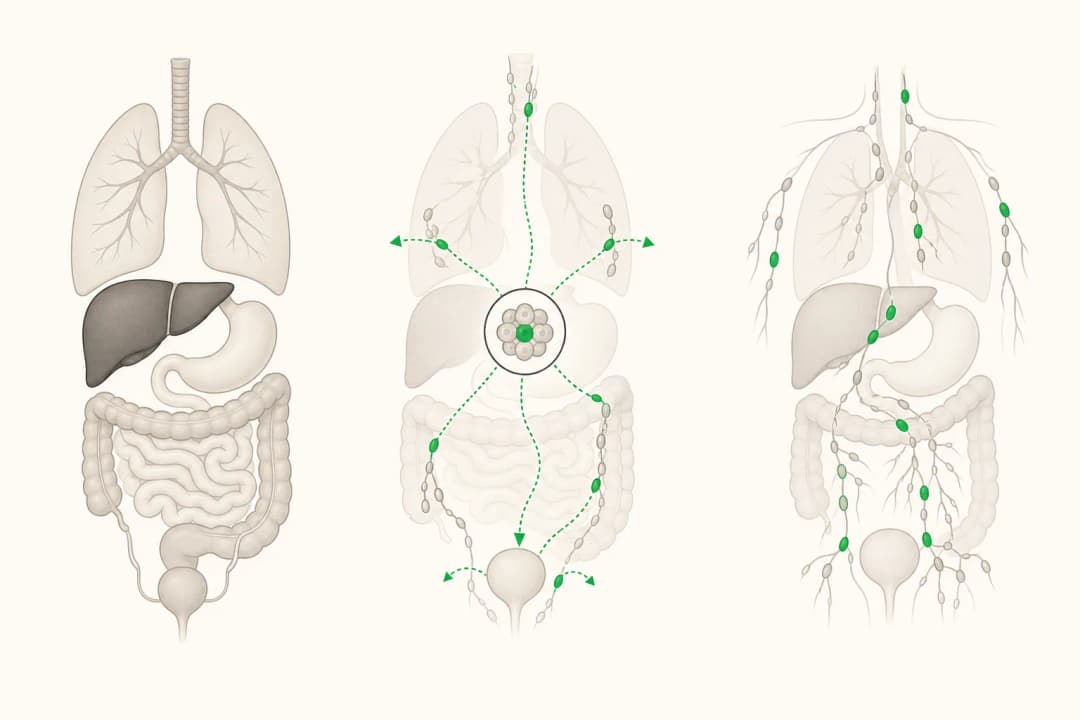
Cancer of unknown primary means cancer has been found but tests have not shown where it began. Specialists use biopsy findings, laboratory tests, scans, and your symptoms to choose medicines that fit the cancer’s pattern. Treatment may be given through a vein or as tablets, usually in cycles separated by recovery time.
Your team may review scan results, blood counts, kidney and liver function, weight, pain, appetite, and activity at regular visits. Tiredness, nausea, appetite changes, mouth soreness, bowel changes, hair loss, and infection risk can occur. The effects depend on the medicines and on which parts of the body are involved.
Staying organised
Keep copies of your medication list and treatment calendar, including medicines prescribed by other clinicians. Take anti-sickness treatment as directed and ask how much fluid is suitable for you. Accept help with transport, food, and daily tasks when energy falls. Record new symptoms, pain locations, bowel changes, and temperatures so the team can act on a clear pattern.
Urgent symptoms
Contact your cancer team urgently for fever, chills, breathing difficulty, chest pain, repeated vomiting, severe diarrhoea, inability to drink, unusual bleeding, new confusion, or a sudden marked change in pain or strength. Ask before treatment how to reach the service outside clinic hours and what temperature reading requires immediate action.
Questions to bring
Ask what evidence guided the medicine choice, what the treatment is trying to control, how response will be reviewed, whether more testing could change the plan, and which symptoms should be reported the same day.
Questions people ask
Does unknown primary mean treatment cannot start?
Not necessarily. A treatment plan can be based on the cancer’s tissue pattern and distribution while the team continues appropriate assessment.
Will the diagnosis name change?
It may if later testing identifies the original site. Tell the team about new symptoms because they can help guide reassessment.
Related
Related reading
Keep reading
Cancer care in the UAE
Hospitals & Medical Centers in Abu Dhabi
Most UAE cancer care is delivered inside hospital services rather than by standalone oncology clinics, so these are licensed hospitals & medical centers listed in Abu Dhabi. Confirm the specific cancer service exists before you travel, and know that asking for a second opinion is routine.
Ahalia Hospital Musaffah Building - Musaffah - Musaffah Industrial - Abu Dhabi - United Arab Emirates
Accepts: Daman, Thiqa, AXA, Cigna +26 more
Al Ruwais Industrial City - Abu Dhabi - United Arab Emirates
Accepts: Daman, Thiqa, AXA, Cigna +30 more
Abu Dhabi, Abu Dhabi
Accepts: Daman, Thiqa, AXA, Cigna +30 more
Second opinions are routine in cancer care and asking for one does not affect your treatment. How to arrange a second opinion in the UAE.
Ordered by verification status and how complete each clinic's public record is, then alphabetically. This is a directory listing, not a ranking — Zavis does not rate or recommend providers.
A factual listing drawn from the DHA, DOH and MOHAP licence registers. It is not a referral, an endorsement, or advice that any of these providers is right for you.
Medical disclaimer. This page is general health information, not medical advice, and it cannot diagnose you. Always consult a licensed healthcare provider about your own symptoms and treatment. In an emergency in the UAE, call 998 for an ambulance.