
What Is Thermoplastic Splint Material Used For?
Short answer
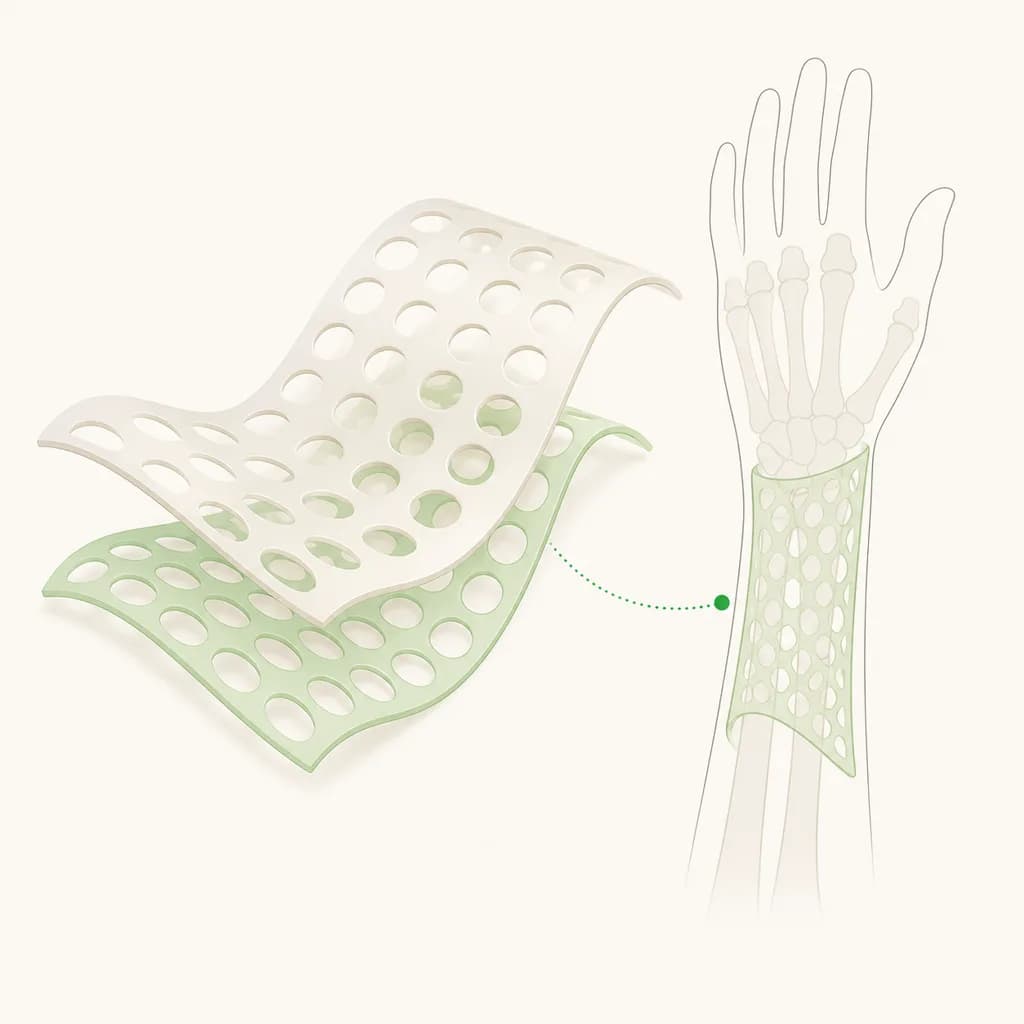
Thermoplastic splint material is used to make custom supports that hold a body part in a protected position while allowing a clinician to shape the fit.
This answers one question. It is not a diagnosis and does not replace an assessment by a licensed doctor.
At a glance
- Material feature
- Softens with controlled heat and firms as it cools
- Main purpose
- Custom support, protection or movement control
How the material works
Thermoplastic sheets soften when warmed and become firm again as they cool. A trained clinician can mould the material around a hand, wrist, finger, limb or trunk to create support that matches the person’s shape. The finished splint may limit a painful movement, protect healing tissue, or guide a joint into a planned position while leaving selected areas free to move.
The material is used in custom splinting and can also form parts of larger supports. Related applications include walking boot immobilisation and scoliosis bracing, although the design and clinical purpose differ from a small hand or wrist splint.
Using a thermoplastic splint safely
Follow the wearing, cleaning and exercise instructions from the clinician who fitted it. Check the skin after removing the splint, especially over edges, straps and pressure points. Keep it away from unapproved heat sources, which can change its shape. Do not trim, bend or re-mould it yourself. Contact the fitting service if it rubs, becomes loose, causes increasing pain, or no longer supports the injured area as intended.
When to seek help
Seek prompt help if fingers or toes become numb, cold, pale or blue, or if swelling makes the splint feel tight. New skin blisters, persistent redness, worsening pain or reduced movement also need review. Urgent assessment is appropriate when the supported limb becomes suddenly weak or very painful, or when the original injury was followed by a visible deformity.
Questions for your doctor
Ask what movement the splint is meant to restrict, when it can be removed, how to protect your skin, and what changes mean the fit needs adjustment.
Find care
General Clinics & Polyclinics in Abu Dhabi
That answer is general. If you want it applied to your own case, these are licensed general clinics & polyclinics listed in Abu Dhabi.
27 Ar Ruwwad St - Shakhbout City - MSH4 - Abu Dhabi - United Arab Emirates
Accepts: Daman, Thiqa, Cigna, MetLife +20 more
Al Ruwais, Al Dhafrah
Accepts: Daman, Thiqa, AXA, Cigna +16 more
Al Bahyah - Al Bahyah Old - Abu Dhabi - United Arab Emirates
Accepts: Daman, Thiqa, Cigna, Allianz Care +18 more
Abu Dhabi
Accepts: Daman, Thiqa, AXA, Cigna +27 more
Ordered by verification status and how complete each clinic's public record is, then alphabetically. This is a directory listing, not a ranking — Zavis does not rate or recommend providers.
A factual listing drawn from the DHA, DOH and MOHAP licence registers. It is not a referral, an endorsement, or advice that any of these providers is right for you.
Questions people ask
Can I reshape the splint at home?
Do not reshape it yourself. Heat and pressure can create a poor fit or alter the support, so adjustments should be made by the clinician or service that fitted it.
Where is this material used?
It is commonly used for custom supports such as hand, wrist, finger, limb and trunk splints, with different designs used for walking boots or scoliosis braces.
Related
Related reading
Keep reading
Medical disclaimer. This page is general health information, not medical advice, and it cannot diagnose you. Always consult a licensed healthcare provider about your own symptoms and treatment. In an emergency in the UAE, call 998 for an ambulance.