
What is exercise therapy done with?
Short answer
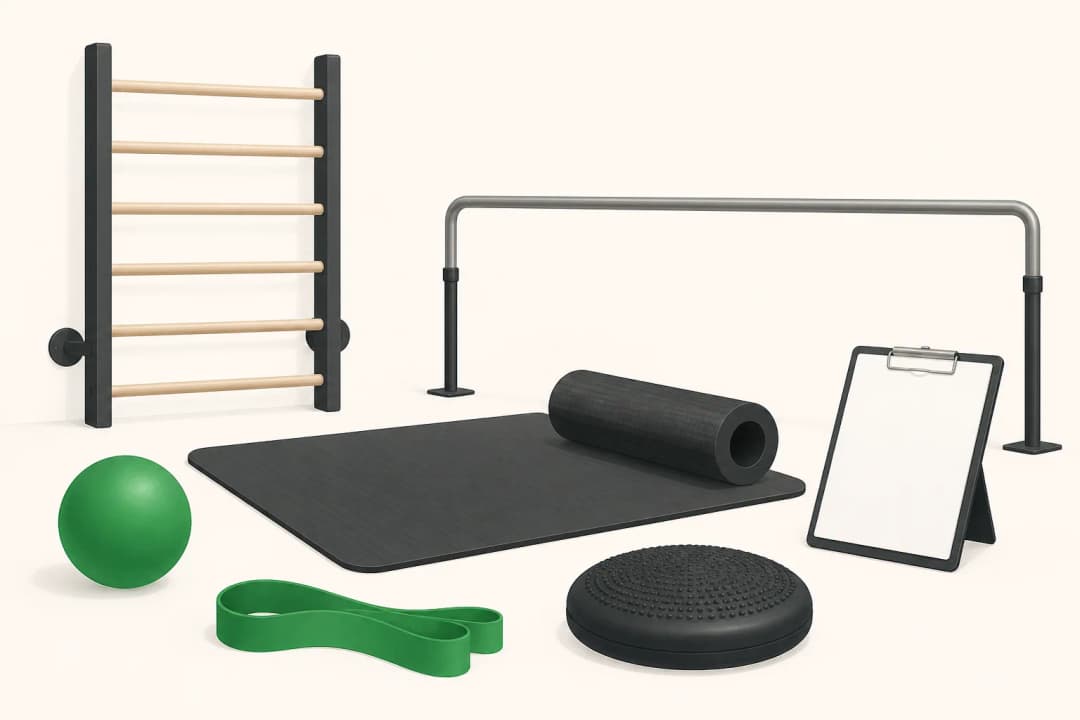
Exercise therapy is done with planned movements, strengthening exercises, mobility drills, and sometimes EMG biofeedback.
This answers one question. It is not a diagnosis and does not replace an assessment by a licensed doctor.
At a glance
- Core tools
- Body weight, bands, weights, steps, or a mat
- Optional feedback
- EMG sensors can show muscle activity
What a session may include
A physiotherapist selects exercises for your symptoms, movement limits, strength, balance, and daily goals. The session may use body weight, resistance bands, weights, steps, a wall, or a treatment mat. Mobility work can guide a stiff joint through a controlled range, while strengthening exercises challenge a muscle gradually. Balance and coordination tasks may be added when walking or changing direction is difficult. EMG biofeedback uses sensors to display muscle activity, helping you recognise whether a target muscle is switching on or relaxing as intended. The equipment is optional and does not replace the exercise plan.
Making the programme work
Use the technique, pace, and repetitions taught by your physiotherapist rather than copying a routine that was designed for someone else. Mild effort or muscle fatigue can be expected, but sharp pain, rapidly increasing swelling, or symptoms that remain worse after exercise need review. Keep track of which movements improve or aggravate your symptoms. Progression may involve changing resistance, range, balance demands, or everyday tasks once your current level is controlled.
When to pause and seek help
Stop an exercise and contact your clinician if it causes new weakness, loss of sensation, severe pain, or marked swelling. Seek urgent care for chest pain, severe breathlessness, fainting, or a new inability to use a limb. A sudden change in walking, speech, or facial movement also requires emergency assessment.
Questions for your doctor
Which movements match my specific problem? What should I feel during and after each exercise? When should the programme become harder? Would EMG biofeedback add useful information for my muscle control?
Find care
General Clinics & Polyclinics in Abu Dhabi
That answer is general. If you want it applied to your own case, these are licensed general clinics & polyclinics listed in Abu Dhabi.
27 Ar Ruwwad St - Shakhbout City - MSH4 - Abu Dhabi - United Arab Emirates
Accepts: Daman, Thiqa, Cigna, MetLife +20 more
Al Ruwais, Al Dhafrah
Accepts: Daman, Thiqa, AXA, Cigna +16 more
Al Bahyah - Al Bahyah Old - Abu Dhabi - United Arab Emirates
Accepts: Daman, Thiqa, Cigna, Allianz Care +18 more
Abu Dhabi
Accepts: Daman, Thiqa, AXA, Cigna +27 more
Ordered by verification status and how complete each clinic's public record is, then alphabetically. This is a directory listing, not a ranking — Zavis does not rate or recommend providers.
A factual listing drawn from the DHA, DOH and MOHAP licence registers. It is not a referral, an endorsement, or advice that any of these providers is right for you.
Questions people ask
Is exercise therapy only for athletes?
No. It can be adapted for everyday tasks, joint recovery, balance, strength, and movement confidence.
What does EMG biofeedback do?
Sensors provide visual or audible feedback about muscle activity so you can practise more targeted control.
Related
Related reading
Keep reading
Medical disclaimer. This page is general health information, not medical advice, and it cannot diagnose you. Always consult a licensed healthcare provider about your own symptoms and treatment. In an emergency in the UAE, call 998 for an ambulance.