
What is a breast cancer gene expression test done with?
Short answer
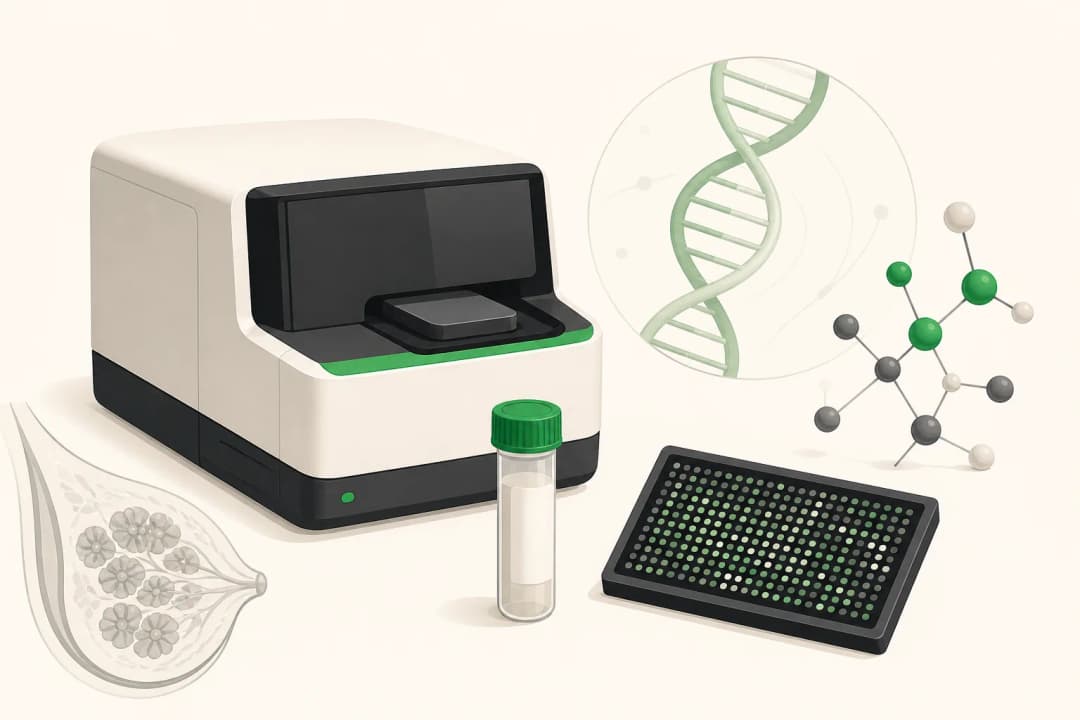
A breast cancer gene expression test is done with tumour tissue, using laboratory analysis to measure the activity of selected genes.
This answers one question. It is not a diagnosis and does not replace an assessment by a licensed doctor.
At a glance
- Specimen
- Tumour tissue
- Usually collected during
- Biopsy or surgery
- Measures
- Activity of selected genes
What the sample tells the team
The sample usually comes from a breast biopsy or surgery and is preserved before being sent to a specialised laboratory. The test examines patterns of gene activity in the tumour cells. Some assays use sequencing or other molecular methods to evaluate a defined group of genes.
The result can add information to the pathology report, such as how the tumour behaves and whether a person may gain useful information from particular systemic treatments. It is one part of decision-making, alongside tumour size, lymph-node findings, hormone receptors, HER2 status, overall health, and personal preferences.
What to expect
Ask whether stored tissue from your biopsy or operation is suitable; a new procedure is not always needed. Your team may explain how long the laboratory process takes and which treatment decision the result is intended to inform.
When the report arrives, review the meaning with your breast cancer team. A gene expression result is not a replacement for pathology and does not confirm or exclude breast cancer on its own. It helps the team interpret an already diagnosed tumour.
When to seek care
The test does not usually cause a new physical symptom because it uses existing tissue. Seek prompt medical advice for a new breast change, wound redness or drainage after biopsy, fever, increasing swelling, or bleeding that does not settle.
Questions for your doctor
Ask which tissue will be tested, what genes or tumour features the assay measures, which treatment choice the report may clarify, and how the result fits with your pathology findings.
Questions people ask
Will I need another biopsy for this test?
Not always. The laboratory may be able to use tissue already collected during a biopsy or operation.
Does the test replace a pathology report?
No. It adds molecular information to the clinical and pathology assessment of an already diagnosed tumour.
Related
Related reading
Keep reading
Cancer care in the UAE
Hospitals & Medical Centers in Abu Dhabi
Most UAE cancer care is delivered inside hospital services rather than by standalone oncology clinics, so these are licensed hospitals & medical centers listed in Abu Dhabi. Confirm the specific cancer service exists before you travel, and know that asking for a second opinion is routine.
Ahalia Hospital Musaffah Building - Musaffah - Musaffah Industrial - Abu Dhabi - United Arab Emirates
Accepts: Daman, Thiqa, AXA, Cigna +26 more
Al Ruwais Industrial City - Abu Dhabi - United Arab Emirates
Accepts: Daman, Thiqa, AXA, Cigna +30 more
Abu Dhabi, Abu Dhabi
Accepts: Daman, Thiqa, AXA, Cigna +30 more
Second opinions are routine in cancer care and asking for one does not affect your treatment. How to arrange a second opinion in the UAE.
Ordered by verification status and how complete each clinic's public record is, then alphabetically. This is a directory listing, not a ranking — Zavis does not rate or recommend providers.
A factual listing drawn from the DHA, DOH and MOHAP licence registers. It is not a referral, an endorsement, or advice that any of these providers is right for you.
Medical disclaimer. This page is general health information, not medical advice, and it cannot diagnose you. Always consult a licensed healthcare provider about your own symptoms and treatment. In an emergency in the UAE, call 998 for an ambulance.