
Breast Cancer Gene Expression Test
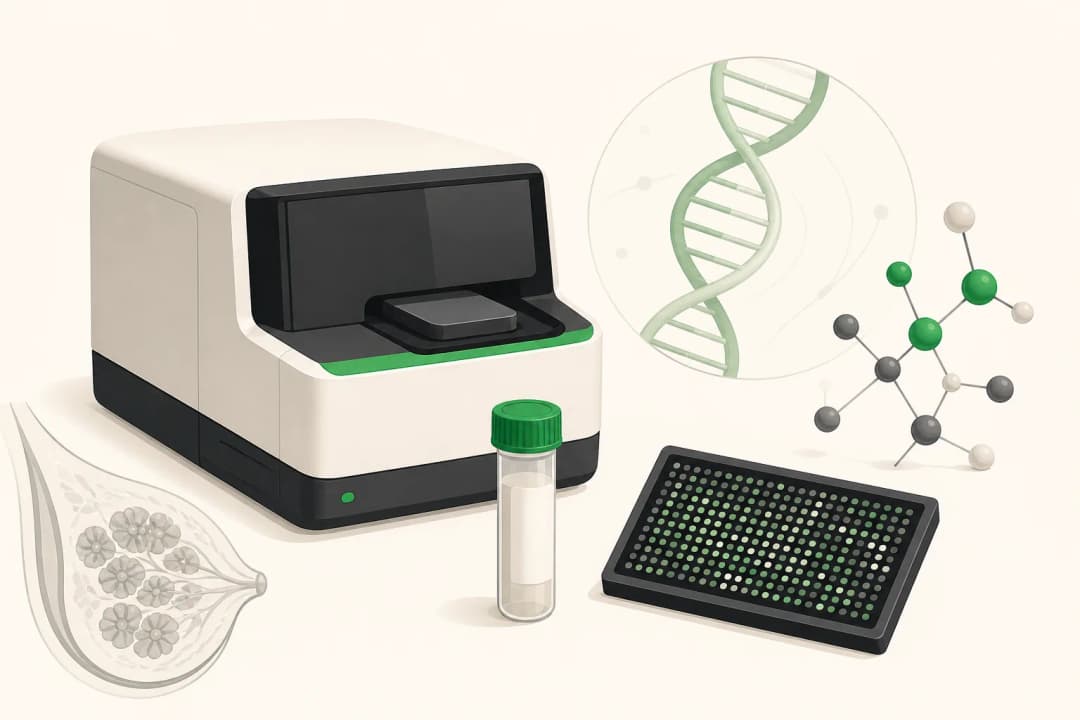
At a glance
- Sample
- Stored tumour tissue from biopsy or surgery
- Purpose
- Support treatment planning after diagnosis
- Recovery
- No recovery from the laboratory test itself
What is a breast cancer gene expression test?
A breast cancer gene expression test examines tumour activity to help estimate recurrence risk and guide treatment discussions.
The test measures patterns of gene activity in cancer tissue removed during a biopsy or surgery. It does not diagnose a lump by itself. Instead, it can add information after breast cancer has been diagnosed, alongside tumour size, grade, hormone receptor findings and other pathology results.
What does the test involve?
A laboratory uses a preserved tissue sample from the tumour. Usually, no separate procedure is needed. The pathology team confirms that enough suitable tissue is available, sends it to a specialised laboratory, and returns a report to the oncology team. The report is then discussed with the rest of the pathology and staging information.
Is it safe, and how accurate is it?
Because the analysis is performed on tissue already collected, the test itself does not add a new needle, anaesthetic or recovery period. Its result is one decision-making tool, not a promise about what will happen. Accuracy depends on the assay, the quality of the sample and whether the tumour fits the group for which the test was designed. Ask which assay is being used and how its result will change your options.
What happens if the result is abnormal?
An elevated or otherwise concerning result does not mean that treatment has failed or that cancer has spread. It may indicate a greater chance of recurrence or a potential benefit from additional treatment, depending on the test. Your oncologist combines it with clinical and pathology findings before discussing chemotherapy, endocrine treatment, monitoring or another plan.
Key facts
Gene expression testing looks at activity patterns rather than a single inherited gene. It is different from genetic testing that estimates inherited cancer risk for relatives. Results are interpreted in the context of the diagnosed [Breast Cancer](/conditions/breast-cancer/), not as a stand-alone answer.
Who may need this test?
It may be considered when the cancer has features that make the value of chemotherapy uncertain, such as certain hormone receptor and HER2 findings. It is not suitable for every breast tumour. The oncology team considers the tumour biology, lymph-node findings, menopausal status and the treatment question that needs answering.
How the process works
The process commonly follows these steps: review the pathology; identify and release an adequate tissue sample; send it to the testing laboratory; receive and explain the report; and combine the result with examination, imaging and pathology findings. The final decision should reflect your values as well as the clinical information.
What is recovery like?
There is no recovery from the laboratory analysis itself. Recovery relates to the biopsy or operation that supplied the tissue. Results may take time to process; during that interval, keep planned appointments and ask when the report will be reviewed with you.
Possible limitations and concerns
The main concern is interpretation: a result may not provide a clear answer, and it cannot account for every feature of an individual cancer. Testing can also create anxiety while you wait. Tell the team if you need the report explained in plain language or want a second pathology opinion.
What are the alternatives?
Treatment planning may rely on pathology, tumour stage, imaging, physical examination and established clinical factors when gene expression testing is not appropriate. Some people may discuss a different assay or no genomic assay. The relevant comparison is how each option answers the specific treatment question.
Finding the right specialist
Look for an oncology team that can explain why testing is being considered, which tissue will be used, when the report is expected and how each possible result could affect treatment. Bring your pathology report and a list of medicines and questions to the consultation. The laboratory approach may involve [Next-Generation Sequencing](/technology/next-generation-sequencing/).
Questions people ask
Is this the same as inherited genetic testing?
No. Gene expression testing examines activity in tumour tissue, while inherited testing examines genetic changes present in the body's cells and may inform family-risk discussions.
Will the test decide whether I receive chemotherapy?
It can inform the discussion, but the decision also considers tumour biology, stage, other pathology findings, benefits, side effects and your preferences.
Can the test be done from a blood sample?
The tests discussed here generally use tumour tissue collected during biopsy or surgery; ask your team which assay and sample type apply to you.
Related
Related reading
Keep reading
Cancer care in the UAE
Hospitals & Medical Centers in Abu Dhabi
Most UAE cancer care is delivered inside hospital services rather than by standalone oncology clinics, so these are licensed hospitals & medical centers listed in Abu Dhabi. Confirm the specific cancer service exists before you travel, and know that asking for a second opinion is routine.
Ahalia Hospital Musaffah Building - Musaffah - Musaffah Industrial - Abu Dhabi - United Arab Emirates
Accepts: Daman, Thiqa, AXA, Cigna +26 more
Al Ruwais Industrial City - Abu Dhabi - United Arab Emirates
Accepts: Daman, Thiqa, AXA, Cigna +30 more
Abu Dhabi, Abu Dhabi
Accepts: Daman, Thiqa, AXA, Cigna +30 more
Second opinions are routine in cancer care and asking for one does not affect your treatment. How to arrange a second opinion in the UAE.
Ordered by verification status and how complete each clinic's public record is, then alphabetically. This is a directory listing, not a ranking — Zavis does not rate or recommend providers.
A factual listing drawn from the DHA, DOH and MOHAP licence registers. It is not a referral, an endorsement, or advice that any of these providers is right for you.
Medical disclaimer. This page is general health information, not medical advice, and it cannot diagnose you. Always consult a licensed healthcare provider about your own symptoms and treatment. In an emergency in the UAE, call 998 for an ambulance.