
What happens if type 2 diabetes is not treated?
Short answer
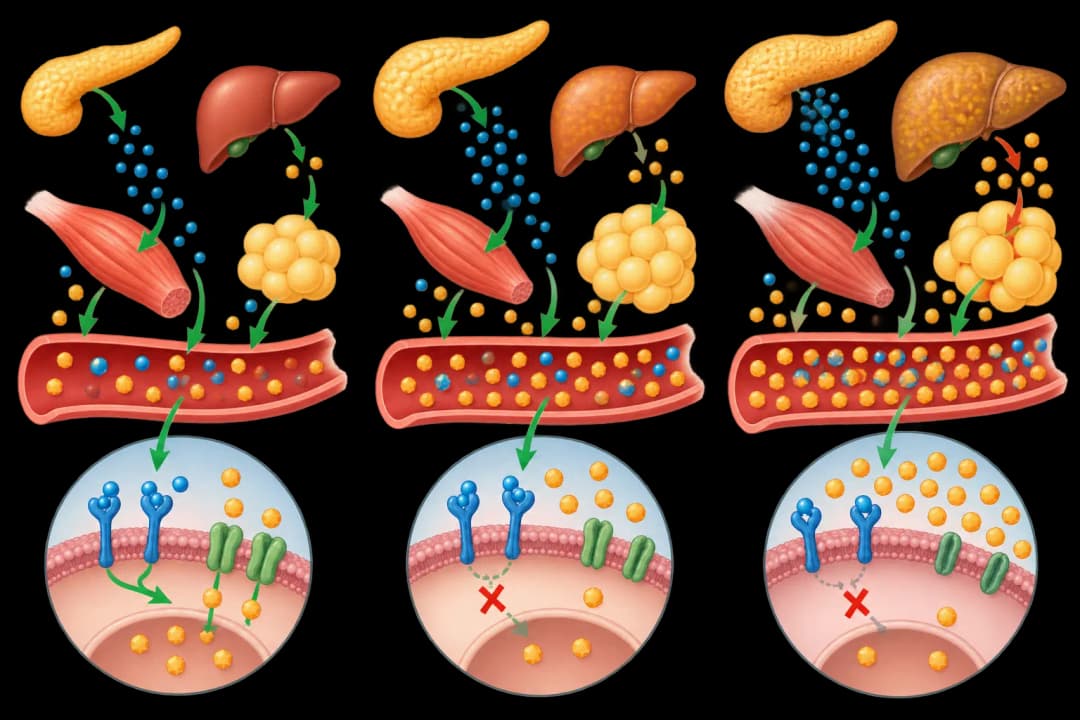
If type 2 diabetes is not treated, persistently high blood glucose can gradually damage blood vessels and nerves, affecting the eyes, kidneys, heart and feet.
This answers one question. It is not a diagnosis and does not replace an assessment by a licensed doctor.
At a glance
- Main concern
- Persistently high blood glucose can harm blood vessels and nerves.
- Useful first step
- Book an assessment and discuss glucose testing.
What untreated diabetes can do
High glucose may cause increased thirst, frequent urination, tiredness or unintentional weight loss. Over time, changes in small blood vessels can affect vision and kidney function. Changes in nerves may reduce feeling in the feet, so a blister or cut can go unnoticed and heal slowly. Larger blood-vessel damage can raise the risk of heart and circulation problems. These effects can develop quietly, even when a person feels well, which is why regular checks matter.
What to do next
Arrange a clinical assessment rather than waiting for symptoms to worsen. A diabetes screening test can help confirm whether glucose is high, while a chronic disease review can check blood pressure, weight, feet, kidney health and treatment needs. Lifestyle support may include a diabetes education programme, nutrition counselling or a weight management programme. Do not stop or change prescribed medicine without medical advice; treatment is adjusted to your results, other conditions and daily routine.
When to seek urgent care
Seek urgent medical help for confusion, severe weakness, repeated vomiting, difficulty breathing, fainting, or marked drowsiness. Prompt assessment is also needed for a new foot wound, spreading redness, sudden vision change, chest pain or one-sided weakness. These symptoms need examination because they can signal a serious glucose or circulation problem.
Questions for your doctor
Ask which glucose checks you need, whether your kidneys, eyes and feet require review, what symptoms should trigger same-day help, and how food, activity and medicines can fit your routine.
Find care
General Clinics & Polyclinics in Abu Dhabi
That answer is general. If you want it applied to your own case, these are licensed general clinics & polyclinics listed in Abu Dhabi.
27 Ar Ruwwad St - Shakhbout City - MSH4 - Abu Dhabi - United Arab Emirates
Accepts: Daman, Thiqa, Cigna, MetLife +20 more
Al Ruwais, Al Dhafrah
Accepts: Daman, Thiqa, AXA, Cigna +16 more
Al Bahyah - Al Bahyah Old - Abu Dhabi - United Arab Emirates
Accepts: Daman, Thiqa, Cigna, Allianz Care +18 more
Abu Dhabi
Accepts: Daman, Thiqa, AXA, Cigna +27 more
Ordered by verification status and how complete each clinic's public record is, then alphabetically. This is a directory listing, not a ranking — Zavis does not rate or recommend providers.
A factual listing drawn from the DHA, DOH and MOHAP licence registers. It is not a referral, an endorsement, or advice that any of these providers is right for you.
Questions people ask
Can type 2 diabetes cause symptoms before complications?
Yes. Thirst, frequent urination, tiredness and unintentional weight loss can occur, although some people have few symptoms.
Can untreated diabetes be reversed by waiting?
Waiting allows high glucose to continue affecting the body. Assessment helps identify appropriate lifestyle support and treatment.
Related
Related reading
Keep reading
Medical disclaimer. This page is general health information, not medical advice, and it cannot diagnose you. Always consult a licensed healthcare provider about your own symptoms and treatment. In an emergency in the UAE, call 998 for an ambulance.